

Arianespace to launch eight new Galileo satellites
 Arianespace will launch the first two satellites in 2022, leading to the Full Operational Capability of Galileo open service. Then, three successive launches on Ariane 62 in 2023, 2024 and 2025, will finalize the launch of the first generation of Galileo satellites and will increase the constellation resilience.
These will be the 13th to 16th Galileo missions by Arianespace, which has orbi
Arianespace will launch the first two satellites in 2022, leading to the Full Operational Capability of Galileo open service. Then, three successive launches on Ariane 62 in 2023, 2024 and 2025, will finalize the launch of the first generation of Galileo satellites and will increase the constellation resilience.
These will be the 13th to 16th Galileo missions by Arianespace, which has orbi Earth's first giant
 The two-meter skull of a newly discovered species of giant ichthyosaur, the earliest known, is shedding new light on the marine reptiles' rapid growth into behemoths of the Dinosaurian oceans, and helping us better understand the journey of modern cetaceans (whales and dolphins) to becoming the largest animals to ever inhabit the Earth.
While dinosaurs ruled the land, ichthyosaurs and othe
The two-meter skull of a newly discovered species of giant ichthyosaur, the earliest known, is shedding new light on the marine reptiles' rapid growth into behemoths of the Dinosaurian oceans, and helping us better understand the journey of modern cetaceans (whales and dolphins) to becoming the largest animals to ever inhabit the Earth.
While dinosaurs ruled the land, ichthyosaurs and othe Live demonstration for cyber resilience
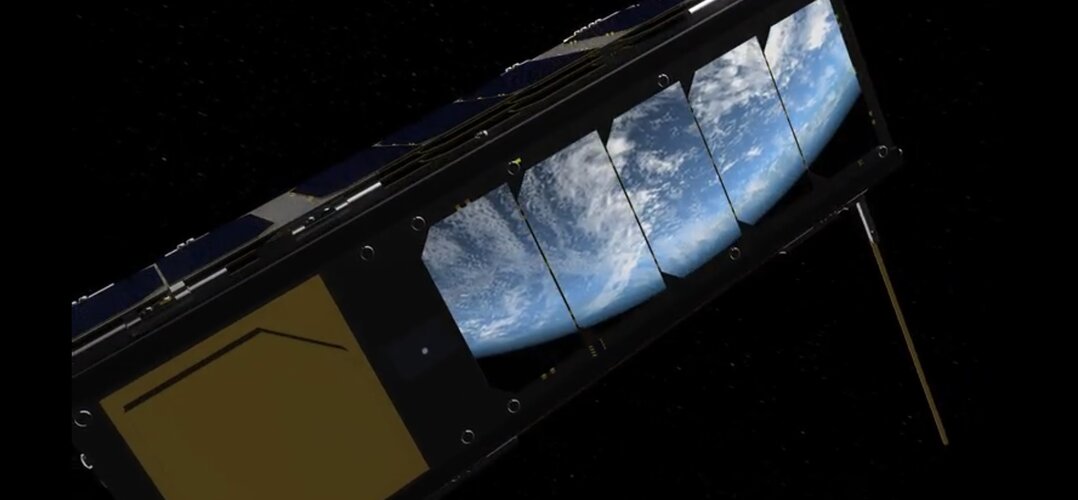
Modern society is growing ever-more reliant on services and data delivered via space. Cyber threats and disruptions to satellites are increasingly dangerous to citizens and economies, and it is vital to protect them and the crucial work they do. This is why ESA is supporting Swiss-based security firm Cysec in organising Europe’s first live cybersecurity demonstration for space systems. The demonstration will highlight the challenges in making space systems cybersecurity resilient vs modern hacking techniques and capabilities.
Preview 2022
 Video:
00:06:30
Video:
00:06:30
As always, a new year brings new and exciting missions and launches for ESA. In science the world looks forward to the first image releases of the recently launched James Webb Space Telescope and the third data release for Gaia, both teaching us more about our galaxy and Universe. ESA’s new Mars rover will be launched with the ExoMars mission, and we will also see the maiden flight of Vega-C and the Artemis I flight. Astronaut Samantha Cristoforetti will return to the ISS for her second mission and a new class of astronauts will be presented to the world. After the groundwork has been
Ride into space on Vega-C secured for FLEX and Altius
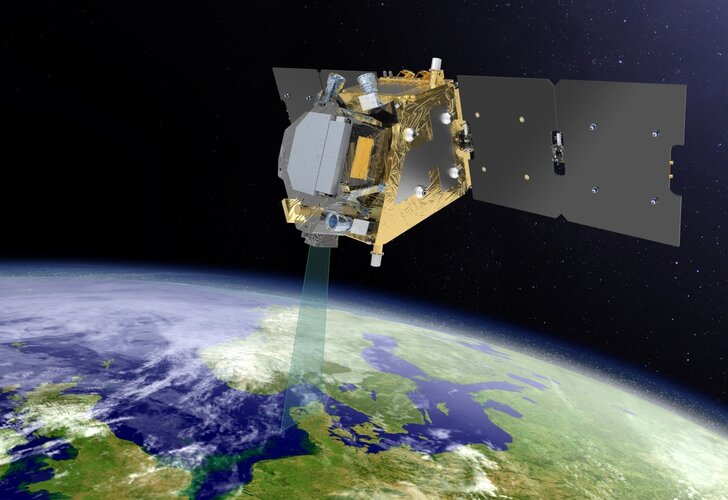
A contract signed with Arianespace secures the joint launch for two satellites that will further knowledge of our home planet. Scheduled to lift off on a new class of rocket, ESA’s Vega-C, from Europe’s Spaceport in mid-2025, FLEX will yield new information about the health of the world’s plants and Altius will deliver profiles of ozone and other trace gases in the upper atmosphere to support services such as weather forecasting.
Launch ranges lack spare parts to support growing demand
The Space Force lacks spare parts for much of the equipment needed to support launches from the Eastern and Western Ranges, an issue that could loom larger as launch activities at both spaceports increase.
Breakup of China’s Yunhai-1 (02) satellite linked to space debris collision
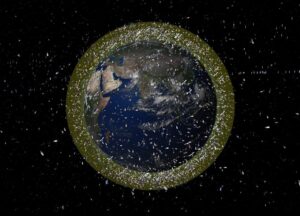
U.S. space tracking has linked the breakup of Chinese satellite Yunhai-1 (02) to a collision with a small piece of debris from a Russian satellite launch, according to NASA.
The Incredible ASIM: Distant galaxy edition
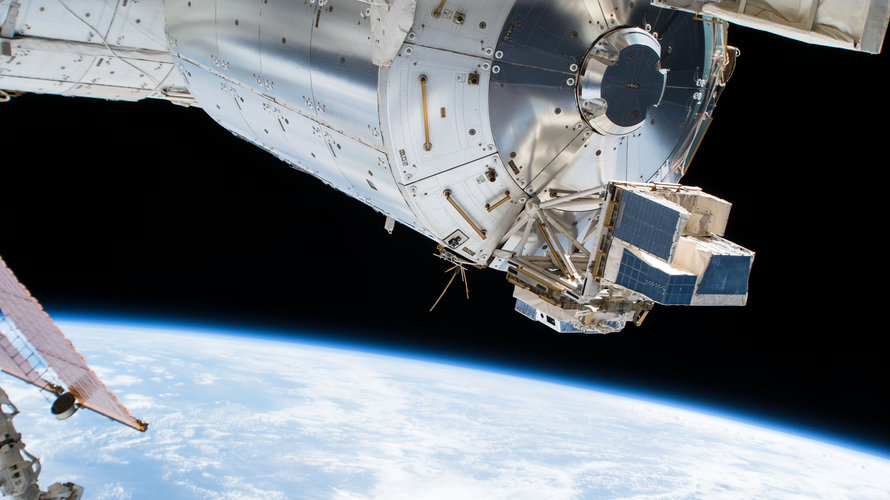
The Atmosphere–Space Interactions Monitor, or ASIM for short, is a first-of-its-kind complement of instruments on the International Space Station. Dubbed the ‘space storm hunter’, ASIM measures electric events in Earth’s upper atmosphere with cameras, photometers and X- and gamma-ray detectors.
Orbit Fab secures deal to refuel Astroscale’s satellite-servicing robots
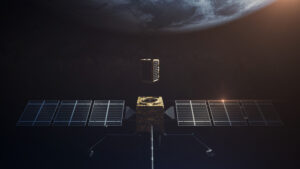
Astroscale U.S., a provider of on-orbit services to extend the life of satellites, has signed an agreement to use Orbit Fab’s in-space fuel tankers.
HawkEye 360 wins $15.5 million AFRL contract
The U.S. Air Force Research Laboratory (AFRL) awarded HawkEye 360 a $15.5 million contract to provide radio frequency analytics research and development, and to help the government test and evaluate its hybrid space intelligence, surveillance and reconnaissance architecture.


