



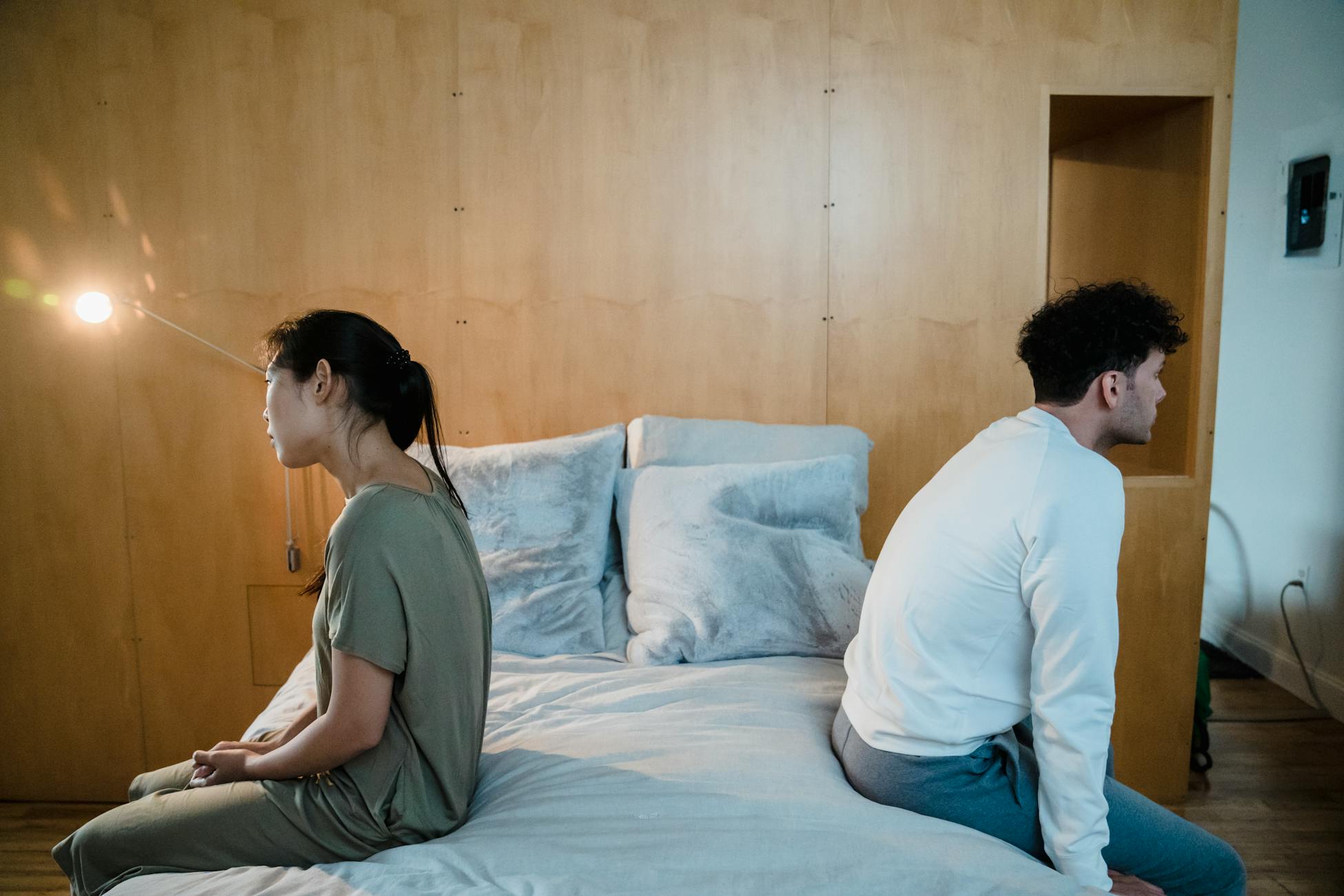
The marriages that fall apart quietly are rarely the ones with the slammed doors. They’re the ones where nobody slams anything anymore. Where the volume has been turned down so gradually that neither person can locate the moment it happened, only that the room they live in now has a different temperature than the one they remember moving into.
My wife told me last Thursday that living with me feels like being loved by someone watching from a window. I have been turning that sentence over for days. What strikes me is not the loneliness in it, though that is what most people would hear. What strikes me is that we hadn’t argued in months before she said it. By any conventional measurement we were doing well. The dishes got done. The bills got paid. The weekends arrived and dispersed without incident. We were, by the standards most couples brag about, peaceful.
Most people believe a quiet marriage is a healthy one. The cultural script suggests that if you’ve outgrown the fights, you’ve graduated into something more durable, the calm waters of mature partnership. What I’ve come to suspect is that a lot of what gets called peace in long relationships is actually a kind of metabolic slowdown — two nervous systems that have stopped expecting much from each other and have learned to call that arrangement maturity.
There is a difference between a couple who has worked through conflict and arrived at ease, and a couple who has stopped fighting because they’ve stopped reaching. The first is rare and earned. The second is common and counterfeit. From the outside they can look identical. From the inside, only one of them knows when the other walks into the room.
The test isn’t the absence of conflict. It’s the presence of light.
Watch a couple in love over a long stretch of years and you’ll notice something small that they probably don’t notice themselves. When one walks into the room, the other’s face does something. A flicker. A softening. The eyes track upward involuntarily. Even after decades, even mid-sentence with someone else, there’s a registration. A small electrical event that says: you came back, and I noticed.
That micro-response is what relationship researchers have documented as bids for connection, turning toward, and positive sentiment override — concepts developed by John Gottman in his decades of relationship research. It is the substrate of relational vitality, and it is far more diagnostic than whether a couple argues. Couples who fight constantly but still light up for each other tend to repair. Couples who never fight but have stopped lighting up tend to drift toward something terminal, even if it takes another fifteen years to officially end. Psychology Today’s writing on what strong couples actually repair makes this distinction directly: durability isn’t about avoiding rupture, it’s about whether the connection still has enough current running through it to be worth restoring.
The couples I worry about most are not the ones who walked into my office angry. They were never anyone’s clients to begin with, because they don’t think anything is wrong. They have no fights to point to. No betrayals. No dramatic grievances. They have what they describe, with a kind of pride, as a low-conflict marriage. What they don’t have, and what they’ve stopped noticing they don’t have, is the small involuntary brightening that signals two people are still actually choosing each other in real time.

Hibernation has a particular feel to it
What happens to long relationships that go cold without conflict is a form of emotional disengagement. It’s distinct from contempt, which is loud, and from neglect, which is negligent. It’s something quieter — a mutual, often unconscious agreement to lower the demands each person makes on the other in exchange for a kind of operational peace.
You can feel it in specific ways. The conversation in the car has thinned to logistics. The questions you used to ask each other about the day have shrunk into how was it and fine. Sex has become either rare or perfunctory or both. You realize you don’t actually know what your partner is currently anxious about, what they’re currently excited about, who in their life is bothering them right now. Not because they’re hiding it, but because you stopped asking and they stopped offering and neither of you can remember exactly when that drift began.
Forbes contributor Mark Travers, writing about the four ingredients of durable relationships, has argued that ongoing attentiveness — the willingness to remain curious about a person you already know — is the variable that separates relationships that stay alive from ones that calcify. The terrifying thing about hibernation is that you don’t experience it as the end of attentiveness. You experience it as efficiency. You already know this person. Why ask? What would they tell you that would surprise you?
The answer, it turns out, is everything. People are not static. The version of your partner sitting across from you tonight is not the version you married, and the gap between who they were when you stopped getting curious and who they actually are now is the exact size of the loneliness they’re carrying.
What gets traded away, and why both people agree to the trade
Hibernation isn’t accidental. Two people choose it, even if neither would describe it that way. The choice usually goes something like this: at some point, one or both partners decided that the cost of bringing a real concern, a real disappointment, a real desire into the room was higher than the cost of swallowing it. So they swallowed it. And the next one. And the one after that.
This is what I’ve written about before in people who never argue — the way silence in a relationship is almost never neutral. It’s a deposit into an account neither person is allowed to acknowledge exists. Eventually the account is full, but the rule is you still can’t mention it. So instead, the air in the house gets thinner. The brightening when the other walks in fades. The body learns not to expect anything because expecting things has become unsafe, or futile, or simply too tiring to keep doing.
The cruelest part is that this often happens between two people who genuinely love each other. Suppressing anger, suppressing disappointment, suppressing the small daily friction of being two separate humans sharing one life — none of it makes the love go away. It just makes it inaccessible. You end up in a marriage where the love is technically still there, sitting in a locked room neither of you visits anymore.
The myth of the low-maintenance partner
Somewhere along the way, our culture decided that the highest compliment you could pay a partner was that they were easy. Low drama. Low needs. Low maintenance. We mistook the absence of friction for the presence of compatibility, and a lot of people built marriages around that mistake.
Here’s what I’ve come to think: easy is what a relationship feels like in year two. By year ten, easy means somebody stopped asking for things. By year twenty, easy can mean two people have constructed parallel lives under one roof and have negotiated, without ever using the word, an emotional ceasefire that looks a lot like peace and feels, from the inside, like slow suffocation.
Healthline’s overview of how emotional intimacy is actually built notes something most relationship discourse glosses over: closeness is a function of disclosure under conditions of safety. You have to keep telling each other things. New things. Hard things. Embarrassing things. The minute the disclosure stops, intimacy doesn’t hold steady — it begins to dissolve, regardless of how much love is technically still in the room.
Couples in hibernation have, often without realizing it, stopped disclosing. Not because they’re hiding. Because they’ve concluded, somewhere underneath conscious thought, that disclosure isn’t worth the friction it might generate. So they trade depth for smoothness. And then, ten years later, one of them says something at the kitchen table about being loved from a window, and the other one cannot argue with it.
Naming it is the only thing that interrupts it
What unsettles me about my wife’s sentence is not that it was cruel. It wasn’t. It was the gentlest possible way to say something neither of us had been willing to name for a long time. The kindness in it was that she said anything at all. Plenty of partners in our position never do. They simply continue the slow descent, and one day five years from now they sign papers, or they don’t, and the marriage ends either way — officially or in the privacy of two interior lives that stopped touching long ago.
The research on couple communication is reasonably clear about one thing: couples who can name what’s happening between them have meaningfully better outcomes than couples who can’t, even when what they’re naming is painful. The naming itself is a form of contact. It’s a hand reaching across a long distance. It says: I still see this. I still see you. I’m not willing to let us slide into something neither of us would have agreed to if we’d been asked directly.
Most couples in hibernation aren’t avoiding a conversation about whether the marriage works. They’re avoiding a conversation about whether they still light up for each other, because they suspect the honest answer is not lately, and they don’t know what to do with that information. So they say nothing. And the not-saying becomes its own answer, repeated daily, for years.
I don’t have a tidy resolution to this. I’m sitting in it. What I know is that the absence of conflict in my marriage was something I had been quietly congratulating myself on, the way you might congratulate yourself on a low resting heart rate, without noticing that the heart had also stopped doing some of the other things hearts are supposed to do. My wife noticed before I did. She said it out loud. That sentence was not the end of something. It was, if I’m willing to receive it that way, the first real bid for connection either of us has made in longer than I want to admit.
The couples I worry about are the ones where nobody ever says it. Where the hibernation completes itself in silence, and two people who once lit up at the sound of each other’s keys in the door spend the rest of their lives politely pretending they still do.