




The feeling underneath the apology is the tell. Not the apology itself, but the sense that someone needed to absorb the discomfort, and the most efficient candidate was always going to be you. People who apologize for things outside their control are not weak communicators or chronically anxious. They are running a script that worked once, in a house where it had to.
Someone might apologize when a restaurant gets a reservation wrong, even though they had no control over the situation. Pressed on why, over-apologizers often reveal deeper patterns — they felt compelled to absorb the discomfort, even when logic told them it wasn’t their responsibility.
I noticed this pattern in myself over the years — the reflexive sorry in meetings, the apology to the barista when she got my order wrong — and started reading into it. What follows is what I found, mostly drawn from clinicians and researchers who’ve spent careers on this. I’m passing it along because the framing changed how I thought about my own behavior.
The reflex starts as a survival strategy
Children learn fast. When a parent’s mood is volatile and the cause is unclear, a child will run experiments until something reliably reduces the threat. Saying sorry, even for things they didn’t do, often becomes the cheapest way to make the room safe again.
Psychiatrist Mark Banschick describes this pattern in a piece on apology as a symptom of childhood parental trauma. The child learns that proactively taking the blame is the only way to stop the lashing out.
The trade is steep. Punishment gets reduced. Self-worth gets mortgaged.
What looks in adulthood like a politeness tic is the residue of that bargain. The body kept the negotiation tactic long after it stopped being necessary.
The script outlives the situation
Here’s where it gets stranger. Most adults who do this aren’t living with the original parent anymore. The volatile household is decades behind them. Yet the apology fires off in line at the post office, in a meeting where someone else made the mistake, in a relationship where their partner has never once raised their voice.
The reflex doesn’t ask whether the current room is dangerous. It just runs.
That’s because the nervous system encoded a pattern, not a context. The pattern says: tension in the air, blame floating, get under it before it lands. Silicon Canals summarized this neatly: people who apologize for everything weren’t necessarily insecure or timid; many of them learned that taking the blame kept the peace, and they still carry that reflex decades later.
The cost is the part nobody warned them about.
What the apology actually costs
Banschick is direct about the bill. Profuse apologies for outcomes that aren’t your fault hurt every relationship they touch. Some people learn they can offload responsibility onto you. Others lose respect, because the constant deference reads as weakness even when it isn’t. And the apologizer’s own self-confidence corrodes, because they enter every conflict already conceding fault.
It also retraumatizes. Each unwarranted apology is a small re-enactment of the original scene where the child had to disarm to survive. The body remembers, even when the mind has moved on.

This is the part that’s hard to explain to people who didn’t grow up this way. They hear “sorry” as a word. The chronic apologizer is performing a much older transaction.
The apology was never really about regret
Researchers who study forgiveness make a distinction that matters here. In her piece on what we get wrong when we teach children to apologize, Suzanne Freedman argues that pressuring kids to say sorry on demand teaches them the words without the meaning. The apology becomes a behavioral fix, not a moral act.
The pattern holds: even young children can tell the difference between a real apology and a coerced one, and forced apologies often increase resentment rather than resolve it. The child who is repeatedly required to apologize regardless of fault learns that apology is something you offer to make adults stop being upset, not something you offer because you genuinely caused harm.
Stretch that lesson over eighteen years and you get an adult whose apology means roughly: please regulate yourself, I’ll absorb whatever this is.
The blame that wasn’t theirs to carry
There’s a related pattern that often shows up alongside the chronic apology, which is a kind of background self-blame for outcomes the person had no realistic control over. Therapist Rich Heller writes about this in his examination of the hidden psychology of childhood self-blame, describing how children in chaotic homes often conclude that they must be the cause of the chaos, because the alternative — that the adults are unsafe and unpredictable — is too frightening to hold.
Self-blame, in that context, is a strange form of agency. If I caused it, I can fix it. If they caused it, I’m trapped.
That logic gets baked in. Decades later, the same person walks into a meeting where a project is going sideways and reflexively wonders what they did wrong, even when they joined the project last week.
Why the abusive parent never apologizes back
One of the cruelest features of these households is asymmetry. The child apologizes constantly. The parent rarely, if ever, does.
The Conversation published a clear breakdown of the dynamics: parents who relied on blame-shifting as their primary coping tool cannot apologize without dismantling the entire defensive structure they built their identity on. Admitting fault would mean confronting the version of themselves they’ve spent decades avoiding. So they don’t.
The adult child, meanwhile, is still apologizing for everyone in the room.
This asymmetry is part of what makes the pattern so hard to unlearn. The apologizer often keeps hoping that if they model the behavior consistently enough, the parent will eventually meet them there. They won’t. The model isn’t broken; it’s the design.
The over-explaining cousin
Chronic apology rarely travels alone. It usually shows up with over-explanation, the cousin behavior where every action gets justified preemptively in case someone might hold it against you.
A piece in VegOut described this exhaustion well — the writer realized their constant explaining was a bid for relational safety, an attempt to be understood correctly enough that they couldn’t be punished for being misread. The over-explaining was the same survival strategy as the apologizing, just in a different costume.
Both behaviors share a hidden assumption: that you are responsible for managing the other person’s perception of you, and that failure to manage it correctly will result in something bad.
That assumption was rational once. It usually isn’t anymore.
How to tell if your apology is the old script
A useful diagnostic: notice what triggered the sorry. If you apologized because you actually did something that affected another person, that’s a functioning apology. If you apologized because you sensed tension in the room and wanted it to dissolve, that’s the old script.
Other signals worth watching:
You apologize for taking up space — for sitting somewhere, for asking a question, for needing a minute to think. You apologize when someone else bumps into you. You apologize before stating an opinion, as if the opinion itself is an imposition. You feel a small wave of relief immediately after the apology, even though nothing was resolved, because the tension dropped a notch.
That relief is the giveaway. The apology worked the way it was designed to work in childhood. It just isn’t working on the actual problem.
The professional cost is real
This isn’t only a relationship issue. Psychology Today recently examined how apologies function in high-stakes professional contexts, and the findings cut both ways. Genuine, well-timed apologies can rebuild trust. Reflexive, blanket apologies erode credibility, because they signal that the speaker doesn’t distinguish between fault and proximity to a problem.
The chronic apologizer in a workplace gets read as someone who can’t be relied on to assess situations clearly. Their apology, intended as a peace offering, becomes a piece of professional baggage. I’ve watched this play out in editorial meetings and on industry calls — the person who apologizes preemptively for every observation is, over time, the person whose observations get weighted less, regardless of how good they are.
This is the cruel irony. The behavior that was meant to make the apologizer safer in the room makes them less trusted in it.
Unlearning is slower than learning was
The reflex took years of repetition to form. It will not dissolve in a weekend.
What seems to actually help, based on the clinical literature and the accounts of people who’ve worked through it: catching the apology before it leaves your mouth and asking, briefly, what you’d say if you removed it. Often there’s nothing to replace it with, which is itself instructive. The apology was filler. The situation didn’t require any words from you at all.
Other times, what wants to come out instead is an observation, a question, or a boundary. Try stating observations like noting something was confusing, rather than apologizing. Express needs directly, such as asking for time to process. State boundaries clearly by expressing when something doesn’t work for you.
The first few times feel rude. They aren’t. They feel rude because the body associates not-apologizing with danger. The danger isn’t there anymore. The body just hasn’t gotten the memo.
The pattern sits next to others
Chronic apology rarely shows up by itself. It tends to cluster with other behaviors shaped by the same kind of household — the adult who replays conversations for hours afterward, scanning for what might be used against them later. The mechanism is similar: an early environment where words had consequences, and the nervous system never stopped patrolling.
The same goes for the people who rehearse phone calls before making them, and for those who can’t accept help without immediately offering something in return. Each of these is a different adaptation to roughly the same childhood problem: a relational environment where being a child with normal needs and normal mistakes wasn’t safe.
The behaviors aren’t character flaws. They’re old solutions to old problems, still running in the background.
What changes when you stop
People who manage to interrupt the reflex describe a few common shifts. The relationships that were running on their constant deference get noisier, sometimes uncomfortably so, because the other person has to actually negotiate now rather than receive automatic concession. Some of those relationships strengthen. Some don’t survive.
The relationships that weren’t running on the deference barely change at all, which is its own piece of information. Those people never needed the apologizing. They were just there for the actual person.
And the apologizer’s sense of themselves slowly shifts. The internal narrator stops automatically assigning fault. The body stops bracing every time a room gets quiet. The energy that was being spent on managing other people’s moods gets returned to its owner.
It is not a fast process. It is, by most accounts of people who’ve done the work, worth it.
The thing nobody tells you about reconciliation
One last note. Forgiveness researchers like the team at Berkeley’s Greater Good Science Center draw a careful line between forgiveness and reconciliation. You can forgive someone — meaning release the resentment for your own well-being — without reconciling with them, meaning resuming the relationship.
That distinction matters for chronic apologizers. The reflex is often tangled up with a hope that if you apologize enough, the original parent or the people who reminded you of them will finally soften. They probably won’t. Forgiveness can still happen. Reconciliation is a separate question with separate criteria.
You can stop apologizing for things that aren’t your fault and still love the people who taught you to do it. You just stop paying the tax.
That’s the quiet shift. Not anger, not estrangement, not a dramatic confrontation. Just the slow recognition that the room you’re standing in now is not the room you grew up in, and the strategies that kept you safe back then are charging you rent you don’t owe.
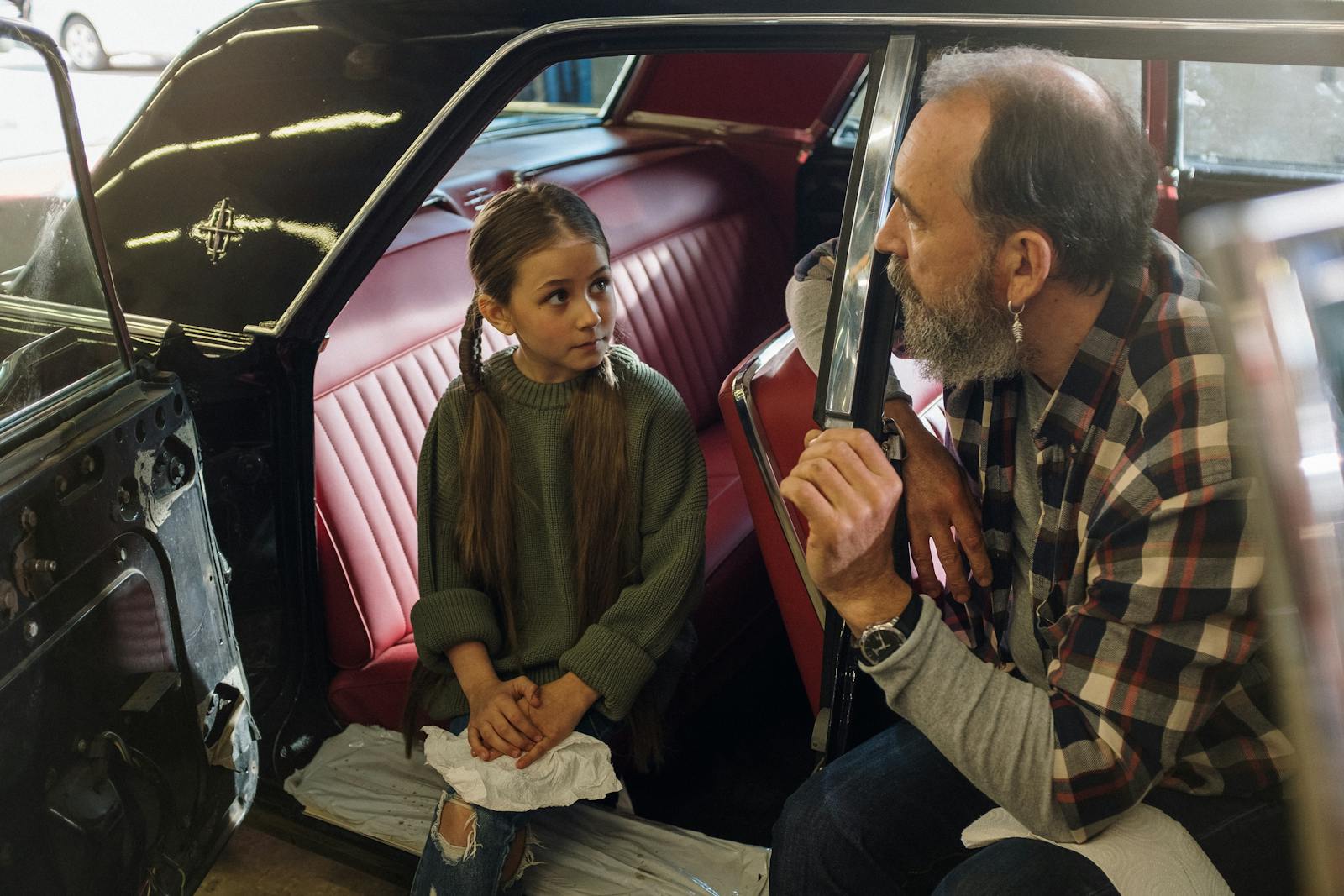
Photo by www.kaboompics.com on Pexels