



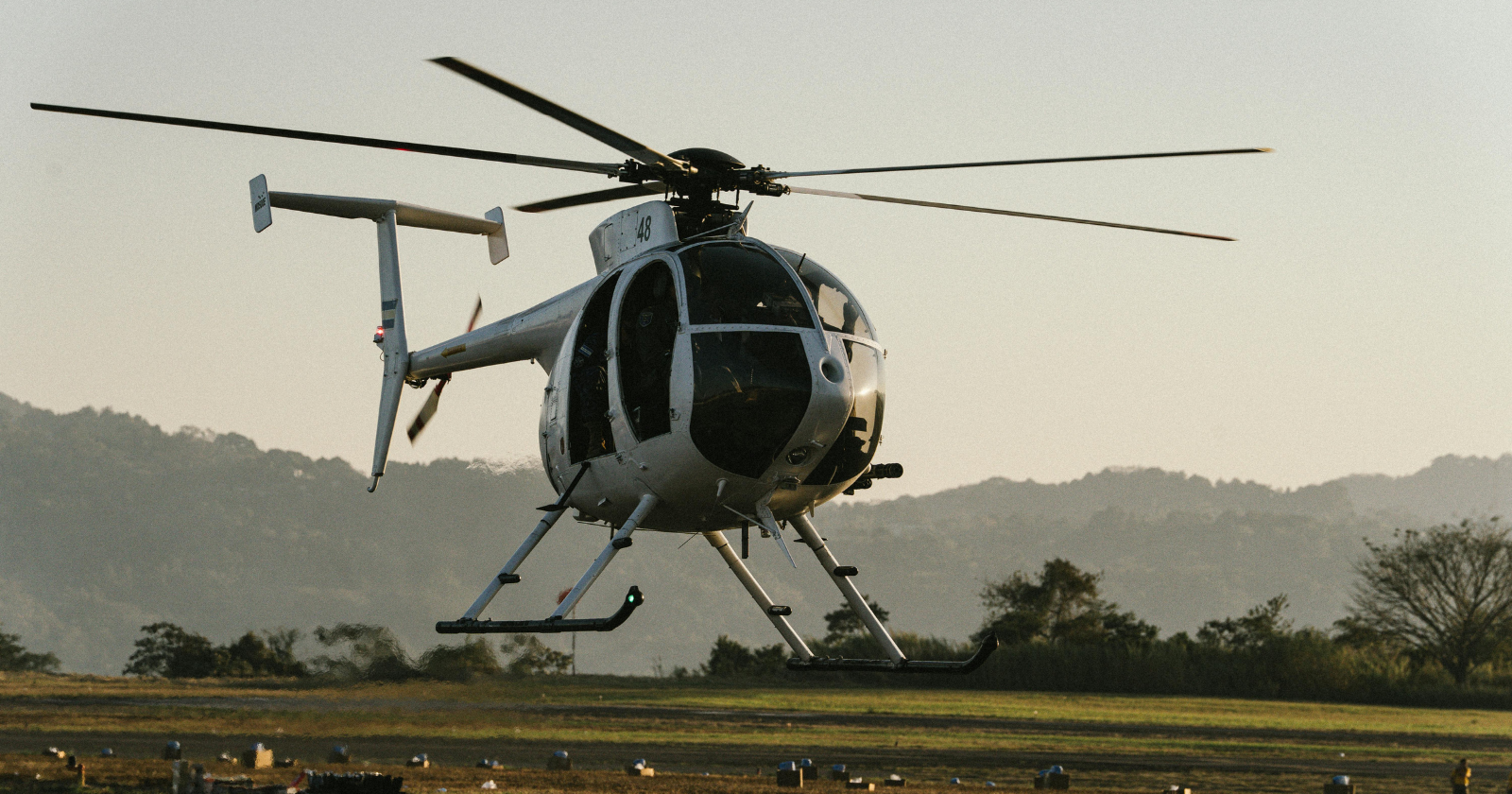
For seventy years, every spacecraft NASA sent to another world either landed in one place and stayed there, or rolled slowly across the surface on wheels. Then in April 2021, a four-pound helicopter called Ingenuity lifted ten feet off the floor of Mars’s Jezero Crater, hovered for thirty seconds, and changed the rules.
Five years on, the rotorcraft revolution is no longer a tech demo. NASA has begun full assembly of an eight-rotor, nuclear-powered drone the size of a small car that will fly across Saturn’s moon Titan in the 2030s. The agency has unveiled a six-rotor SUV-sized successor concept for Mars. And it has announced an entirely new mission, SkyFall, that will deliver multiple helicopters to the Red Planet in a single mid-air deployment. Aerial exploration of other worlds, once a fringe idea, is now the leading edge of how NASA plans to investigate the solar system.
What Ingenuity actually proved
The reason Ingenuity matters is not just that it flew. It is that it kept flying.
The helicopter was originally budgeted as a 30-day technology demonstration with a goal of five test flights, as JPL noted in its final mission tribute. Instead, it operated for nearly three years, completed 72 flights, covered more than 17 kilometers across the Martian surface, and logged over two hours of total flight time. Its mission ended in January 2024 when its rotor blades clipped the surface during a hard landing on featureless terrain.
Even with that ending, the precedent was set. NASA had proven that powered, controlled flight is possible in an atmosphere just one percent the density of Earth’s. As importantly, the agency had shown that an aerial scout could give scientists a kind of perspective no rover or lander could. Ingenuity transitioned mid-mission from a tech demo into an operations demonstration, scouting routes and points of interest for the Perseverance rover. Lori Glaze, NASA’s planetary science chief, said the helicopter “shattered our paradigm of exploration.” That language sounded grand at the time. It looks understated now.
Dragonfly is the real beginning
Ingenuity’s successor in size and ambition is not a Mars vehicle. It is Dragonfly, a NASA New Frontiers mission targeted at Saturn’s largest moon, Titan, scheduled to launch in July 2028 on a SpaceX Falcon Heavy. After a six-year cruise, the rotorcraft will arrive at Titan in 2034 and begin a 3.3-year science campaign across one of the most chemically interesting worlds in the solar system.
The scale change between Ingenuity and Dragonfly is enormous. Ingenuity weighed about 1.8 kilograms. Dragonfly weighs roughly 875 kilograms. Ingenuity had two rotors. Dragonfly has eight, arranged in four counter-rotating pairs. Ingenuity drew its power from a small solar panel. Dragonfly carries a Multi-Mission Radioisotope Thermoelectric Generator, the same nuclear power source used by Curiosity and Perseverance. The vehicle is built and managed by Johns Hopkins Applied Physics Laboratory, with planetary scientist Elizabeth Turtle as the principal investigator.
Full integration and testing of the rotorcraft began at APL in early 2026. Late in April, the team announced three significant milestones: the lander’s primary structure was bolted together for the first time, a full-scale parachute system completed a successful drop test over the Arizona desert, and the laser inside the science payload that will analyze Titan’s surface chemistry was fired into a test sample at NASA Goddard. The hardware is real now, not a render.
The cost of getting there has been controversial. Dragonfly was originally selected in 2019 with an $850 million principal-investigator cost cap. As of NASA’s confirmation in 2024, the total lifecycle cost has risen to $3.35 billion, driven by COVID disruptions, supply chain pressures, the addition of a heavy-lift launcher, and multiple replans. NASA’s Office of Inspector General has flagged the mission for ongoing budget and schedule risk. None of that changes the science case. Most of it just speaks to how hard it is to build a nuclear-powered drone for a moon nearly 900 million miles away.
Titan is the perfect target for a flying robot
Titan is also the reason rotorcraft suddenly make sense as planetary explorers. Its atmosphere is roughly four times denser than Earth’s, while its gravity is about one-seventh, according to JHUAPL’s mission overview. The combination is brutal for descent and landing engineering, but kind to anything trying to fly. The power required to hover is dramatically lower than on Earth. Dragonfly’s flight envelope, in pure aerodynamic terms, is friendlier than the air over Mojave.
What it gets to fly across is a chemically rich, prebiotic world. Titan has lakes and rivers of liquid methane and ethane, a thick nitrogen atmosphere, complex organic compounds raining out of its sky, water-ice bedrock, and a likely subsurface liquid water ocean. Titan is, in essence, the closest analog we have to early-Earth chemistry, but kept on ice. Dragonfly will spend its primary mission flying short hops between dozens of geologically distinct sites, sampling organic surface material and looking for the chemistry that may have preceded life on Earth.
Mars is getting another helicopter, or several
While Dragonfly grabs the headlines, the Mars rotorcraft program is also getting more ambitious. In December 2024, NASA’s Jet Propulsion Laboratory unveiled a concept called Mars Chopper, an SUV-sized helicopter with six rotors and 36 blades, capable of carrying five kilograms of scientific payload up to three kilometers per Martian day. The vehicle is still early-stage, but it represents what an Ingenuity-class craft looks like once you stop budgeting for a tech demo and start designing for science return.
Then there is SkyFall. NASA announced the mission earlier this year at its Ignition event. The plan is to deliver a team of next-generation Mars helicopters to the Red Planet via a mid-air deployment, allowing them to scout candidate human landing sites and map subsurface water ice. SkyFall is part of NASA’s broader move toward integrating aerial scouts into Artemis-era exploration architecture, where helicopters are no longer optional add-ons but planning tools for crewed missions.
A new way to explore
What is actually happening here is a category change in how NASA thinks about visiting other worlds. For decades, the choice was orbiter, lander, or rover. Each has obvious strengths and obvious limits. Orbiters see everything but reach nothing. Landers see one location very well. Rovers move, but slowly, and they are stopped cold by terrain that a helicopter would simply fly over.
Aerial vehicles fill the gap. They give you the mobility of a rover with the perspective of an orbiter, plus the ability to deliver instruments to spots that would be impossible to reach on the ground. On Titan, where dense atmosphere and abundant chemistry meet, that capability is the entire mission. On Mars, where Ingenuity proved the concept, helicopters are becoming standard scouts. By the late 2030s, NASA expects to be flying multiple aircraft across multiple worlds simultaneously, with Dragonfly studying prebiotic chemistry on Titan, SkyFall mapping ice on Mars, and Mars Chopper-class vehicles delivering kilograms of instruments to sites no rover can reach.
The line that gets repeated about Ingenuity is that it was the Wright Brothers moment for another planet. It was. What is coming next is the rest of aviation history, compressed into a decade and spread across half a billion miles of solar system.