

Op-ed | The World Below: The need for free and open data in Earth observation activities
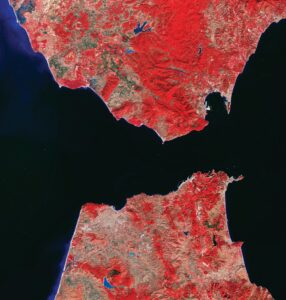
With President Joe Biden in the Oval Office, the United States is set to reestablish its global influence on environmental and climate studies for the coming years. The renewal of the country’s participation in the Paris Agreement is among the clearest examples of the distancing of the Biden administration from former President Donald Trump’s approach to the subject.
With a focus on the low-Earth orbit economy, Voyager eyes more acquisitions
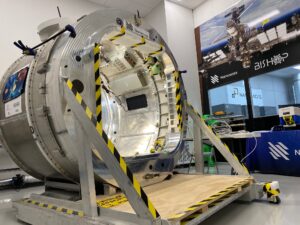
WASHINGTON — Voyager Space Holdings said May 10 it has closed a deal announced in December to acquire a majority stake in XO Markets, the parent company of commercial space services provider Nanoracks.
Op-ed | Getting Serious About the Office of Space Commerce
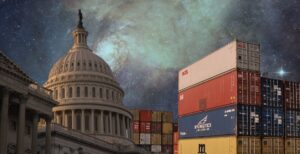
In the absence of an active push, attempts to create organizational change and improvement tend to revert to the way things used to be. After three years of an active push to increase the role of the Office of Space Commerce (OSC) in promoting and enabling commercial space activities, that vision is beginning to revert to the way things used to be.
Iceye unveils new wide-area imaging capability

SAN FRANCISCO – Iceye unveiled a new product May 10, wide-area Scan imaging focused on areas as large as 10,000 square kilometers.
Since Iceye flew the first small synthetic-aperture radar satellites in 2018, the company has developed a variety of products to help customers zoom in on specific areas or detect changes over time.
A new era of spaceflight? Promising advances in rocket propulsion
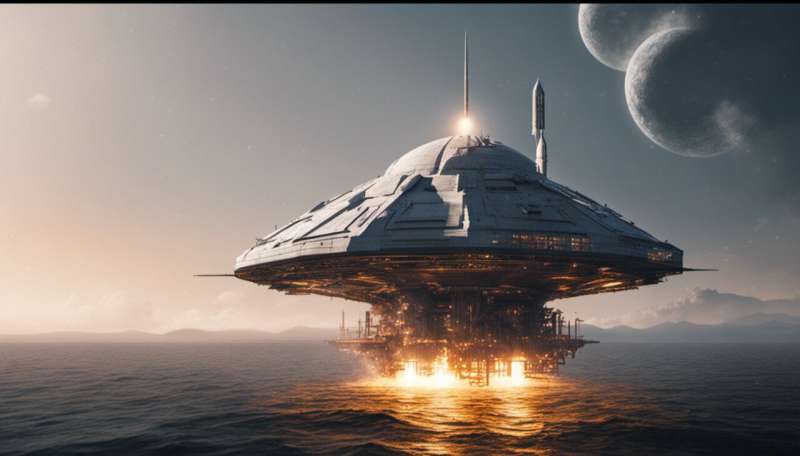
The US Defense Advanced Research Projects Agency (Darpa) has recently commissioned three private companies, Blue Origin, Lockheed Martin and General Atomics, to develop nuclear fission thermal rockets for use in lunar orbit.
Such a development, if flown, could usher in a new era of spaceflight. That said, it is only one of several exciting avenues in rocket propulsion. Here are some others.
Chemical rockets
The standard means of propulsion for spacecraft uses chemical rockets. There are two main types: solid fuelled (such as the solid rocket boosters on the Space Shuttle), and liquid fuelled (such as the Saturn V).
In both cases, a chemical reaction is employed to produce a very hot, highly pressurized gas inside a combustion chamber. The engine nozzle provides the only outlet for this gas which consequently expands out of it, providing thrust.
The chemical reaction requires a fuel, such as liquid hydrogen or powdered aluminum, and an oxidiser (an agent that produces chemical reactions) such as oxygen.
From iron rain on exoplanets to lightning on Jupiter: 4 examples of alien weather

When Oscar Wilde said "conversation about the weather is the last refuge of the unimaginative" he was unaware of some of the more extreme weather on planets and moons other than Earth.
Since the discovery of the first exoplanet in 1992, more than 4,000 planets have been discovered orbiting stars other than our own.
The continuing research with exoplanets involves trying to identify their atmospheric composition, specifically to answer the question of whether life could exist there. In this search for life though, astronomers have found a huge variety of potential worlds out there.
Here are four examples of bizarre weather on other astronomical bodies—to show how varied an exoplanet atmosphere could be.
1. Iron rain on WASP-76b
WASP-76 is a large, hot exoplanet discovered in 2013. The surface of this monster planet—roughly twice the size of Jupiter—is about 2,200℃ (4,000℉). This means a lot of material that would be solid on Earth melts and vaporizes on WASP-76b.
As described in a particularly famous 2020 study, these materials include iron.
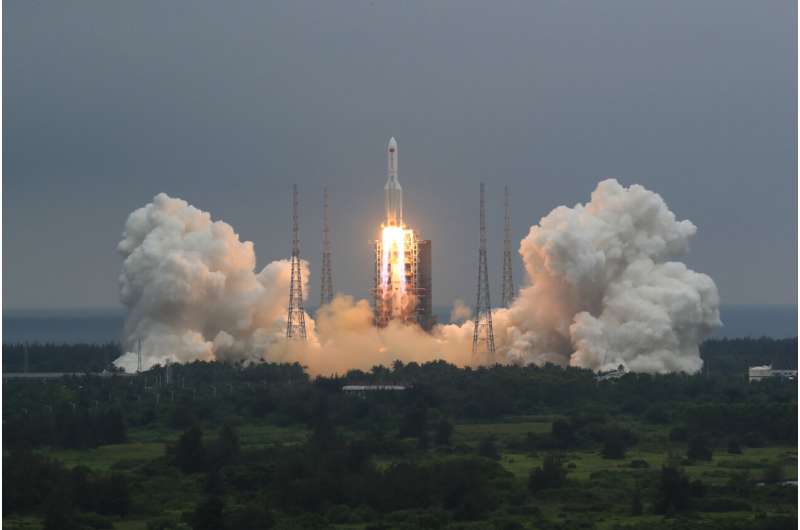
China defends handling of rocket that fell to Earth
We could detect extraterrestrial satellite megaconstellations within a few hundred light-years
Starlink is one of the most ambitious space missions we've ever undertaken. The current plan is to put 12,000 communication satellites in low-Earth orbit, with the possibility of another 30,000 later. Just getting them into orbit is a huge engineering challenge, and with so many chunks of metal in orbit, some folks worry it could lead to a cascade of collisions that makes it impossible for satellites to survive. But suppose we solve these problems and Starlink is successful. What's the next step? What if we take it further, creating a mega-constellation of satellites and space stations? What if an alien civilization has already created such a mega-constellation around their world? Could we see it from Earth?
This is the idea behind a recent article posted on the arXiv. It's based on an idea about how civilizations might grow over time, known as the Kardashev scale. It's based on the level of energy a civilization can tap into; Type I uses energy on a global scale, type II a star's worth of energy, and so on.
Inmarsat heading to administrative court over Dutch 3.5 GHz auction
TAMPA, Fla. — Inmarsat is pivoting to an administrative court in its battle to stop the Netherlands from auctioning 3.5 GHz spectrum, which the British satellite operator says it does not want to cede to bandwidth-hungry 5G networks.
Orbcomm gets no offers after contacting more than 50 potential buyers
TAMPA, Fla. — Satellite operator Orbcomm said May 10 it did not get any alternative proposals in its 30-day “go-shop” period, which followed private equity firm GI Partners’ $1.1 billion acquisition offer.


