



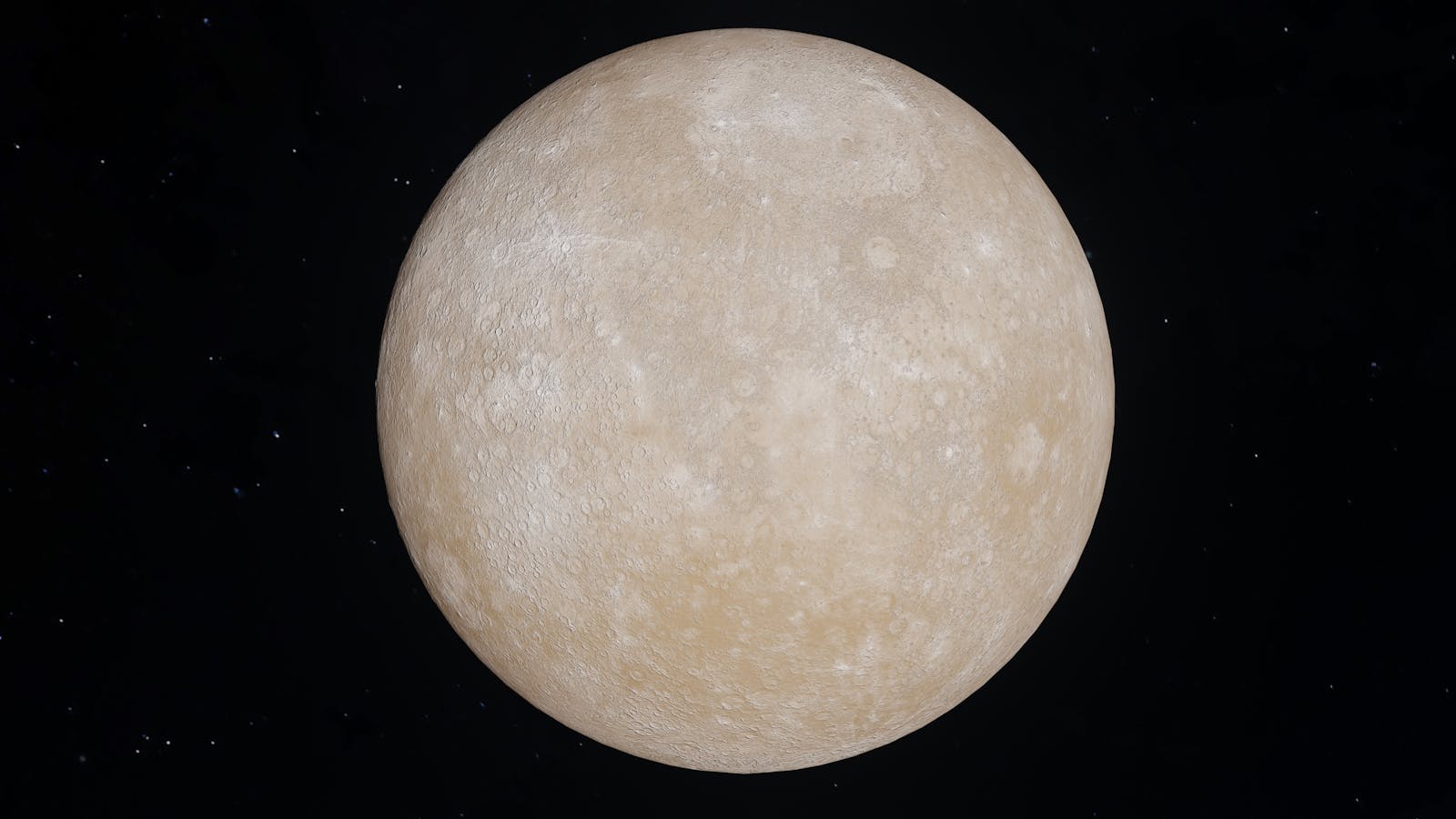
Mercury’s magmas may not play by Earth’s rules. Laboratory work suggests that the innermost planet’s sulfur-rich, iron-poor chemistry could fundamentally alter how molten rock crystallizes, meaning planetary scientists cannot safely borrow terrestrial assumptions when reconstructing how Mercury’s mantle solidified.
Research using the Indarch meteorite, an enstatite chondrite, as a stand-in for Mercury’s building blocks has recreated the pressures and temperatures of Mercury’s interior to observe what sulfur actually does when the planet’s reduced chemistry takes over.
A planet built from different ingredients
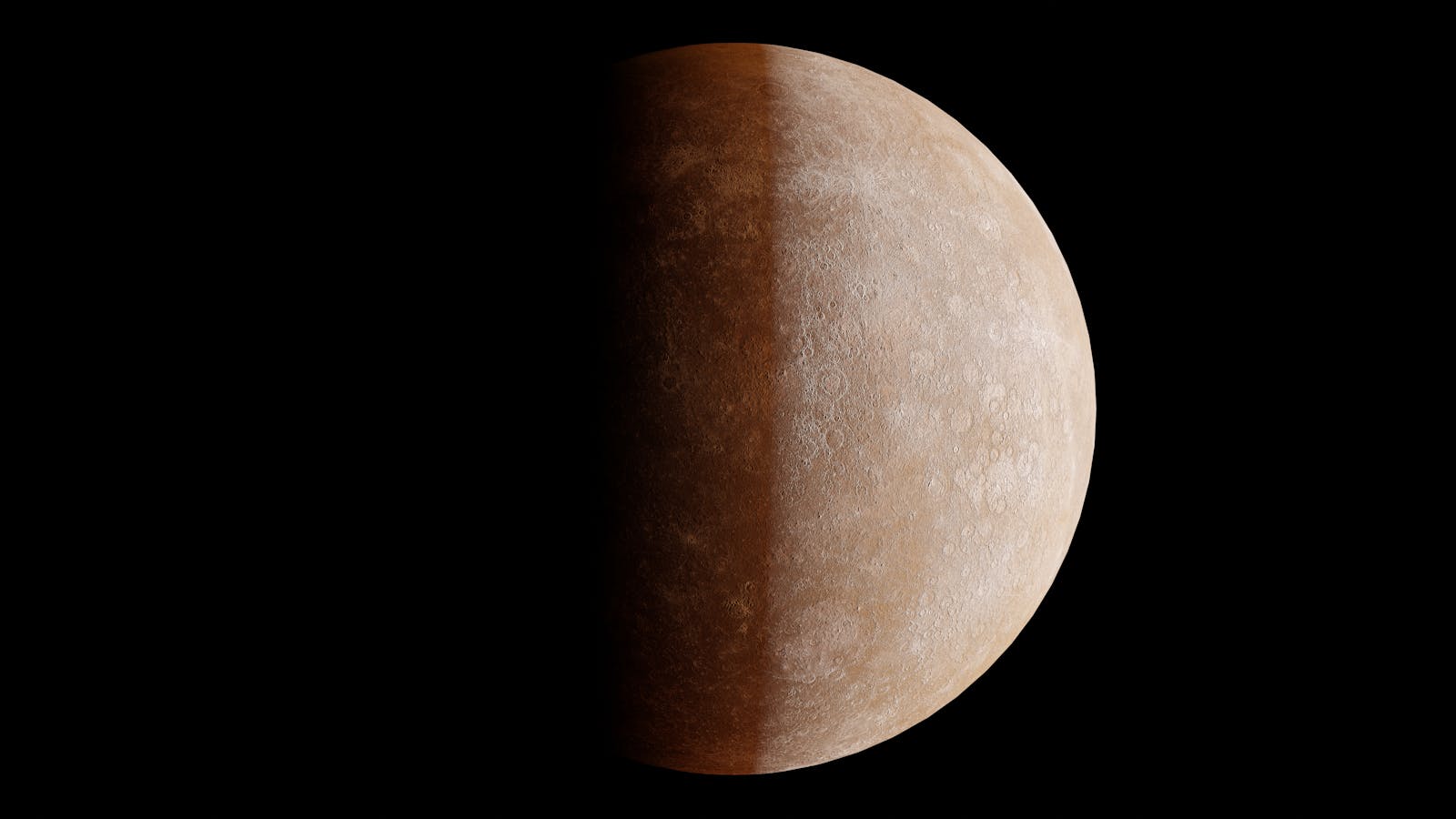
Mercury is the most chemically reduced planet in the solar system. Its surface is iron-poor and sulfur-rich, a combination that has puzzled planetary scientists since NASA’s MESSENGER mission mapped its surface chemistry and revealed a composition unlike anything on Earth, Venus, or Mars. MESSENGER left planetary scientists with a problem. The data was there. The framework to interpret it was not.
Researchers have conducted high-pressure, high-temperature experiments on enstatite chondrites, whose chemistry is about as reduced as anything we can get our hands on and may represent possible building blocks of Mercury.
What sulfur actually does
On Earth, sulfur typically pairs with iron. That is the boring, predictable version of sulfur chemistry, and it is the one most magmatic models assume. On Mercury, there is not much iron to pair with. So sulfur goes looking for other partners.
Experiments suggest sulfur binding instead to magnesium and calcium, the same rock-forming elements that normally build the silicate network holding a magma together. When sulfur inserts itself there, the network weakens. The melt stays liquid at temperatures where an Earth-like magma would have already started crystallizing.
In other words, Mercury’s magmas may run cool and stay molten longer. That single fact reshapes how we should think about the planet’s interior history.
This behavior has been compared to the role of volatiles on Earth. Water and carbon are the volatiles that make Earth’s mantle dynamics interesting. On Mercury, sulfur may occupy that structural role, taking a position that on Earth belongs to oxygen.
Why the analog matters
Laboratory analogs are how planetary science reaches places spacecraft cannot sample directly. No probe has ever landed on Mercury, and given the thermal and gravitational challenges of getting there, none will soon. Research has investigated Earth rocks that mimic Mercury’s surface chemistry, including boninite lavas whose major-element composition closely matches MESSENGER measurements.
Other work takes a different path to the same problem. Rather than searching for a terrestrial rock that looks like Mercury, researchers have taken meteorites that chemically resemble Mercury’s starting material and subjected them to the conditions Mercury’s interior would have imposed. The result is a process-level picture, not just a compositional snapshot.
Both approaches are needed. Surface analogs tell you what the rocks look like. Melting experiments tell you how they got that way.
Implications for Mercury’s history
If Mercury’s magmas crystallized at lower temperatures than Earth’s, the planet’s mantle solidified on a different schedule. The layering, the differentiation, the timing of crustal formation, all of it shifts.
That matters for the current generation of Mercury science. BepiColombo, the joint European-Japanese mission, continues its operations with instruments measuring surface mineralogy, topography, and interior structure in far greater detail than MESSENGER managed. Interpreting those measurements requires laboratory grounding into Mercury’s unique chemistry.
There is also the question of Mercury’s outsized iron core, which takes up far more of the planet’s volume than the cores of Venus, Earth, or Mars. Some researchers have proposed Mercury began much larger and lost most of its mantle in a giant impact. Others point to a diamond-bearing core-mantle boundary as a signature of the planet’s deep reducing chemistry. Sulfur-driven melting behavior adds another constraint. Whatever story you tell about Mercury’s formation now has to account for magmas that behave this way.
The broader lesson
The reason this research connects to something larger is simple. Planetary science spent decades assuming Earth was the default case and other rocky planets were variations on that theme. Mercury keeps refusing to cooperate with that framing. Its core is wrong. Its crust is wrong. Its surface chemistry is wrong. And now its magmas are wrong.
Mercury’s surface looks completely different than Earth’s, and its magmatic evolution may require different assumptions than those built from our understanding of Earth. That is not a small methodological note. It is a warning about how planetary science gets done.
The same caution applies well beyond the solar system. As exoplanet characterization improves, the diversity of rocky-world chemistries is going to expand quickly. Some will have oxidation states nothing like Earth’s. Some will have volatile inventories dominated by sulfur, or carbon, or compounds we have not modeled yet. The magmatic physics governing those worlds will need its own experimental foundation, the way hidden magma oceans on rocky exoplanets have started to demand theirs.
What is still unknown
Experiments have focused on near-liquidus phase relations, the moment when crystals first start to appear in a cooling melt. That is one slice of a long cooling history. How these sulfur-bound magmas behave as they continue to solidify, how they interact with the overlying crust, and how they degas into Mercury’s thin exosphere are all open questions.
BepiColombo data will help. So will continued work on enstatite chondrites, which are rare but chemically informative. And the experimental infrastructure that produces these results, the kind of high-pressure mineral physics work happening at major research institutions, will need to keep pace with whatever the spacecraft finds.
For now, the useful framing is clear. Sulfur may be to Mercury what water is to Earth. Build the models from there.
Photo by Zelch Csaba on Pexels