

NASA’s OSIRIS-REx Spacecraft Heads for Earth with Asteroid Sample
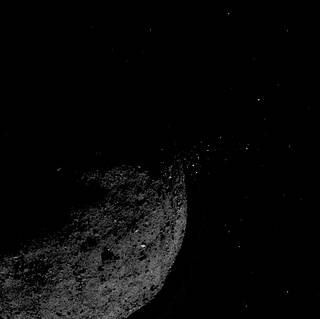 After nearly five years in space, NASA’s Origins, Spectral Interpretation, Resource Identification, Security, Regolith Explorer (OSIRIS-REx) spacecraft is on its way back to Earth with an abundance of rocks and dust from the near-Earth asteroid Bennu.
 After Chinese rocket reentry, DoD calls for countries to ‘behave responsibly’

WASHINGTON — Less than two days after parts of an uncontrolled Chinese rocket fell into the Indian Ocean, the Pentagon said allowing a large booster to free fall toward Earth is “irresponsible behavior.
Crew training begins soon for first private trip to ISS
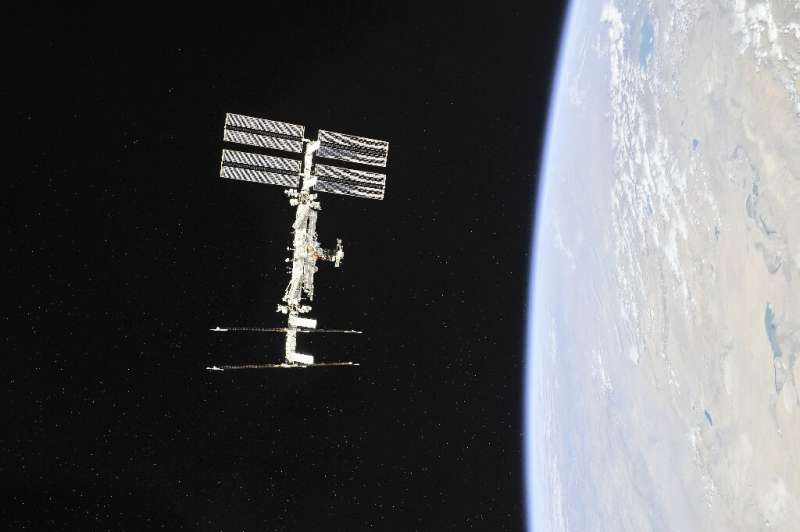
Training of the crew for the first entirely private trip to the International Space Station (ISS) is to begin soon, Axiom Space, the company behind the flight, said Monday at a joint press conference with NASA.
Four astronauts are to be launched to the ISS in late January aboard a rocket built by another space company, Elon Musk's SpaceX.
Only one of the four—NASA veteran Michael Lopez-Alegria—has been in space before.
The other three are businessmen—Larry Conner, an American, Mark Pathy, a Canadian, and Eytan Stibbe, an Israeli.
The mission dubbed Ax-1 is to last around 10 days, said Axiom Space president and CEO Michael Suffredini.
The astronauts will work and live in the American section of the space station and plan to conduct a number of scientific experiments while in orbit.
"We'll be starting what I would call serious training next week," said Lopez-Alegria, the Ax-1 commander.
"From there the pace will pick up, and we'll all be immersed essentially full time in ISS systems and Crew Dragon training starting in the fall.
NASA spacecraft begins 2-year trip home with asteroid rubble
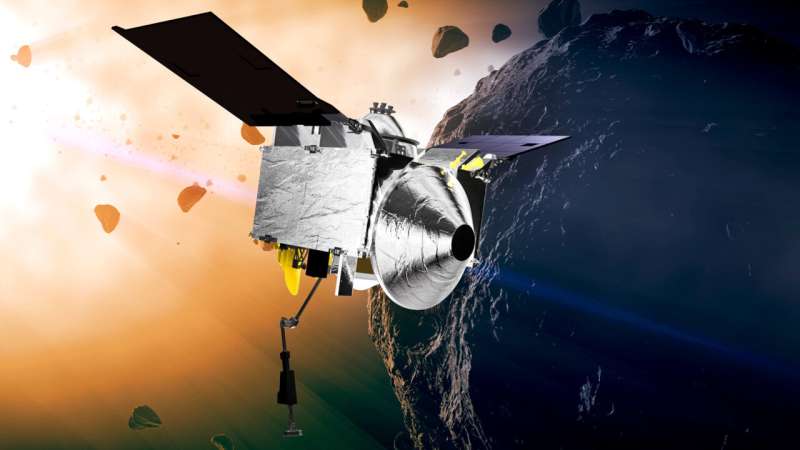
With rubble from an asteroid tucked inside, a NASA spacecraft fired its engines and began the long journey back to Earth on Monday, leaving the ancient space rock in its rearview mirror.
The trip home for the robotic prospector, Osiris-Rex, will take two years.
US space probe Osiris-Rex heads home with asteroid dust
 The US space probe Osiris-Rex on Monday left the orbit of the asteroid Bennu, from which it collected dust samples last year, to begin its long journey back to Earth.
The probe still has a vast distance to cover before it lands in the Utah desert on September 24, 2023.
Osiris-Rex is "now moving away over 600 miles an hour from Bennu, on its way home," Dante Lauretta, head of the mission
The US space probe Osiris-Rex on Monday left the orbit of the asteroid Bennu, from which it collected dust samples last year, to begin its long journey back to Earth.
The probe still has a vast distance to cover before it lands in the Utah desert on September 24, 2023.
Osiris-Rex is "now moving away over 600 miles an hour from Bennu, on its way home," Dante Lauretta, head of the mission Cabana to succeed Jurczyk as NASA associate administrator

WASHINGTON — Bob Cabana, a former astronaut and longtime head of NASA’s Kennedy Space Center, will become NASA associate administrator later this month, replacing the retiring Steve Jurczyk.
In separate announcements May 10, NASA said that Jurczyk will retire from the agency effective May 14.
NASA says demand for private ISS missions exceeds flight opportunities
WASHINGTON — NASA says it’s seeing strong interest from companies proposing private astronaut missions to the International Space Station, with the demand for such missions exceeding the agency’s ability to accommodate them.
NASA announced May 10 that it had finalized an agreement with Axiom Space for that company’s first crewed mission to the station, scheduled for launch no earlier than January 2022.
Aircraft issue could delay resumption of SpaceShipTwo test flights
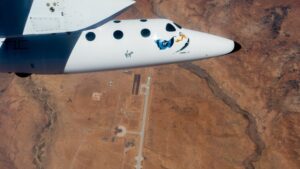
WASHINGTON — Virgin Galactic said May 10 that while it believes it corrected a problem with its SpaceShipTwo suborbital spaceplane that aborted a test flight five months ago, the resumption of those test flights could be further delayed by a problem with the plane that carries SpaceShipTwo aloft.
Scientists catch exciting magnetic waves in action in the Sun's photosphere
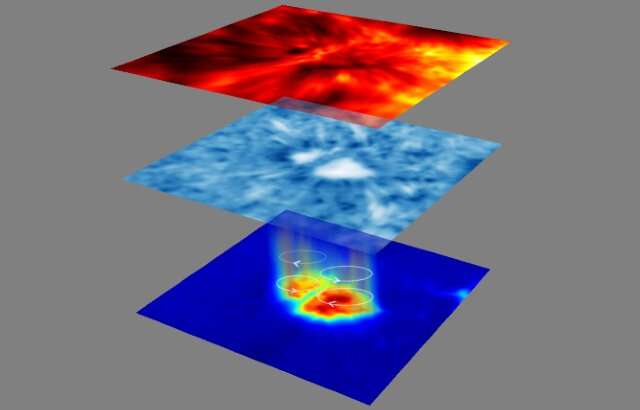
Researchers have confirmed the existence of magnetic plasma waves, known as Alfvén waves, in the Sun's photosphere. The study, published in Nature Astronomy, provides new insights into these fascinating waves that were first discovered by the Nobel Prize winning scientist Hannes Alfvén in 1947.
The vast potential of these waves resides in their ability to transport energy and information over very large distances due to their purely magnetic nature. The direct discovery of these waves in the solar photosphere, the lowest layer of the solar atmosphere, is the first step towards exploiting the properties of these magnetic waves.
The ability for Alfvén waves to carry energy is also of interest for solar and plasma-astrophysics as it could help explain the extreme heating of the solar atmosphere—a mystery that has been unsolved for over a century.
Elusive waves
Alfvén waves form when charged particles (ions) oscillate in response to interactions between magnetic fields and electrical currents.
Within the solar atmosphere bundles of magnetic fields, known as solar magnetic flux tubes, can form.
Senate Intelligence chairman wants further review of decision to relocate U.S. Space Command

WASHINGTON — The chairman of the Senate Select Committee on Intelligence Sen. Mark Warner (D-Va.) is backing efforts by Sen. Michael Bennet (D-Colo.) to challenge the relocation of U.S. Space Command from Colorado to Alabama.


