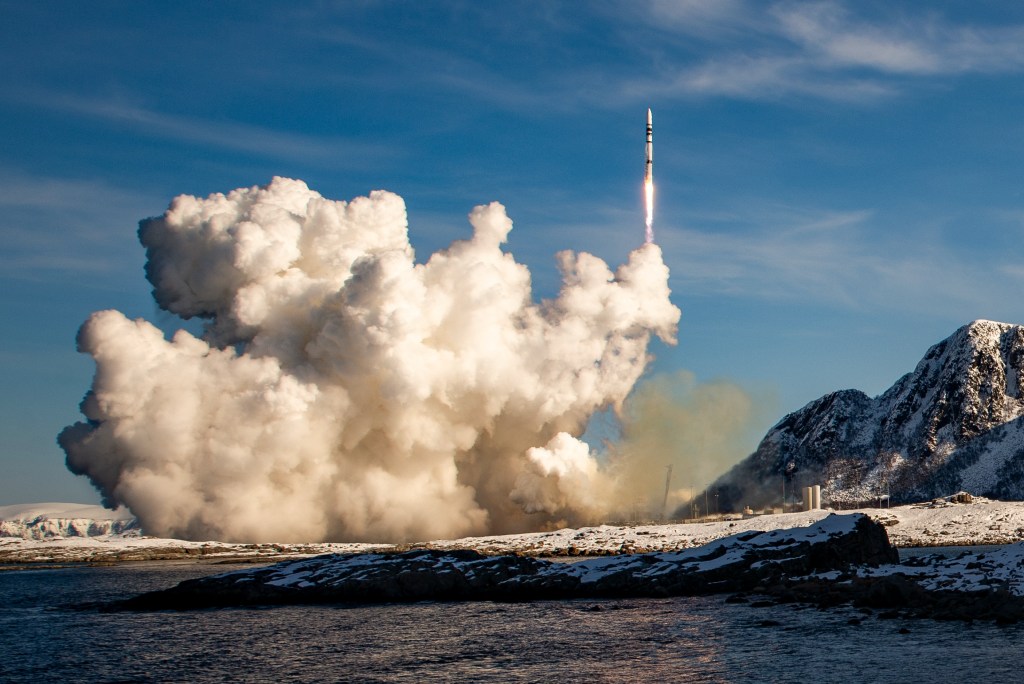
How Artemis astronauts will be protected from solar storms


ESA selects Thales Alenia Space and The Exploration Company for commercial cargo program


Why are the Department of Defense and Space Force talking about buying foreign space technology?


First crewed Boeing Starliner flight delayed again
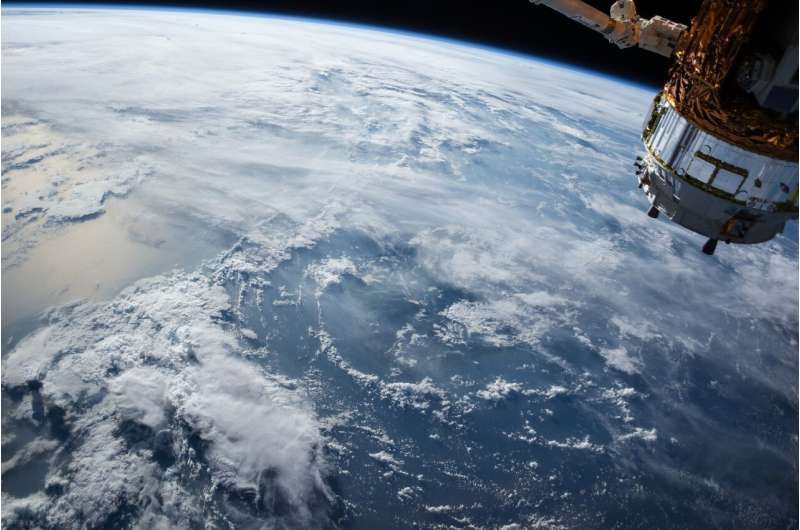
The first crewed launch of Boeing's Starliner spacecraft to the International Space Station has again been delayed, according to NASA, with no new date immediately set.
"The next possible launch opportunity is still being discussed," the US space agency said in a statement Tuesday.
The postponement of the launch, which had been set for Saturday, marks the third delay this month for the highly anticipated mission, which would allow NASA to certify a second commercial vehicle to carry crews to the ISS, beyond Elon Musk's SpaceX.
Earlier this month, the Starliner launch was postponed just hours before liftoff, with the astronauts already strapped in, due to a separate technical issue.
Then last week, another delay was announced to allow teams to further assess a helium leak linked to the service module, which sits on top of the rocket.
"The team has been in meetings for two consecutive days, assessing flight rationale, system performance, and redundancy," NASA said Tuesday. "There is still forward work in these areas."
The postponements come as the Starliner program faces years of delays and at a challenging time in general for Boeing, which is separately facing safety questions around its commercial aviation arm.
Space Force selects companies to develop concepts for simulated space war training range


NASA report identifies cost-effective approaches to dealing with orbital debris


European Space Agency selects two firms to build ISS cargo vehicle
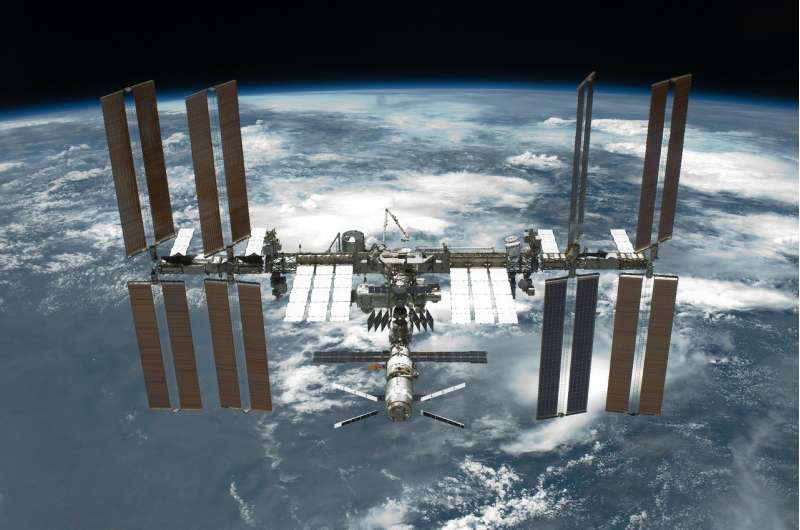
The European Space Agency announced Wednesday it has selected two companies to develop a vehicle to transport cargo to the International Space Station by 2028, in a potential first step towards independent missions carrying astronauts.
The agency has recently struggled to find rockets to launch its missions into space, and is following in the footsteps of NASA by purchasing services from firms rather than developing them itself.
In November, the ESA launched a competition allocating up to 75 million euros ($80 million) to a maximum of three firms to build a vehicle to take cargo to the ISS and back.
Out of seven proposals, the ESA selected those from French-German The Exploration Company and French-Italian company Thales Alenia Space, each of which will receive 25 million euros, the agency's chief Josef Aschbacher told AFP.
"The evaluation is still ongoing," he said, adding that the ESA may yet select a third proposal.
The contracts, which run until June 2026, will focus on developing the technology and structure of the vehicles.
Additional funds for the ambitious plan would need to be approved by the ESA's 22 members states in 2025.
NASA's Psyche fires up its sci-fi-worthy thrusters
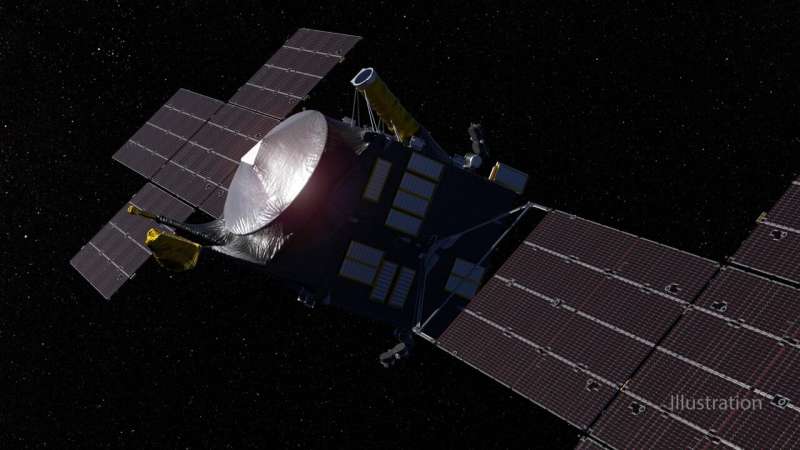
NASA's Psyche spacecraft passed its six-month checkup with a clean bill of health, and there's no holding back now. Navigators are firing its futuristic-looking electric thrusters, which emit a blue glow, nearly nonstop as the orbiter zips farther into deep space.
The spacecraft launched from NASA's Kennedy Space Center in Florida atop a SpaceX Falcon Heavy on Oct. 13, 2023. After leaving our atmosphere, Psyche made the most of its rocket boost and coasted beyond the orbit of Mars.
French, Belgian astronauts named next Europeans to fly to ISS
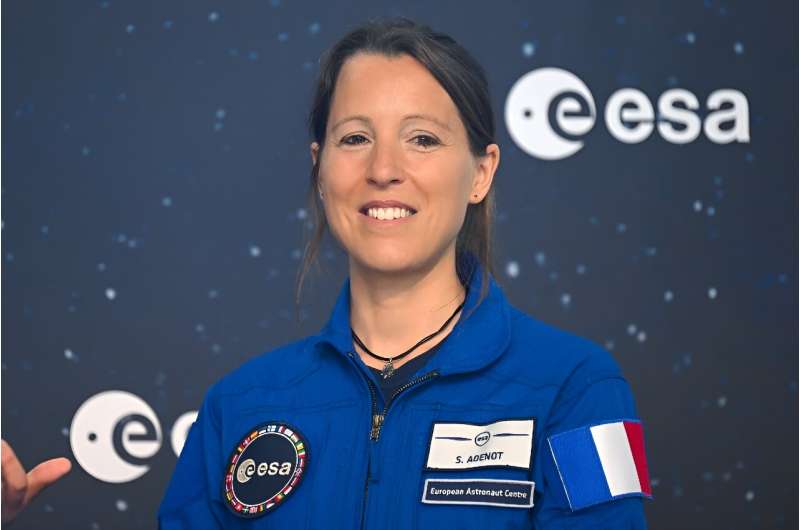
France's Sophie Adenot and Belgium's Raphael Liegeois will be the first two from a new class of European astronauts to blast off to the International Space Station, the European Space Agency said Wednesday.
Adenot will join the crew onboard the ISS, around 400 kilometers (250 miles) above Earth, in 2026 for a six-month mission, after which she will be replaced by Liegeois.
The pair were among five new European Space Agency (ESA) astronauts selected in 2022 out more than 20,000 applicants.
"I am very happy to fly first," Adenot told AFP in an interview from NASA's Johnson Space Center in Houston.
The 41-year-old engineer and helicopter pilot will become the second French woman onboard the ISS, after Claudie Haignere in 2001.