



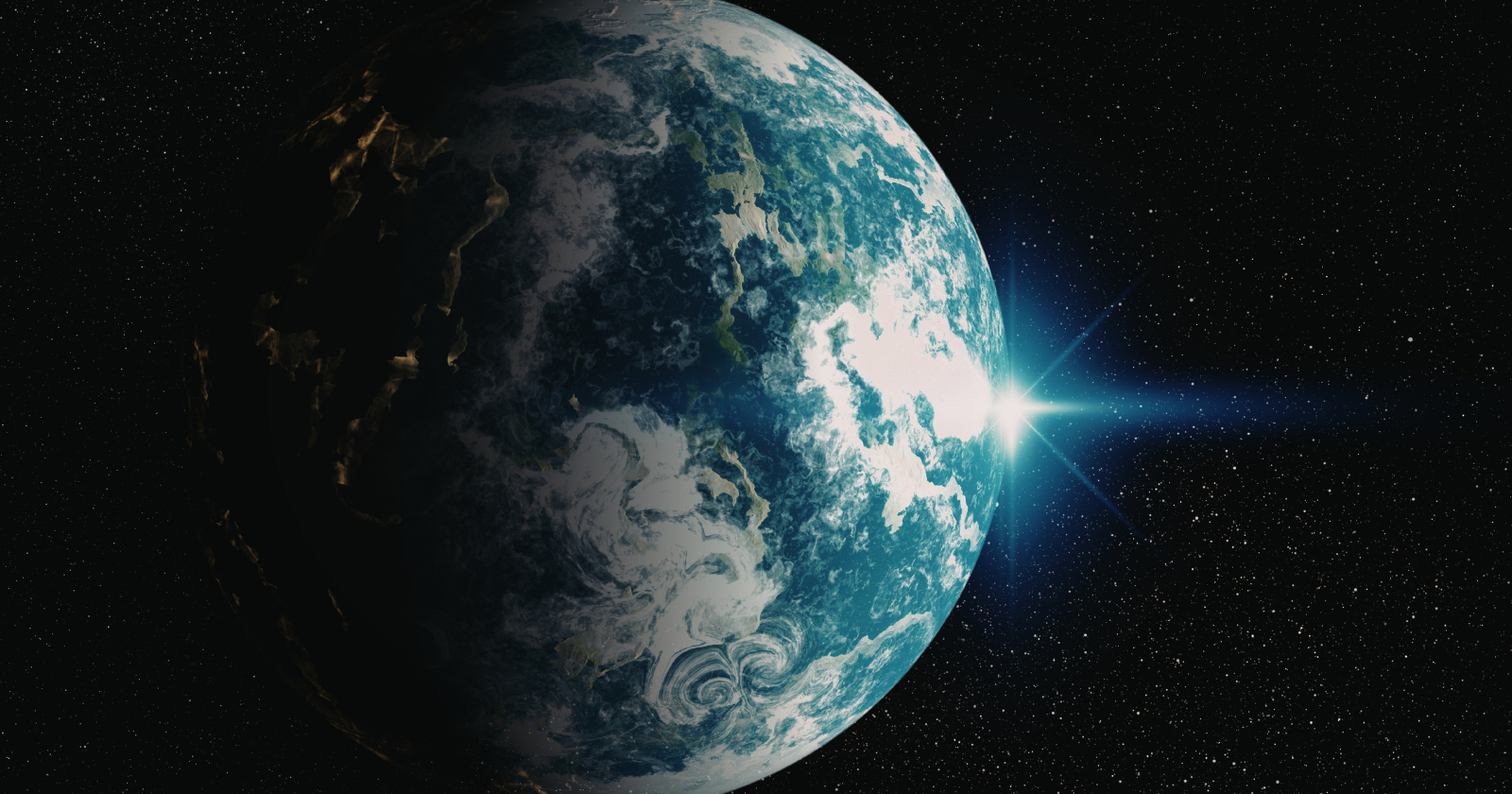
Picture this. You’re above Earth, strapped into the International Space Station. You glance out the window and there it is. Our planet. A swirling blue marble suspended in nothing. No borders. No politics. No to-do list. Just a fragile sphere holding everything that has ever mattered to you.
Astronauts who experience this often describe a sudden cognitive shift. Edgar Mitchell, who walked on the moon famously said:
“You develop an instant global consciousness, a people orientation, an intense dissatisfaction with the state of the world, and a compulsion to do something about it”
Others say they came back changed. The phenomenon has a name. The overview effect.
But here’s the thing. You don’t need a rocket to access it.
I’ve felt versions of it riding my bike through Saigon’s traffic, holding my baby daughter, running through tropical heat until my legs forgot how to argue. Awe doesn’t require altitude. It just requires attention.
Let me explain what I mean.
What’s actually happening up there
The overview effect was coined by author Frank White in 1987 after he interviewed dozens of astronauts. The pattern was strikingly consistent. Crew members reported feeling a sense of unity, a softening of the ego, a sudden clarity about what matters and what doesn’t.
Some came back wanting to dedicate their lives to environmental causes. Others to family. Many described the return to “normal” life as jarring, because the trivial things they used to stress over had quietly lost their grip.
What’s the mechanism? Researchers think it’s a powerful experience of awe combined with self-transcendence. When you see something so vast that your usual sense of self gets dwarfed, the mind reshuffles its priorities.
Here’s what I find fascinating. Neuroscience now shows that awe physically changes us. Experts say that even brief moments of awe reduce inflammation markers, decrease self-focused thinking, and increase feelings of connection.
In other words, the shift is real.
But it’s available to anyone, not just the lucky few in orbit.
Why earth-bound awe still works
The key insight is that the overview effect isn’t really about space. It’s about perspective.
Astronauts experience it because Earth from orbit is so much bigger than the petty stories we live inside. But anything that makes your usual frame of reference feel small can do similar work.
Standing under a night sky in the countryside. Watching waves break on a beach. Listening to a piece of music that hits you in some unspeakable place. Holding a newborn and realising you’d take a bullet for someone you met yesterday.
These aren’t identical to seeing Earth from space. But I’d say they’re cousins. They all do the same fundamental thing. They crack open the small story you’ve been telling yourself and let something bigger in.
I’ve talked about this before but the Buddhist concept of the “non self” feels relevant here. So much of our suffering comes from the cramped, defensive ego that thinks it’s the centre of the universe. Awe is one of the fastest ways out of that prison. It’s a kind of free meditation. You don’t have to sit still or chant. The world just hands it to you, if you’re willing to look up.
How to invite the shift on purpose
So how do you make this less of an accident?
The honest answer is you can’t manufacture awe on demand. But you can make yourself more available to it.
First, get outside. Specifically, get somewhere where the sky is bigger than the buildings. A park works. A beach works better. The countryside on a clear night works best. Whenever I’m in Singapore feeling caged in by glass towers, I make a point of going somewhere with a horizon. Something about that long view does what no amount of journaling can do.
Second, slow down enough to notice. The overview effect doesn’t happen if you’re scrolling. Astronauts don’t get it because they’re checking email. They get it because they’re paying attention. Most of us walk past awe ten times a day. The moon was full last week. Did you stop to look?
Third, get curious about what’s already huge in your life. Your child’s hand. Your partner’s breathing next to you. The fact that your body is right now keeping itself alive without any input from you. The vast, uncountable hours of human work and accident that produced the building you’re sitting in. Reality is teeming with overview moments if you stop expecting them to look spiritual.
Fourth, do something physical. There’s a reason astronauts feel it floating in zero gravity. The body is involved. For me, running in tropical heat does something similar. So does a long walk without headphones. The mind quiets when the body is engaged, and once the mind is quiet, awe has somewhere to land.
What changes when you start practicing this
Once you start collecting these little overview moments, something subtle happens.
You stop taking yourself so personally. Petty grievances start to look exactly as small as they always were. You become more patient with traffic, with strangers, with yourself. The big questions start to feel less terrifying because you’ve spent enough time in the bigness to know you can survive it.
I’m not saying worry vanishes. Mine certainly hasn’t. But it loses some of its monopoly on your attention.
You also become a better partner, parent, and friend. Because the people in front of you stop being obstacles to your goals and start looking like miracles standing in your kitchen.
That’s the gift. Not transcendence, exactly. Just a slightly looser grip on the small story, and a slightly stronger pulse with the big one.
Final words
The astronauts had to risk their lives to feel it. We don’t.
We have sunsets. We have sleeping children. We have the vast strangeness of being alive on a spinning rock at all. The overview effect was always available. We just got too busy to look up.
Try it tonight. Step outside. Find the moon if it’s there. Let your shoulders drop. Notice the size of what you’re standing under.
You’re already in space. You’re just used to it.