

ALMA discovers rotating infant galaxy with help of natural cosmic telescope
 Using the Atacama ALMA array, astronomers found a rotating baby galaxy 1/100th the size of the Milky Way at a time when the Universe was only seven percent of its present age. Thanks to assistance by the gravitational lens effect, the team was able to explore for the first time the nature of small and dark "normal galaxies" in the early Universe, representative of the main population of the firs
 New ESA telescope in South America to search for dangerous asteroids
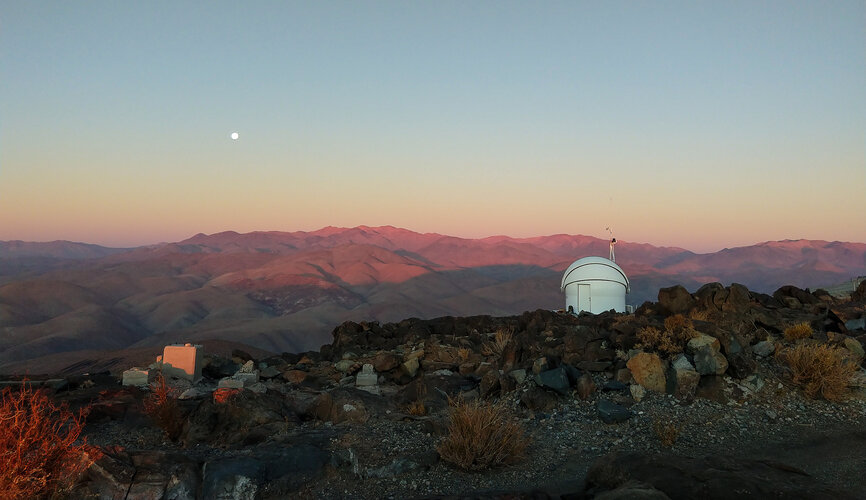
- ESA’s second Test-Bed Telescope has seen ‘first light’.
- It will help spot asteroids in space that could pose a risk to Earth.
- This telescope is the latest step towards ESA’s planned Flyeye telescope network.
- It is hosted at the European Southern Observatory’s La Silla Observatory in Chile.
‘Campfires’ offer clue to solar heating mystery

Computer simulations show that the miniature solar flares nicknamed ‘campfires’, discovered last year by ESA’s Solar Orbiter, are likely driven by a process that may contribute significantly to the heating of the Sun’s outer atmosphere, or corona. If confirmed by further observations this adds a key piece to the puzzle of what heats the solar corona – one of the biggest mysteries in solar physics.
Crew-1 splashdown delayed by weather
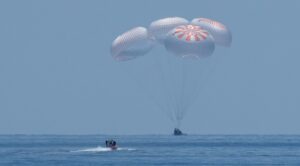
WASHINGTON — NASA and SpaceX are postponing the return of a Crew Dragon spacecraft by three days because of poor weather forecast in the splashdown location off the Florida coast.
NASA announced late April 26 that, in cooperation with SpaceX, it is postponing the return of the Crew-1 mission, which was scheduled to undock from the International Space Station April 28 and splash down in the Gulf of Mexico south of Tallahassee, Florida, later that day.
China launches space mining test spacecraft on commercial rideshare mission
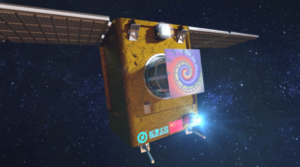
HELSINKI — China launched a small space mining test spacecraft and eight other commercial satellites into orbit on a Long March 6 rocket late Monday.
More patrols, fewer boaters for SpaceX splashdown Saturday
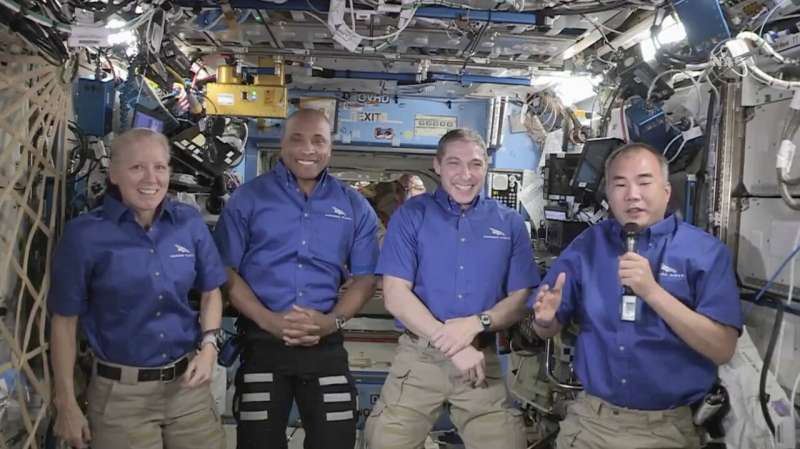
The astronauts flying SpaceX back to Earth this week urged boaters to stay safe by staying away from their capsule's splashdown in the Gulf of Mexico.
NASA and SpaceX are promising more Coast Guard patrols and fewer pleasure boaters for Wednesday afternoon's planned splashdown off the Florida panhandle coast near Tallahassee—the company's second return of a crew.
New ESA telescope in South America to search for asteroids
- ESA’s second Test-Bed Telescope has seen ‘first light’.
- It will help spot asteroids in space that could pose a risk to Earth.
- This telescope is the latest step towards ESA’s planned Flyeye telescope network.
- It is hosted at the European Southern Observatory’s La Silla Observatory in Chile.
Op-ed | How Elon Musk’s CO2 XPRIZE can fight climate change and advance space exploration
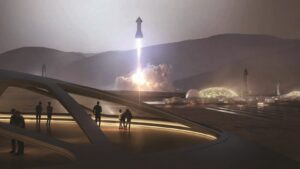
Elon Musk and XPRIZE recently announced a $100 million prize purse for economically scalable ideas to capture and sequester carbon dioxide (CO2). As of Earth Day 2021, registration for XPRIZE Carbon Removal now open. The hope is to inspire a global industry that will “collectively achieve” gigaton-scale removal of CO2 from Earth’s atmosphere.
York Space Systems building larger LX-CLASS satellite platform
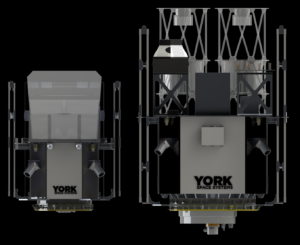
TAMPA, Fla. — Smallsat specialist York Space Systems is producing a larger satellite platform with double the payload volume of its current spacecraft bus in response to market demand.
The new LX-CLASS is designed to have a total mass of more than 350 kilograms, up from 180 kilograms for its flight-proven S-CLASS satellite platform.
African spaceports cut rocket fuel costs

Space is big business once again, Mars rovers and putative moon landings aside, there is an enormous need for geostationary satellites. With increasing traffic there is also a need for new sites for spaceports that might offer reduced energy costs and simpler launching of new satellites. Writing in the International Journal of Aerospace System Science and Engineering, a team from the Obasanjo Space Center in Abuja, Nigeria, suggest that African spaceports offer a scientifically and economically viable option.
Rocket propellant is the main constituent of launch weight largely irrespective of payload. Indeed fuel accounts for 90 percent of the launch cost. As such, any measures that might be put in place to reduce fuel requirements can offer substantial savings. A launch site close to The Equator would offer several benefits in terms of reducing fuel costs. Obviously, a stationary object on the equator is moving at almost 1700 kilometers per hour relative to a "fixed" reference in space because of the rotation of the earth. If you launch from north or south of the equator, this boost is lower. Halfway to the pole and the speed boost is only 1200 km/h.


