


NASA researchers bid farewell to 'flying laboratory' at Ames Research Center

For many NASA scientists, flying aboard a decked-out Douglas DC-8 plane provided them some unique glimpses of Earth: the Moai on Easter Island, Central Park in New York and Mount Vesuvius in Italy.
On May 15, some of the same scientists who worked on that "flying laboratory" looked on as it made one last flight over Ames Research Center in Mountain View before its retirement.
Reem Hannun, a research scientist in the atmospheric science branch, attended the flyover with her two children before taking them to school. As the twins played around the trees and commented on the big plane that flew close to the ground for them to see, she recalled how she got her start at NASA doing science and reading field measurements on the plane.
"It's just cool to see all these different measurements for atmospheric composition, and it's a great community to be a part of, and you get to travel the world doing science," Hannun said.
The plane, owned by NASA, was one of seven DC-8 planes still in operation internationally. Thomas Matthews, lead operations engineer for the aircraft and main mission director, said that NASA used the plane for 37 years, but the aging aircraft needed to be replaced as it was getting harder to sustain.
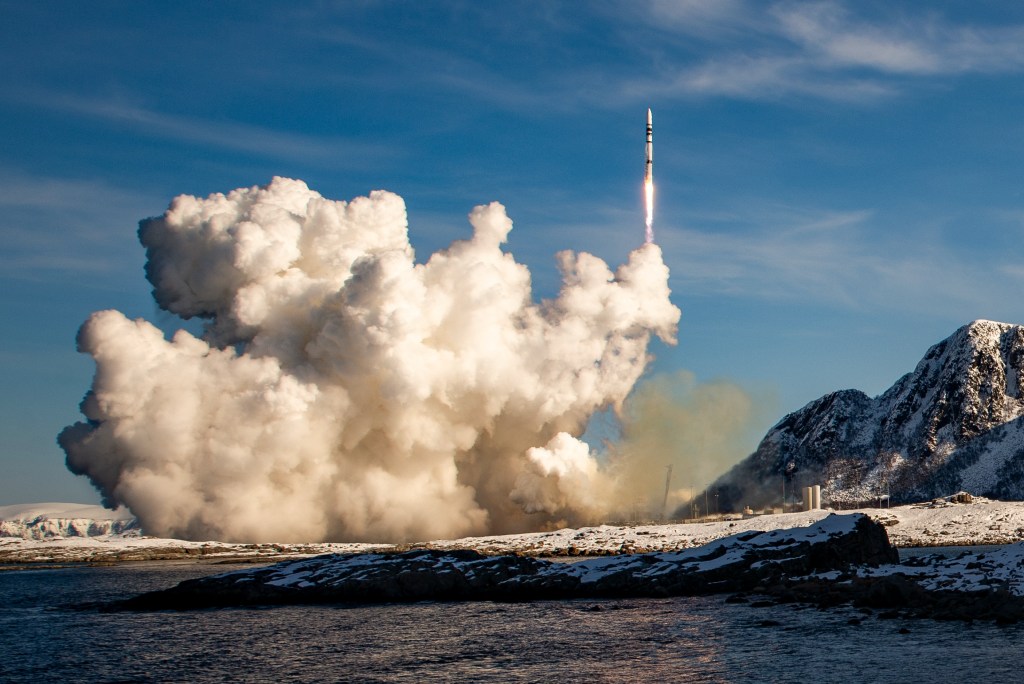
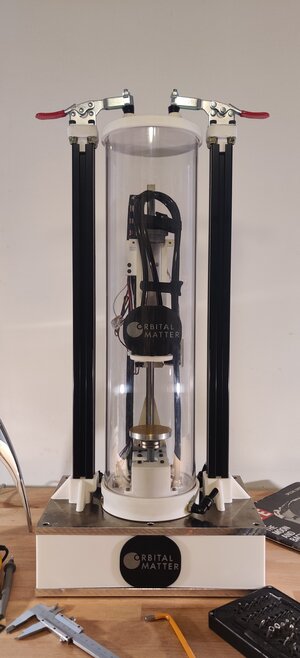
Ariane 6 launches Replicator – 3D printing in open space
Hera plus one: enter the CubeSat
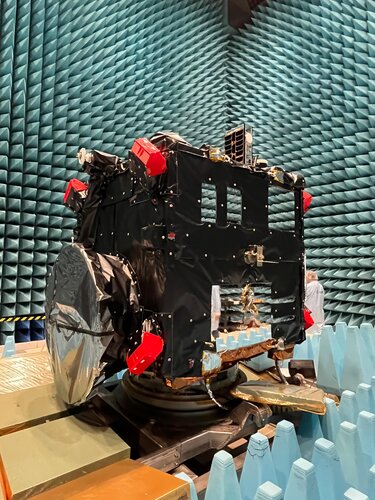 Image:
Hera plus one: enter the CubeSat
Image:
Hera plus one: enter the CubeSat Canada’s wildfire season begins
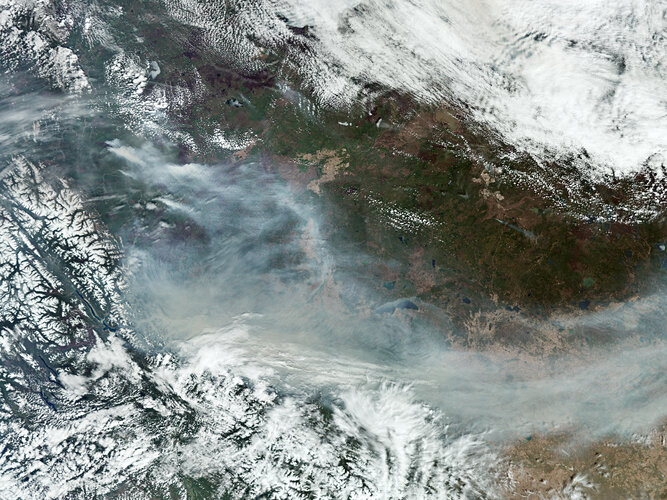
Wildfire season has arrived in full force in Canada, prompting evacuation orders and alerts in several towns in British Columbia and Alberta due to the danger of uncontrolled blazes.
Hazardous smoke from the fires has also triggered air quality alerts in Canada and the northern US. Satellite technology, including the Copernicus Sentinel-5P satellite and ESA’s Fire Atlas, plays a crucial role in monitoring these wildfires.
Protected: The Satellite Industry Will Answer the Demand for Telco Interoperability with Next Generation Ground Infrastructure
There is no excerpt because this is a protected post.
The post Protected: The Satellite Industry Will Answer the Demand for Telco Interoperability with Next Generation Ground Infrastructure appeared first on SpaceNews.
Webinar Replay – Space Loves AI: How AI promises to transform space operations


Inversion Space targets military market with ‘warehouses in space’


Q&A: Stellar insights—the Mauve mission's journey into the cosmos

In a quest to study the variety of stars in our galaxy, the Mauve mission has emerged to provide a stronger understanding of the characteristics of stars—including their magnetic activity, flare evolution, and influence on the habitability of neighboring exoplanets. Chuanfei Dong, an assistant professor of astronomy within Boston University's College of Arts and Sciences, is the lead Principal Investigator (PI) at BU for the Mauve mission.
"Mauve" refers to the UV satellite provided by Blue Skies Space that scientists will utilize in a multi-year collaborative survey program, which is slated to commence mission operations in 2025. The satellite will be instrumental in providing scientists with a rare chance to re-examine and analyze active stars, which have been beyond reach since observations ceased as early as 2013 with the Galaxy Evolution Explorer (GALEX).
In this Q&A, Dr. Dong shares his insights on the mission's objectives, technological innovations, and the potential implications for our understanding of stars and exoplanet habitability.
What inspired you to pursue research in your field, and how does your involvement in the Mauve mission align with your research interests? What aspect of the Mauve mission are you particularly excited for?
Government revenue and AT&T direct-to-smartphone agreement lift AST SpaceMobile