A year in training: ESA's new astronauts graduate
 Video:
00:05:16
Video:
00:05:16
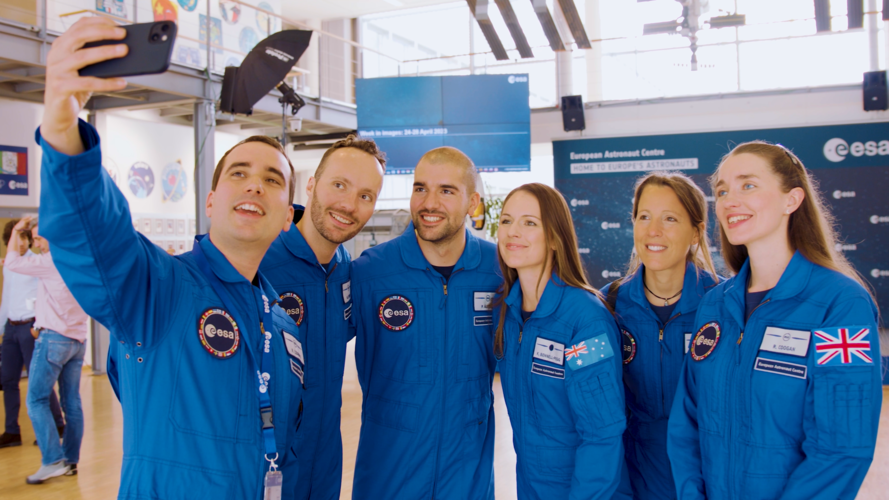
ESA's newly graduated astronauts reach the end of one year of rigorous basic astronaut training. Discover the journey of Sophie Adenot, Rosemary Coogan, Pablo Álvarez Fernández, Raphaël Liégeois, Marco Sieber, and Australian Space Agency astronaut candidate Katherine Bennell-Pegg. Selected in November 2022, the group began their training in April 2023.
Basic astronaut training provides the candidates with an overall familiarisation and training in various areas, such as spacecraft systems, spacewalks, flight engineering, robotics and life support systems as well as survival and medical training. They received astronaut certification at ESA’s European Astronaut Centre on 22 April 2024.
Following certification,
The Sun’s fluffy corona in exquisite detail
 Video:
00:00:48
Video:
00:00:48
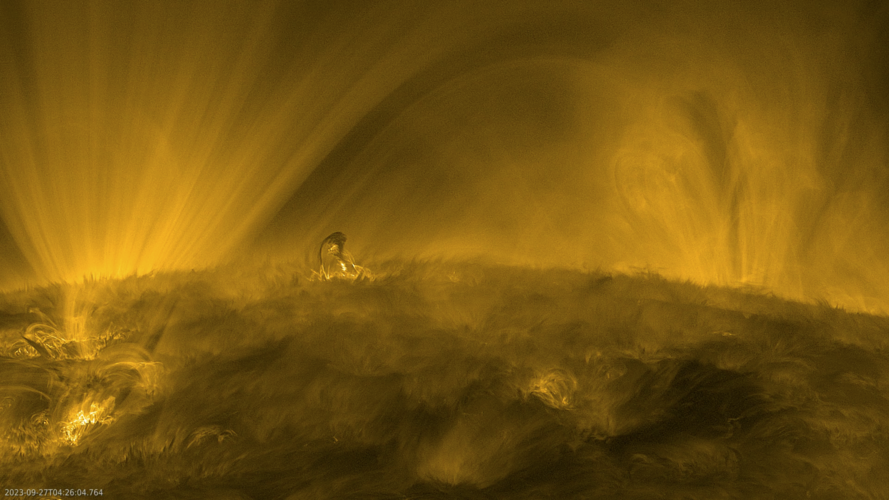
This otherworldly, ever-changing landscape is what the Sun looks like up close. ESA's Solar Orbiter filmed the transition from the Sun's lower atmosphere to the much hotter outer corona. The hair-like structures are made of charged gas (plasma), following magnetic field lines emerging from the Sun's interior.
The brightest regions are around one million degrees Celsius, while cooler material looks dark as it absorbs radiation.
This video was recorded on 27 September 2023 by the Extreme Ultraviolet Imager (EUI) instrument on Solar Orbiter. At the time, the spacecraft was at roughly a third of the Earth’s distance from the Sun, heading for a closest approach of 43 million km on 7 October.
On the same day that this video
NASA inspector general report highlights issues with Orion heat shield


Boeing's Starliner is about to launch - if successful, the test represents an important milestone for commercial spaceflight
 If all goes well late on May 6, 2024, NASA astronauts Butch Wilmore and Suni Williams will blast off into space on Boeing's Starliner spacecraft. Launching from the Kennedy Space Center, this last crucial test for Starliner will test out the new spacecraft and take the pair to the International Space Station for about a week.
Part of NASA's commercial crew program, this long-delayed missio
If all goes well late on May 6, 2024, NASA astronauts Butch Wilmore and Suni Williams will blast off into space on Boeing's Starliner spacecraft. Launching from the Kennedy Space Center, this last crucial test for Starliner will test out the new spacecraft and take the pair to the International Space Station for about a week.
Part of NASA's commercial crew program, this long-delayed missio Intercropping viable for optimizing vegetable production on Mars
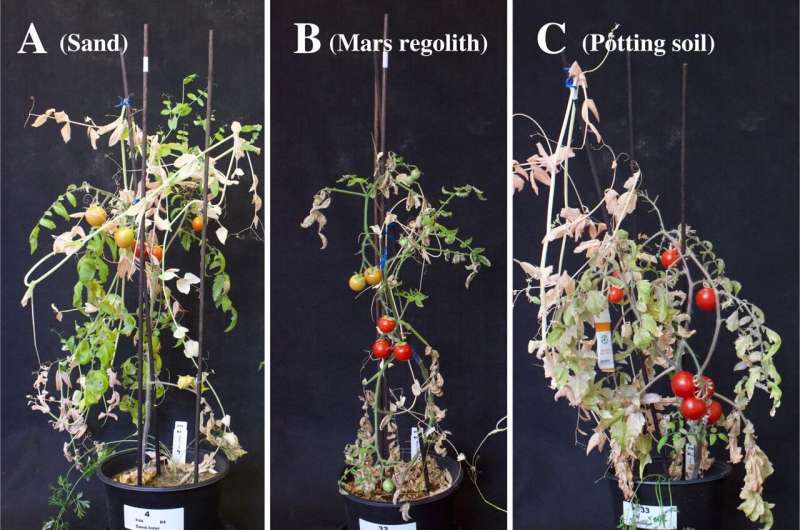
A group of crop systems analysts at Wageningen University and Research, in the Netherlands, has found evidence that intercropping on Mars could be a viable option for optimizing vegetable production.
In their study, reported in the open-access journal PLOS ONE, Rebeca Gonçalves, G. W. Wieger Wamelink, Peter van der Putten and Jochem B. Evers, grew test plants in simulated Martian soil in a greenhouse.
If humans are ever to going to build colonies on Mars, colonists will need to grow most of their own food sustainably. Hauling soil or fertilizer from Earth to prevent depletion of nutrients in soil is considered to be unsustainable by most in the habitability field. For this new study, the research team looked at the possibility of intercropping as a way to optimize vegetable production.
Ariane 6 stands tall for launch
 Video:
00:02:59
Video:
00:02:59
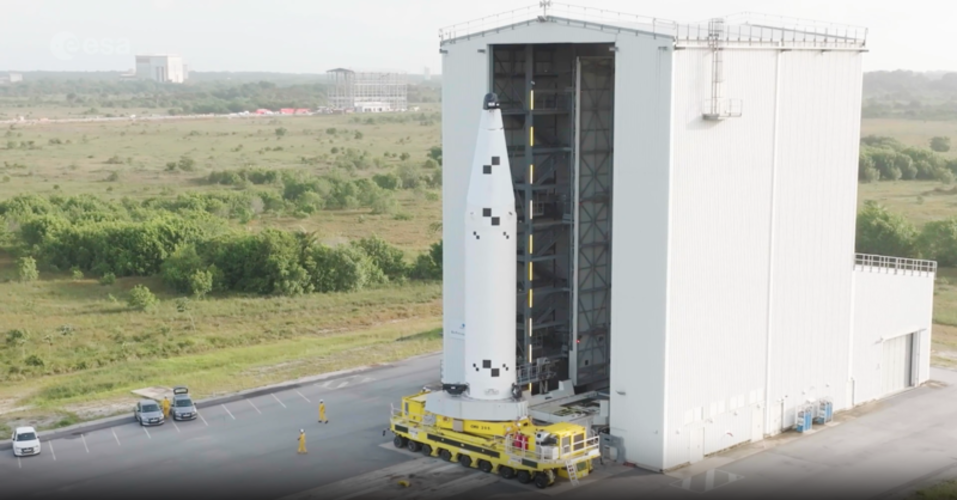
Last week, Ariane 6’s central core – the main body of the rocket – was stood tall at the launch zone and connected to its two solid-fuel boosters. This exciting moment means only one thing: it’s the start of the first launch campaign.
The main stage and upper stage make up the core stage, and they were autonomously driven at 3 km/h from the rocket assembly building to the launch pad, 800 m away. Then lifted by a crane, the Ariane 6 core was stood upright on the launch table.
The two boosters were transported to the launch pad
Space Force flexes muscle as Pentagon’s smallest but vital branch


SpaceX launches Maxar’s first WorldView Legion imaging satellites


Webinar – Space Loves AI: How AI promises to transform space operations

L3Harris scores payload contract for Millennium’s Foo Fighter missile tracking satellites