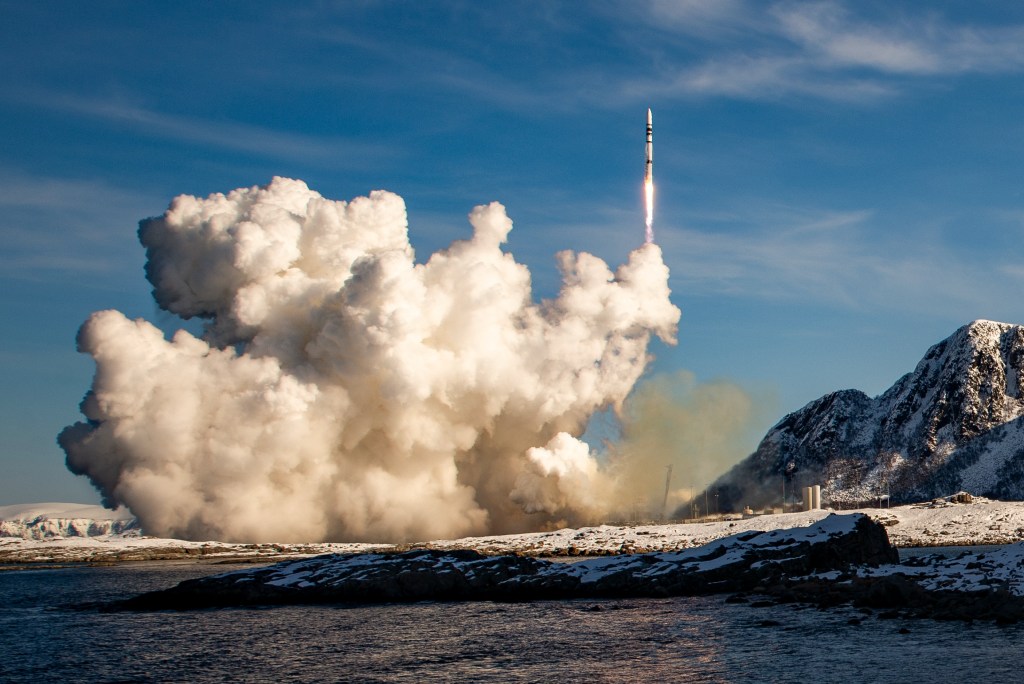
China selects new space missions including lunar far side astronomy and terrestrial exoplanet survey


Smiles all round: Vega-C to launch ESA solar wind mission
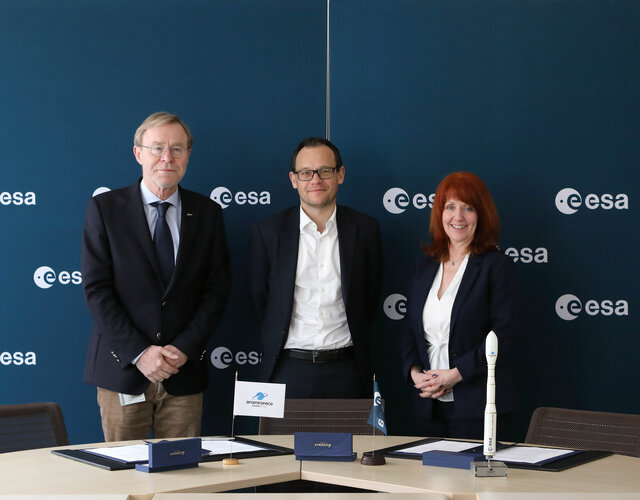
ESA ensures a ride into space for its Smile mission, with Arianespace signing up to launch the spacecraft on a Vega-C rocket
Portal Space Systems unveils plans for highly maneuverable spacecraft


Orbital congestion reaching critical levels, warns new report


Ariane 6 gets its wings
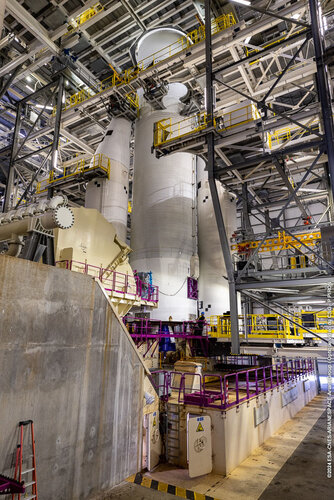 Image:
Ariane 6's boosters are connected to the rocket's central core
Image:
Ariane 6's boosters are connected to the rocket's central core Millennium Space lands $414 million contract to build missile-tracking satellites


Chinese astronauts return to earth after six months in space

NASA's Mars Sample Return mission is in trouble—but it's a vital step to sending humans to the red planet
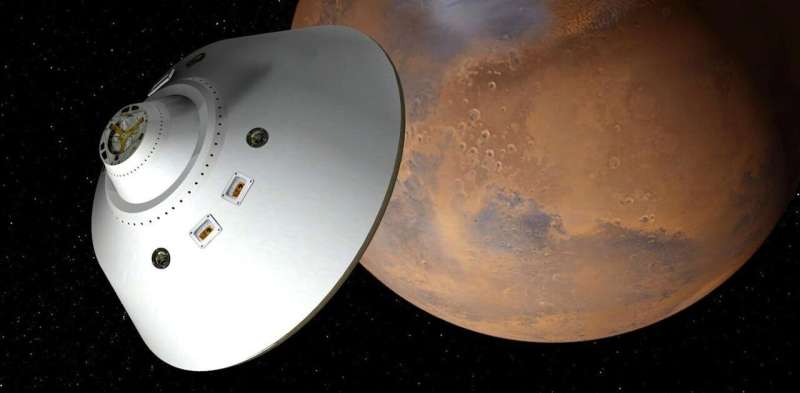
NASA recently asked the scientific community to help come up with innovative ideas for ways to carry out its Mars Sample Return (MSR) mission. This was in response to a report by an independent board that deemed that its US$11 billion (£8.7 billion) price tag was too expensive and its 2040 timeline too far in the future.
In brief, the ambitious plan was to collect rock samples cached inside containers by NASA's Perseverance rover and deliver them to laboratories on Earth. Perseverance has been exploring Mars' Jezero Crater, thought to have once hosted an ancient lake, since 2021. The mission would deliver the samples by sending a lander that carries a rocket (NASA's Sample Retrieval Lander) down to the surface of Mars.
Perseverance would then deliver the cached rock samples to the lander, with small drone helicopters delivered on the lander as a back up. Perseverance's samples would then be launched into Mars' orbit using the lander's rocket. A spacecraft already in Martian orbit, the Earth Return Orbiter, would then intercept these samples and deliver them to Earth.
Australian Government backs Space Machines Company in joint India mission to combat space debris
 Space Machines Company, a leading Australian in-space servicing firm, today announced Space MAITRI, a joint industry-led Australian-Indian mission to demonstrate progress towards space debris management and a sustainable space future.
The Space MAITRI project, funded by an $8.5 million grant from the Australian Government through the Australian Space Agency, is part of the International Sp
Space Machines Company, a leading Australian in-space servicing firm, today announced Space MAITRI, a joint industry-led Australian-Indian mission to demonstrate progress towards space debris management and a sustainable space future.
The Space MAITRI project, funded by an $8.5 million grant from the Australian Government through the Australian Space Agency, is part of the International Sp