
Total solar eclipse wows North America. Clouds part just in time for most
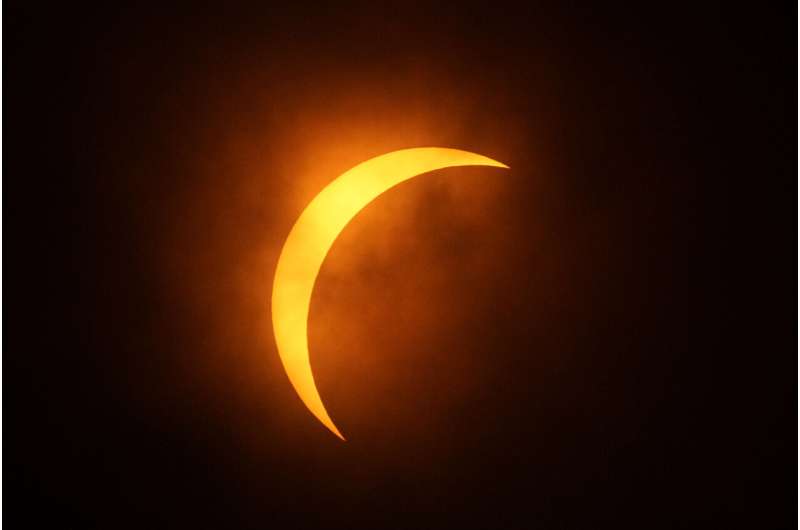
After beholding the midday darkness of a total solar eclipse that raced across the continent, thousands of spectators in New England were stuck seeing only brake lights Monday night as highway traffic backed up for hours.
Crowds of motorists leaving remote northern New Hampshire in the late afternoon clogged local roads leading to Interstate 93, which they found also thronged by cars inching southward. By midnight, some drivers had traveled only 50 miles (80 km) in nine hours.
The New Hampshire Department of Transportation urged patience and said there were about 22,000 more vehicles visiting the tiny state compared to the same time last year. Heavy traffic was also reported in Vermont and Massachusetts.
Proba-2 sees the Moon eclipse the Sun
 Video:
00:00:31
Video:
00:00:31
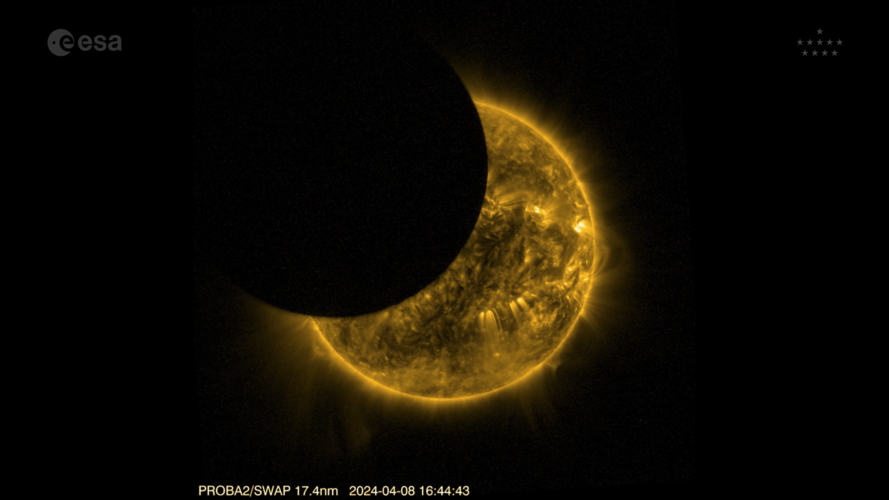
ESA’s Proba-2 captured two partial solar eclipses on 8 April 2024.
A solar eclipse occurs when the Moon passes between Earth and the Sun, totally or partially blocking the Sun from Earth’s point of view. On 8 April, lucky viewers across North America witnessed the Moon blocking out the Sun in its entirety for a few minutes, while those north and south of the ‘total eclipse path’ witnessed a partial eclipse.
Throughout the eclipse period, the Moon crossed Proba-2’s field of view twice, appearing as a partial solar eclipse. The satellite flies around 700 km above Earth’s
Ariane 6 launches: Robusta-3A for weather reports and radiation robustness
SpaceWERX initiative lends startups a crucial hand in tech validation


Delta eclipse flight: Here's what it was like
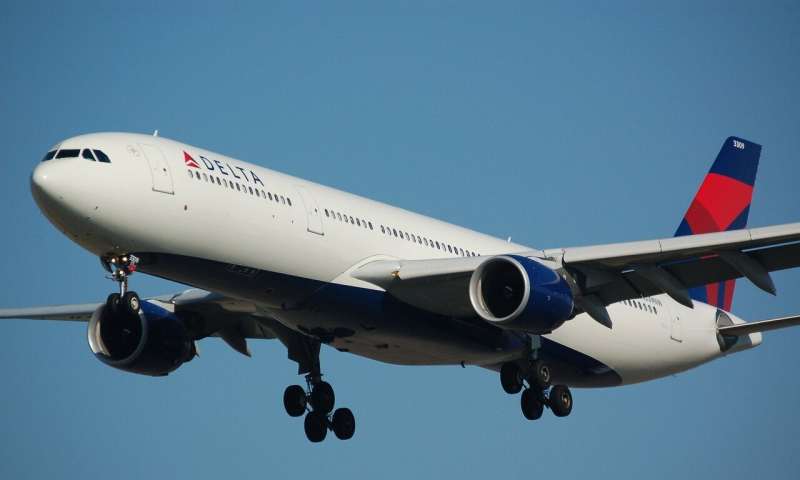
At 35,000 feet over the U.S. the air was thick with anticipation and excited chatter as everyone pulled out their phones hoping to get a photo.
Gray shadows entered the blue sky, turning it a rich slate as the moon started to eclipse the sun.
The moment everyone had been waiting for was here—totality.
Before even getting into the air Delta Air Lines treated passengers to an experience. As they arrived at gate E15 at Dallas Fort Worth International Airport for Flight 1010 to Detroit, they were met with a celestial-themed balloon arch, a red carpet and music.
Flight attendants in purple and gray passed out eclipse-viewing glasses the airline produced in collaboration with Warby Parker—paper shades but with blue-and-white star path drawings on the front and "Eyes on the Sky" written inside.
Delta workers wore T-shirts emblazoned with "Climbing the Cosmos," the airline's slogan for the pair of flights from Austin and Dallas that would be in the path of the eclipse 35,000 feet in the air.
People were excited, and the gate party only heightened the anticipation. Most passengers flew to Dallas that morning or the night before just to turn right around, all to experience totality in a way few others could.


Space Force budget inches upward in tight fiscal year


U.S. Space Command adopts multipronged approach to prepare for ‘a conflict that has never happened’


Russia aborts planned test launch of new heavy-lift space rocket