




json
{
“content”: “
The flinch is small. A shoulder tightens, a breath catches, the eyes dart for half a second toward the source of the sound. The person who raised their voice was laughing, or cheering at a game, or calling out a hello across the room. Nothing is wrong. But the body moved first, and the body had its reasons.
People who do this often spend years feeling embarrassed by it. They apologize for being jumpy. They make jokes about caffeine. What they rarely say out loud is that the reaction is not really about the volume in the room right now. It is about every other room where volume came first and something harder came second.
The reflex itself is not the problem
The acoustic startle reflex is one of the fastest motor responses the human body produces. A loud sound travels through the auditory nerve, hits the brainstem, and triggers a defensive contraction before the cortex has finished deciding what the sound even was. This is universal. Everyone has it. Research on the startle reflex shows it relies on subcortical pathways that bypass slower cortical processing entirely, which is why you cannot consciously decide not to flinch.
The interesting part is not whether the reflex fires. It is how easily it fires, and how long the body stays activated afterward.
That part is shaped by experience. The nervous system, like every learning system, calibrates itself to the environment it grew up in. If volume was usually neutral or pleasant, the threshold stays high and recovery happens quickly. If volume was usually a precursor to something else, the threshold drops and recovery takes longer.
What habituation actually does
Most nervous systems learn to tune out sounds that turn out not to matter. A door slams, nothing follows, the brain files it under harmless. After enough repetitions, the same sound stops producing much of a response at all. Neuroscientists call this habituation, and it is one of the oldest forms of learning known to biology.
A 2025 review in Frontiers in Molecular Neuroscience describes habituation as the ability to filter out irrelevant stimuli from important ones, suppressing responses to repetitive non-salient inputs. It is, in the words of the researchers, a prerequisite for more complex types of learning. Without it, the brain cannot decide what to ignore, and everything competes for attention at full volume.
The trouble is that habituation depends on the stimulus actually being irrelevant. If a loud voice in childhood usually preceded something painful, even occasionally, the nervous system stops habituating. It does the opposite. It sensitizes. Every loud voice becomes a signal to brace.
The difference between sensitivity and learning
This is where the framing of oversensitivity falls apart. Calling someone oversensitive implies the response is excessive relative to reality. But the response is not excessive relative to the reality the body learned. It is precisely calibrated to a different environment, an earlier one, where the prediction was usually correct.
The nervous system is not malfunctioning. It is running an outdated model.
Studies measuring acoustic startle activity have used it as a window into autonomic regulation precisely because it reveals what the body has learned to expect. People with conditioned threat responses show heightened reactivity, slower habituation, and stronger physiological aftereffects from the same sound that barely registers in someone else.
None of this is willpower. None of it is character.
Why excitement reads the same as anger
One of the cruel features of this calibration is that the body cannot always tell the difference between excited volume and angry volume. Both are loud. Both rise quickly. Both come with sharp edges and unpredictable pacing. The cortex eventually sorts it out, but the brainstem has already fired.
This is why someone can flinch when a friend cheers at a touchdown, then feel foolish about it three seconds later when the cortex catches up. The cortex knows the friend is happy. The brainstem only knew the sound profile, and the sound profile matched something old.

People who grew up around volatile adults often describe this as a delay between the body’s reaction and the brain’s recognition. The body moves first because the body has been moving first for years. It learned that waiting for confirmation was too slow.
The role of prediction in the nervous system
Modern neuroscience increasingly frames the brain as a prediction machine. It does not respond to the world as it is. It responds to what the world is most likely about to be, based on prior experience. The startle response is one of the clearest demonstrations of this principle in action.
Research on pre-pulse inhibition in mice shows that even a quiet sound delivered just before a loud one can dramatically reduce the startle response, because the nervous system uses the first signal to predict and prepare for the second. The body is constantly pre-loading its response based on what came just before.
If your childhood pre-loading went something like volume-then-yelling, volume-then-slammed-door, volume-then-someone-leaving, the prediction model gets very efficient at one thing. Bracing.
It is also worth saying that this kind of prediction is not unique to people who grew up in loud homes. Some people learn the same lesson from quiet homes where volume only ever appeared during the worst moments. The trigger is not loudness as such. It is the association between loudness and what tended to follow it.
The body keeps the schedule even after the schedule changes
Adults who carry this calibration into their thirties and forties often find themselves in environments that look nothing like the one their nervous system was trained for. Their colleagues are warm. Their partners are kind. The friend cheering at the game has never raised a hand or a cruel word in their life.
And still, the flinch.
This gap between current life and inherited reflex is one of the most disorienting parts of growing up around volatility. The world has changed. The body has not received the memo. Work on the locus coeruleus, the brainstem region that regulates arousal and physiological reflexes, suggests that these systems are slow to update once they have been tuned toward vigilance. They were not designed for fast updating. They were designed to keep you alive in the environment that produced them.
The good news, buried in the same research, is that they do update. Just slowly, and through accumulated evidence rather than insight.
The cost of running an old model
Living with a startle threshold set too low has consequences beyond the flinch itself. The body spends energy on threat assessment that should be going elsewhere. A study using fNIRS and thermal imaging found that startle responses produce measurable shifts in prefrontal cortical activation and facial blood flow, with cognitive performance affected for some time afterward. The cost is not just the moment of the flinch. It is the recovery curve.
People who startle easily at volume often describe a kind of low-grade tiredness in social settings. They are not antisocial. They are running a security system in the background that other people get to leave switched off.
This connects to a pattern Space Daily has explored in adults who replay conversations for hours afterward. Same logic, different surface behavior. The system that learned to scan tone is the same one that learned to scan words. Both are vigilance, just calibrated to different inputs.
Why the flinch is not weakness
There is a tendency, especially among people who have done this their whole lives, to treat the flinch as evidence of being broken. It is not. It is evidence of having paid attention. A child who learned to read volume as a leading indicator of harm was doing something cognitively sophisticated. They were building a model of their environment that allowed them to react faster than the threat could land.
That model probably helped them. It probably kept them safer than they would have been without it.
The fact that the model is now outdated does not retroactively make it stupid. It just means the work now is different. The work is not unlearning the response. The work is letting new evidence accumulate slowly enough for the prediction model to update.
What actually helps
The research on habituation suggests that the nervous system updates through repetition without consequence. Loud voice, nothing bad happens. Loud voice, nothing bad happens. Loud voice, someone laughs and the laughter keeps being just laughter. Hundreds of times. Thousands.
This is slow work, and it cannot be rushed. Quantitative studies of startle response show that habituation depends on consistent, repeated exposure to the stimulus in the absence of the feared outcome. Insight does not produce it. Reading articles does not produce it. Time and accumulated counter-evidence does.
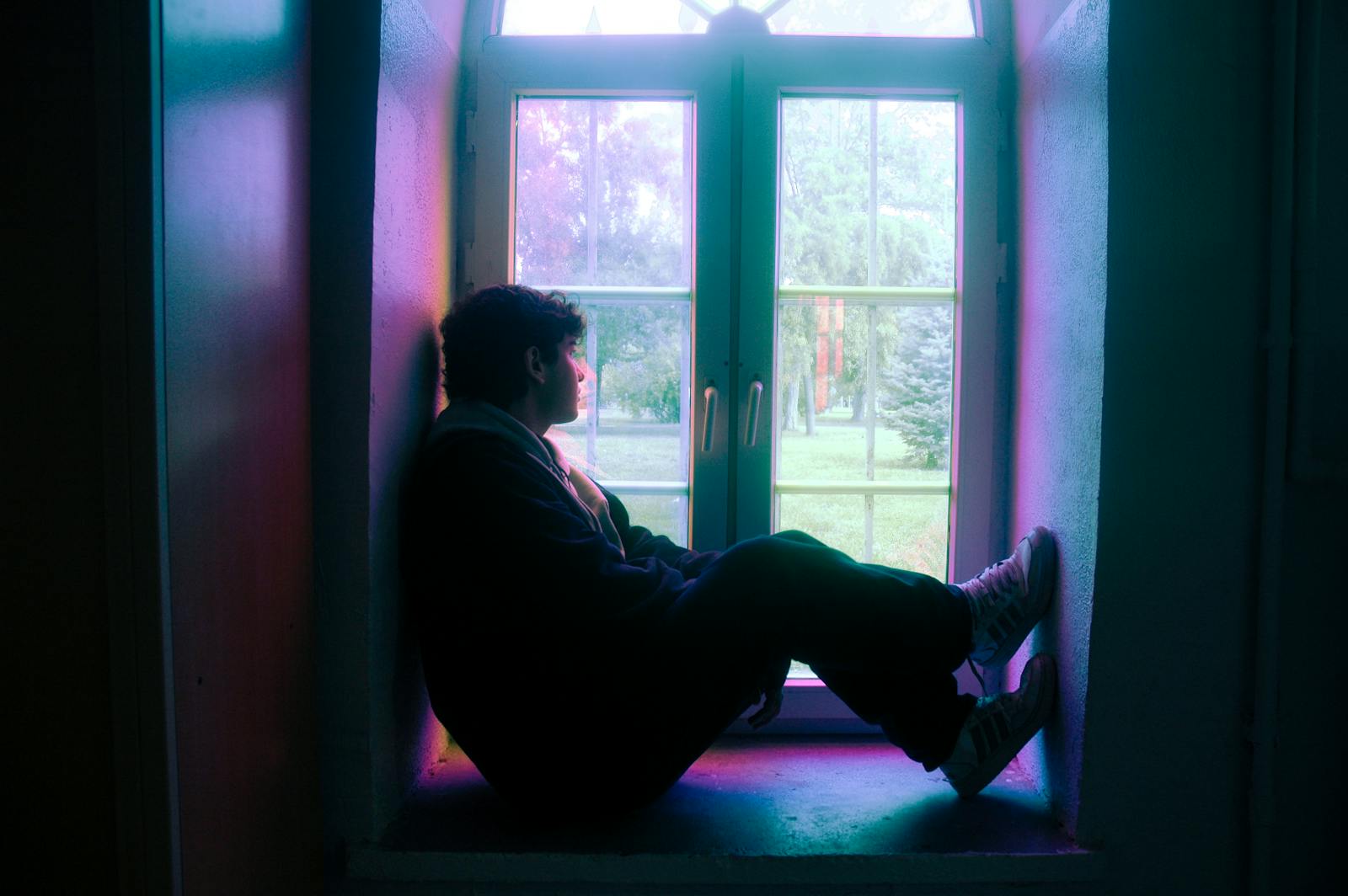
What does help, in the meantime, is naming it. Knowing why the body is doing what it is doing changes the relationship between the conscious mind and the reflex. Instead of feeling ashamed of the flinch, the person can recognize it as old data and let it pass without adding a second layer of distress on top.
This is the same logic underneath my recent piece on adults who apologize for things that were not their fault. The behavior looks like a flaw in the present. It is actually a strategy that was once adaptive. Treating it as a flaw misses the whole point of what the nervous system was trying to do.
Telling the people who love you
One small thing that helps is letting the people closest to you know. Not as a complaint, just as information. If a partner knows that sudden excitement reads as alarm to your body for half a second, they can give a beat of warning before they cheer at the screen. Not because the flinch is dangerous. Because being known reduces the loneliness of the response.
Most people who flinch at volume have spent their lives apologizing for it or hiding it. The act of saying out loud, this is what my body does and here is why, often does more for the recovery curve than any technique.
The shape of the work
The flinch will probably never disappear entirely. The reflex is wired too deep, and the years of pairing volume with threat were too consistent. What changes is the recovery time, the shame around it, and the willingness to stay in rooms where loud excitement happens.
People who do this work often describe a moment, somewhere in their forties or fifties, when they realize they did not flinch at something they would have flinched at ten years earlier. Not because they tried harder. Because the body finally collected enough evidence that the loud voice was not the warning anymore.
That is what habituation looks like in real life. Slow, unspectacular, and mostly invisible until one day you notice it has happened.
The nervous system was not oversensitive. It was attentive. It learned what it needed to learn in the environment that taught it. The fact that it is still learning, still updating, still capable of letting a cheer be just a cheer, is the part worth paying attention to.
“,
“excerpt”: “Some mental health professionals suggest that people who flinch at raised voices may have nervous systems that learned to associate volume with danger based on past experiences.”,
“imageSearchHints”: [“friends laughing dinner table”, “person calm window light”]}
Photo by Pressmaster on Pexels