
Op-ed | What could happen to the LEO broadband constellations?
LEO broadband constellations will greatly exceed their budgets. Still, because the titans of technology and institutions backing most of these systems have extremely deep pockets, we shouldn't expect any of these systems to disappear unless their backers decide to back out.
South Korea, Australia sign MOU on space cooperation

South Korea and Australia agreed to work together to improve capacities in space situational awareness, Earth observation, space traffic and debris management.
Interview: Japanese tourist says space trip 'amazing'
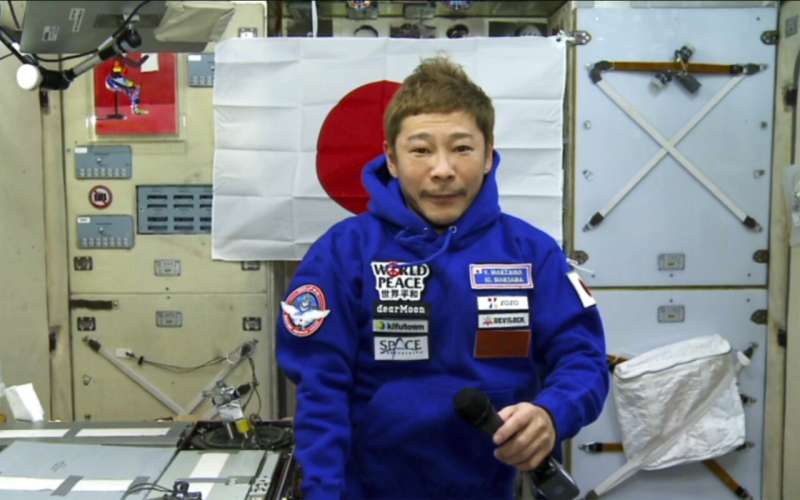
A Japanese space tourist on Monday rejected criticism from those who questioned his decision to pay a fortune for a trip to the International Space Station, saying the "amazing" experience was worth it.
Bundle up for the 2021 Geminid meteors
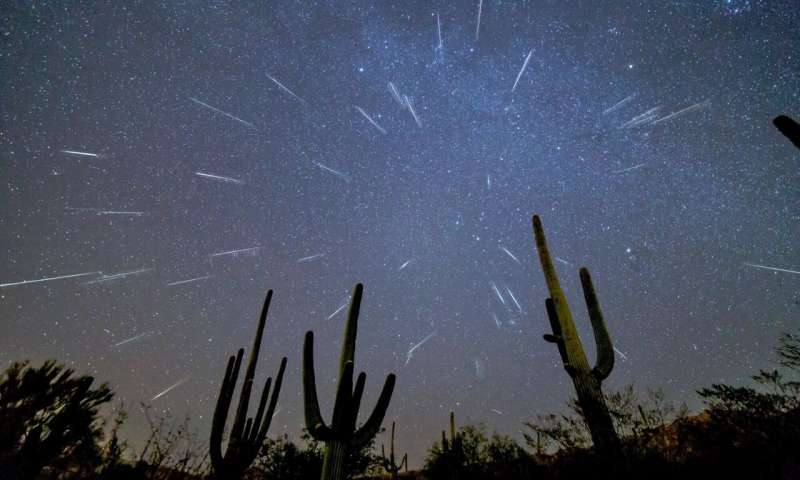
Ready to brave the cold? If you're like us, you haven't wasted an early clear sky morning to get out and see Comet C/2021 A1 Leonard before it heads southward. The coming days offer another early AM celestial sight: the Geminid meteors. To be sure, 2021 sees the Geminid meteors transpire under somewhat challenging conditions. But fear not: With a little planning and patience, you too can witness the "Tears of the Twins."
Circumstances for 2021: First, the bad news: the Geminids peak this year on Tuesday, December 14 at 7:00 Universal Time (UT) or ~2:00 AM EST, just over four days prior to full moon on the 19th. This puts the moon at 80 percent illumination waxing gibbous, meaning there's a narrow window of 'true darkness' between moonset and the beginning of dawn. For example, here in Norfolk, Virginia at latitude 37 degrees north, the moon sets at 2:53 AM EST on the 14th, and dawn begins at 5:37 AM EST just a few hours later.
New launch vehicles face schedule pressure
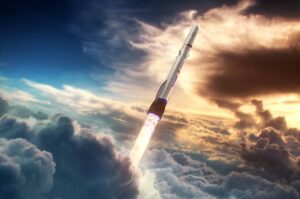
Executives of two launch companies insisted their vehicles will be ready for their inaugural flights in 2022 while a third acknowledged their new vehicle’s first flight will likely slip beyond the end of next year.
Spelunking on the moon: New study explores lunar pits and caves
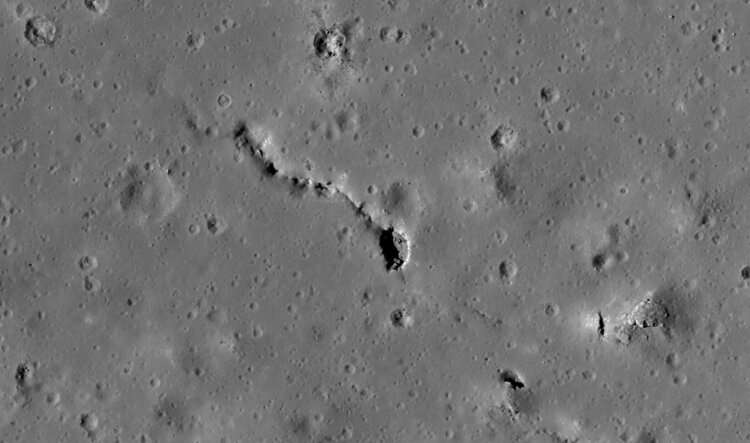
The moon may be a mostly uniform expanse of gray, but if you look closely, you can still find a few nooks and crannies in its surface, from deep trenches to pits and maybe even caves.
Now, researchers at CU Boulder have set out to explore what the environment might be like inside some of these shadowy features—many of which are too dark to see clearly from orbit.
The team's preliminary results suggest that pits and caves on the moon showcase remarkably stable conditions. They don't seem to experience the wild swings in temperature that are common at the moon's surface, said Andrew Wilcoski, a graduate student in the Department of Astrophysical and Planetary Sciences at CU Boulder. He will present the group's initial findings Friday at the American Geophysical Union fall meeting in New Orleans.
"If we're hoping to send people into these caves in the decades ahead, we want to know what they should expect down there," said Wilcoski, a co-author of the new research.
Satellite operators criticize “extreme” megaconstellation filings
Established satellite operators expressed their frustration at the wave of filings for enormous satellite constellations, arguing nations need to step forward and establish rules to curtail such systems.
BlackSky to begin transition to higher-resolution imaging satellites in 2023

With 12 satellites currently in orbit, BlackSky plans to add two or four more next year before it transitions to a higher-resolution spacecraft in 2023.
Double drop test success for ExoMars parachutes
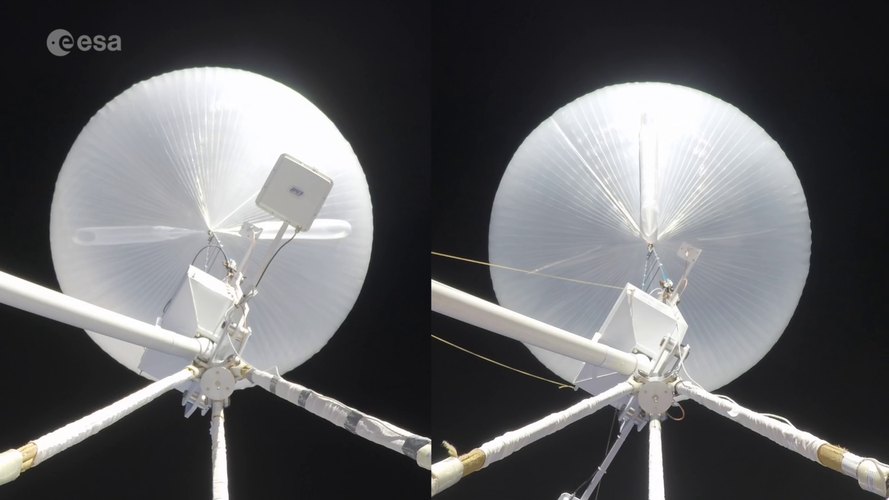
The largest parachute set to fly on Mars has completed its first successful high-altitude drop test, a critical milestone for ensuring the ExoMars mission is on track for launch in 2022. Both the first and second stage parachutes have now successfully flown this year.
ESA Highlights: images and achievements from 2021

ESA Highlights: images and achievements from 2021
ESA Highlights 2021 is available online in this interactive format, which can be read on your desktop computer, laptop, tablet or phone.