Aeolus paves the way for future wind lidars in space
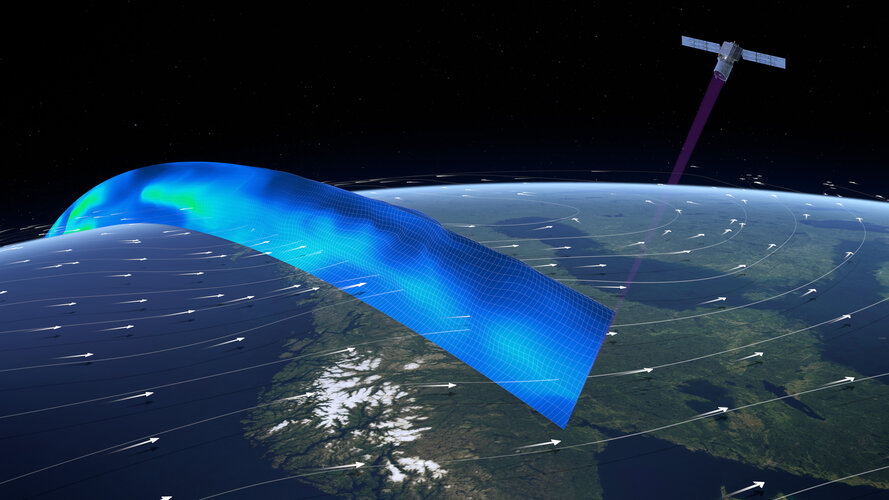
It’s hard to believe that ESA’s Aeolus wind mission has now been orbiting Earth for three years and, remarkably, exceeded its design life milestone. Aeolus has gone way further than its original goal of demonstrating that ground-breaking laser technology can deliver global profiles of the wind; its data are being distributed to weather forecasting services across the world in less than three hours of measurements being made in space. Moreover, Aeolus has laid the foundation for future Doppler wind lidar satellite missions.
Albedo wins license to sell 10-centimeter imagery
Earth observation startup Albedo was granted a National Oceanic and Atmospheric Administration license to sell commercial optical imagery with a resolution of 10 centimeters per pixel.
Space traffic control startup Kayhan Space raises $3.7 million in seed funding

WASHINGTON — Kayhan Space, a startup based in Boulder, Colorado, announced Dec. 14 it has closed a $3.75 million seed funding round. The company developed a space traffic control system for satellite operators to help prevent collisions in Earth’s orbit.
Rocket Lab to acquire SolAero Holdings
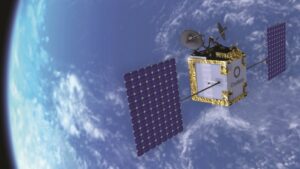
Rocket Lab announced Dec. 13 that it is acquiring solar power system manufacturer SolAero Holdings, the latest in a series of acquisitions by Rocket Lab of component developers.
Locked in stone: Mars' missing water might be stored in clay mineral
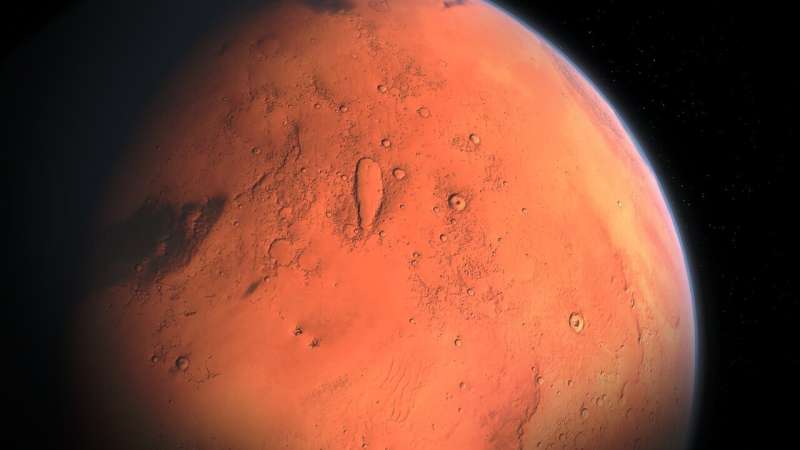
A clay mineral known as smectite could hold a substantial portion of the water missing from Mars, according to new research from Binghamton University, State University of New York.
Rivers and streams once flowed across the surface of Mars, etching channels still evident on the planet's surface today. Water in lakes once lapped ancient shores. But today, Mars' red sands appear bone-dry. Where did all that water go?
Some of that water is trapped in the planet's polar ice caps, which behave like stone due to Mars' frigid temperatures. The rest may have gone underground, locked inside clay minerals such as smectite.
New research from Binghamton University Geological Sciences and Environmental Studies Professor David Jenkins and former graduate student Brittany DePasquale provides information on how deep smectite could occur in the surface rocks of Mars. They found that iron-rich smectite, the least-stable form of smectite, can form to depths up to 30 km, much deeper than others might have predicted. In view of this rather robust stability for smectite, it appears that clay minerals are able to receive and store the missing water on Mars.
Video: Double drop test success for ExoMars parachutes
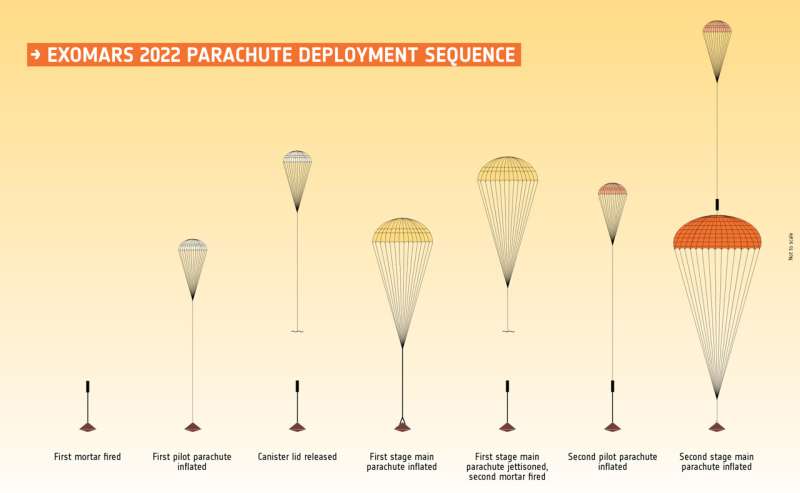
The largest parachute set to fly on Mars has completed its first successful high-altitude drop test, a critical milestone for ensuring the ExoMars mission is on track for launch in 2022. Both the first and second stage parachutes have now successfully flown this year.
A pair of high-altitude drop tests took place in Oregon on 21 November and 3 December as part of the ongoing parachute testing to ensure the safe delivery of the ExoMars Rosalind Franklin rover and Kazachok lander to the surface of Mars in June 2023.
HyspecIQ selects advisors, offering clues to early applications

HyspecIQ is beginning to fill out its advisory board, a move that offers clues to the hyperspectral imagery applications the startup plans to address.
Space traffic analytics startup Kayhan Space raises $3.7 million in seed funding
WASHINGTON — Kayhan Space, a startup based in Boulder, Colorado, announced Dec. 14 it has closed a $3.75 million seed funding round. The company developed a cloud-based collision-avoidance software service for low Earth orbit satellite operators.
BlackSky to begin transition to higher-resolution imaging satellites in 2023

With 12 satellites currently in orbit, BlackSky plans to add two or four more next year before it transitions to a higher-resolution spacecraft in 2023.
NASA enters the solar atmosphere for the first time, bringing new discoveries
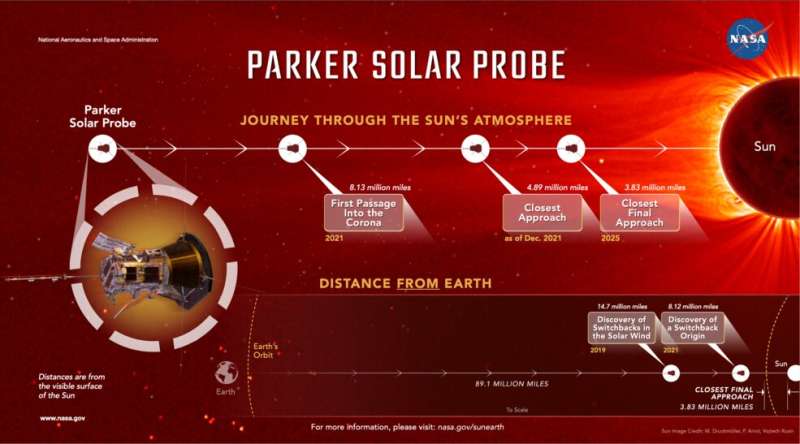
For the first time in history, a spacecraft has touched the Sun. NASA's Parker Solar Probe has now flown through the Sun's upper atmosphere—the corona—and sampled particles and magnetic fields there.
The new milestone marks one major step for Parker Solar Probe and one giant leap for solar science. Just as landing on the Moon allowed scientists to understand how it was formed, touching the very stuff the Sun is made of will help scientists uncover critical information about our closest star and its influence on the solar system.