



I keep a folder on my laptop labeled “missions that justified themselves.” Cassini-Huygens lives at the top of it. Not because the science was prettier than other deep-space programs (though it was), but because as a former Senate Commerce staffer who watched flagship missions get knifed in budget markups, I understand how rare it is for a single spacecraft to outlive the political coalition that funded it and still keep producing results nine years after it burned up in a planet’s atmosphere. That’s what Cassini did. A paper published this month in Nature Communications, drawing on data the spacecraft collected between 2004 and 2010, just rewrote part of what we thought we knew about how giant planets interact with the solar wind. The mission ended in 2017. It is still teaching us things.
That is the frame I want to hold throughout this piece. Cassini-Huygens was not a single experiment. It was an institutional bet, made in the late 1980s and locked in across four presidential administrations, that a long-duration orbiter at Saturn carrying a European-built lander for Titan would generate decades of returns. The bet paid off. The reason it paid off has as much to do with how the mission was structured politically as with what its instruments could see.
Act One: The mission Congress almost killed
Cassini-Huygens was approved in 1989, launched in 1997, and arrived at Saturn in 2004. Between approval and launch, it nearly died at least three times. The Clinton-era Office of Management and Budget treated flagship planetary science the way it treated any other discretionary line: as a target. What saved Cassini was the European Space Agency’s commitment to the Huygens probe and the Italian Space Agency’s contribution to the high-gain antenna. Killing Cassini would have meant breaking treaty-level commitments with two allied space programs. That is not a fight a White House picks lightly, and Congress knew it.
This is the part of mission history that gets edited out of the picture-book retrospectives. International partnerships are not just scientifically generative. They are politically protective. They convert a domestic budget line into a diplomatic obligation, and obligations survive continuing resolutions in ways that pure NASA programs often do not. When you read about Cassini’s twenty-year journey from launch to plunge, you are reading about a spacecraft that lived as long as it did partly because the European Space Agency had skin in the game.
The same logic shaped the mission’s ending. On September 15, 2017, Cassini executed a controlled plunge into Saturn’s atmosphere. The mission ended after twenty years from launch, including thirteen years in Saturn orbit. The decision to destroy the spacecraft rather than park it in a stable orbit was driven by planetary protection: NASA could not risk a dead Cassini eventually crashing into Enceladus or Titan and contaminating a potentially habitable environment with terrestrial microbes that had hitchhiked from Earth.
That decision is worth sitting with. NASA chose to destroy a working spacecraft, one that could have continued returning data for years, to preserve the scientific value of two moons it had only barely begun to study. That is a long-horizon institutional choice. It assumed that future missions would actually go back. It assumed that protecting Enceladus’s chemistry in 2017 was worth the marginal data loss, because in 2040 or 2050 someone would land there and need a clean sample.
I have sat in enough budget meetings to know how unusual that kind of decision is. The default institutional incentive in any agency is to extract every dollar of value from existing assets, because the next asset is never guaranteed. Cassini’s Grand Finale was a bet against that incentive, and it required mission leadership to convince Congress and OMB that throwing away a functioning spacecraft was the responsible move.
Act Two: The discoveries that justified the bet
On January 14, 2005, the Huygens probe separated from Cassini and descended through Titan’s atmosphere for two and a half hours before landing on a surface nobody had ever seen. It returned data for another 72 minutes from the ground. That sequence remains the most distant landing humanity has ever pulled off. It was built by ESA, carried by a NASA orbiter, and it produced the first direct measurements of the chemistry of a world that looks, from orbit, like a frozen mirror of early Earth.
Titan has weather. It has rivers, lakes, and seasonal rainfall, all of methane and ethane rather than water. It has a thick nitrogen atmosphere, a dune-covered equator, and a subsurface water ocean. Before Huygens, all of that was theory. After Huygens, it was geology. The probe gave planetary scientists a calibration point for every model of hydrocarbon cycles on cold worlds, and it is the reason Dragonfly, the rotorcraft mission scheduled for Titan in the 2030s, exists as a funded program rather than a concept paper.

The Enceladus discovery is the one that rewrote the planetary science decadal survey. In 2005, Cassini’s magnetometer detected a strange bending of Saturn’s magnetic field near the small icy moon. That led to targeted flybys, which led to the imaging team capturing plumes of water ice erupting from the south polar region. By 2008, Cassini had flown directly through those plumes and tasted them. They contained water, salts, organic molecules, and molecular hydrogen, the last of which strongly implied hydrothermal activity on the seafloor of a global subsurface ocean.
That sequence of discoveries did something the astrobiology community had been arguing for but could not previously demonstrate: it proved that liquid water habitats exist beyond the traditional habitable zone, beyond Earth’s neighborhood, on bodies small enough that nobody had bothered to model them seriously. Enceladus is roughly 500 kilometers across. It should be a frozen rock. Instead it is a chemistry experiment with a heat source, and Cassini flew through its exhaust.
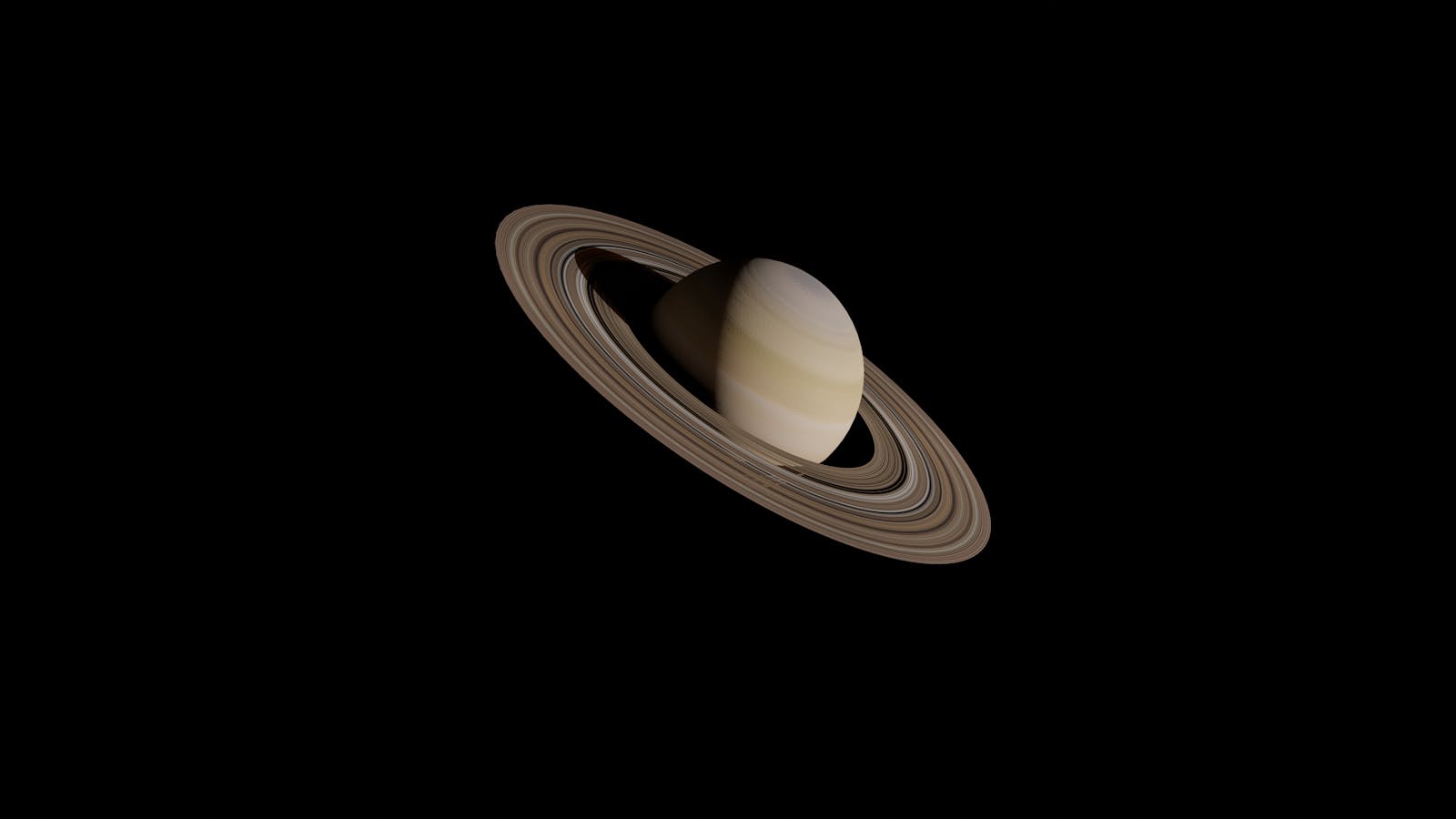
The 22 final orbits between Saturn and its rings, the so-called proximal orbits, were a separate scientific campaign in their own right. Cassini’s final image campaign captured the planet, its rings, and its moons from angles no spacecraft had ever achieved. More importantly, the proximal orbits let Cassini measure Saturn’s gravitational and magnetic fields with a precision impossible from a wider orbit, finally pinning the planet’s rotation rate at roughly 10.7 hours, a number Voyager could not nail down.
Act Three: A legacy that keeps compounding
This is why the recent Nature Communications result on Saturn’s magnetosphere matters institutionally. A team led by Dr Yan Xu and including researchers from University College London and Lancaster University found that Saturn’s magnetic cusp, the opening where solar wind particles can slip into the planet’s atmosphere, sits in the afternoon sector rather than at noon as it does at Earth. According to the research summary, the asymmetry comes from Saturn’s rapid rotation combined with the plasma supplied by Enceladus itself. The moon is not just an astrobiology target. It is a mass-loading source large enough to reshape the magnetic environment of an entire giant planet.
Andrew Coates of UCL described the finding as critical evidence for a long-held theory that the rapid spin of massive planets with active moons replaces the solar wind as the dominant force shaping their magnetospheres. The dusk-shifted cusp lines up with patterns previously reported at Jupiter, suggesting both planets share a magnetospheric regime driven by internal dynamics rather than the solar wind. If that pattern holds, the Earth-centered model of magnetospheric behavior that has dominated textbooks since the 1960s may be a special case. The general case may look more like Saturn and Jupiter, which has direct consequences for how we model magnetized exoplanets, the vast majority of which are rapidly rotating gas giants.
Why did this take until 2026 to publish? Because Cassini generated more data than any planetary mission in history, and the analytical infrastructure to mine it properly is still catching up. That kind of careful statistical work does not happen on mission timelines. It happens on academic timelines, which run on graduate students and postdoc cycles, and which produce results long after the spacecraft itself is gone.
This is the unglamorous truth about flagship missions. The science return curve does not end at end-of-mission. It often peaks years afterward, once the data archive has been ingested, cross-referenced, and re-examined by people who were undergraduates when the spacecraft launched.
What Cassini’s model means for the missions still to come
NASA’s planetary science decadal survey released in 2022 ranked an Enceladus Orbilander as a top priority for the late 2030s. ESA is scoping a separate Enceladus mission concept. The Dragonfly rotorcraft is in development for Titan. Cassini’s twenty-year mission made all of these programs politically feasible by demonstrating that the Saturn system contains targets worth a decade of investment. The new magnetosphere paper even changes the engineering brief: if you are building an Enceladus orbiter, the radiation environment you design against just got revised.
I wrote earlier this week about Astrobotic’s Chakram burn and the moment a propulsion technology stops being a research project and starts being a procurement category. Cassini-Huygens represents the same kind of transition for ocean-worlds science. Before Cassini, the search for habitable environments beyond Earth was an Earth-and-Mars story with a few speculative footnotes. After Cassini, it is a story about Enceladus, Europa, Titan, and a half-dozen other icy moons whose subsurface oceans are now the central organizing question of astrobiology.
That shift was not inevitable. It required a flagship mission to survive twenty years of political turbulence, deliver data good enough to convert hypothesis into evidence, and end in a way that protected the targets it discovered. Cassini ended its mission in 2017, and it is still changing how scientists think about the Saturn system in 2026.
That is the model the next generation of flagships has to be built on. Not the launch. Not the arrival. Not even the controlled plunge. The justification is the third paper, the seventh paper, the fortieth paper, written by people who were not yet hired when the spacecraft left Earth. The Enceladus Orbilander, the ESA follow-on, the missions that will be scoped in the 2030s decadal: they will succeed politically only if their architects internalize what Cassini proved. International partners convert budget lines into treaty obligations. Planetary protection decisions made today determine what science is possible in 2050. And the data archive you build is infrastructure that will outlive everyone who built it. Cassini-Huygens is the template. The agencies that learn to copy it will own the next century of outer-planets science. The ones that do not will keep losing flagships in budget markups, and wondering why.
Photo by Mahmoud Ramadan on Pexels