Contract signed to build Scout CubeMAP
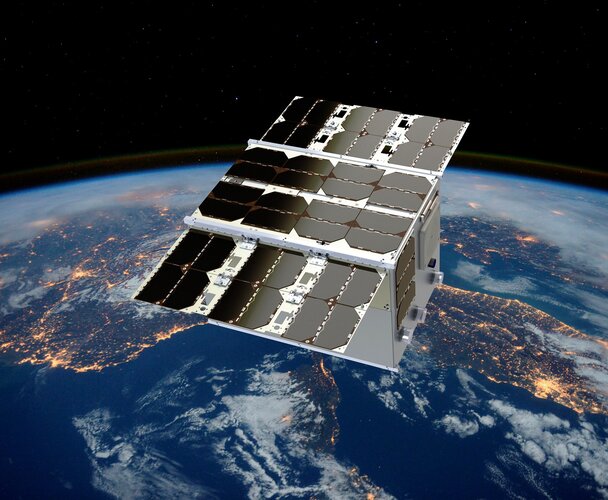
ESA has signed a contract with GomSpace to build the Scout CubeMAP mission. Embracing the concept of New Space, CubeMAP is a trio of nanosatellites to help quantify atmospheric processes in the upper atmosphere and how they impact our climate. The constellation will measure water vapour, carbon dioxide, methane, ozone, nitrous oxide and aerosols – all of which play a key role in the greenhouse effect and climate change.
Virgin Orbit adds Spire satellite to next launch
Virgin Orbit will fly a Spire cubesat in addition to several other payloads on its next LauncherOne launch, scheduled for no earlier than Dec. 22.
Mexico joins Artemis Accords

The government of Mexico announced Dec. 9 that it is signing the U.S.-led Artemis Accords outlining best practices for space exploration.
China sends classified Shijian satellites into orbit with milestone Long March launch
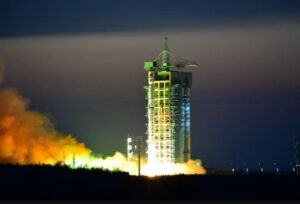
A Long March 4B launched the Shijian-06 (05) group of satellites Dec. 9, marking the 400th launch of China’s Long March family of launch vehicles.
Week in images: 6 - 10 December 2021
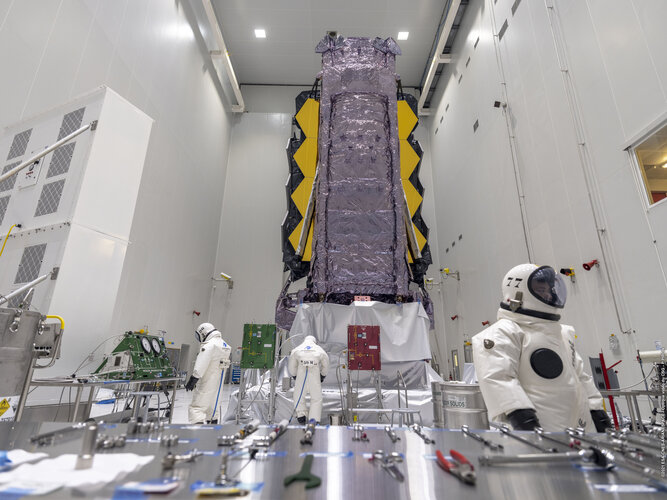
Week in images: 6 - 10 December 2021
Discover our week through the lens
"Newer, nimbler, faster:" Venus probe will search for signs of life in clouds of sulfuric acid
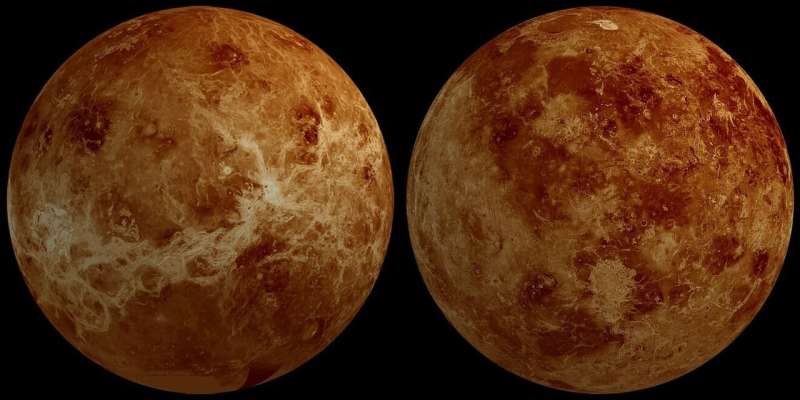
With multiple rovers landed and a mission set to return samples to Earth, Mars has dominated the search for life in the solar system for decades. But Venus has some fresh attention coming its way.
In a new report published today, a team led by MIT researchers lays out the scientific plan and rationale for a suite of scrappy, privately-funded missions set to hunt for signs of life among the ultra-acidic atmosphere of the second planet from the sun.
"We hope this is the start of a new paradigm where you go cheaply, more often, and in a more focused way," says Sara Seager, Class of 1941 Professor of Planetary Sciences in MIT's Department of Earth, Atmospheric and Planetary Sciences (EAPS) and principal investigator for the planned Venus Life Finder Missions. "This is a newer, nimbler, faster way to do space science. It's very MIT."
The first of the missions is set to launch in 2023, managed and funded by California-based Rocket Lab. The company's Electron rocket will send a 50-pound probe on board its Photon spacecraft for the five-month, 38-million-mile journey to Venus, all for a three-minute skim through the Venusian clouds.
FAA to end commercial astronaut wings program

The Federal Aviation Administration will stop awarding commercial astronaut wings at the end of this year, five months after it revised the criteria for receiving the wings.
FAA: No more commercial astronaut wings, too many launching
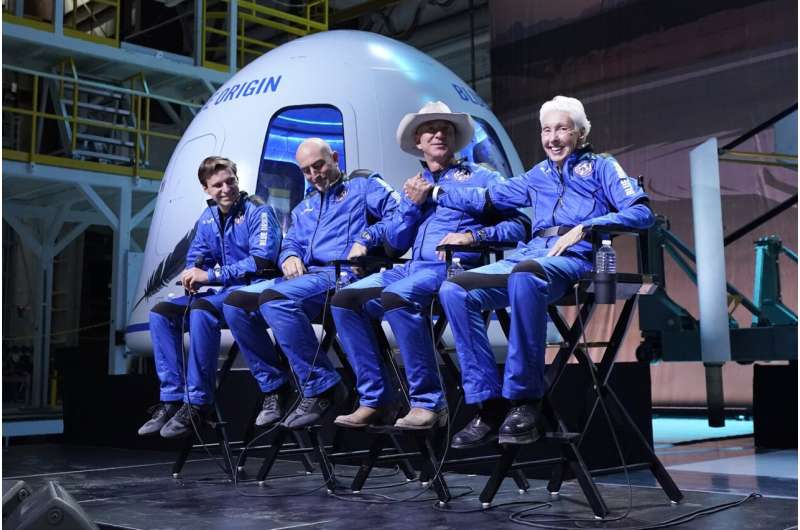
Daughter of first American astronaut to launch on Blue Origin flight

Jeff Bezos' Blue Origin is set to blast its third private crew to space on Saturday, this time including the daughter of the first American astronaut.
The spaceflight will last roughly 11 minutes, launching from the company's base in Texas and soaring to just beyond the internationally-recognized boundary of space, 62 miles (100 kilometers) high.
The six-member crew will unbuckle and enjoy a few minutes' weightlessness before the spaceship returns to Earth for a gentle parachute landing in the desert.
The launch date was pushed back because of high winds, but is now set for 8:45 am local time (1445 GMT) on Saturday.
Chinese Yutu-2 rover embarks on weeks-long 80-metre journey to reach Moon Cube
 As China's Yutu-2 lunar rover set off to investigate a peculiar shape dubbed the "moon cube," which the craft spotted earlier this month, the rover will take its time travelling to it.
According to VICE, however, there's a good reason why it may take about two to three lunar days, "or two to three months on Earth," for the rover to reach the object supposedly located about 80 metres away.
As China's Yutu-2 lunar rover set off to investigate a peculiar shape dubbed the "moon cube," which the craft spotted earlier this month, the rover will take its time travelling to it.
According to VICE, however, there's a good reason why it may take about two to three lunar days, "or two to three months on Earth," for the rover to reach the object supposedly located about 80 metres away.