




In recent years, the term “phone anxiety” started showing up in mainstream coverage as if it were a new generational quirk, a side effect of texting culture and Gen Z social awkwardness. The framing was almost always the same: young people can’t make calls because they didn’t grow up with them. It’s a tidy explanation. It also misses what’s actually happening for a significant slice of people who rehearse phone calls before making them.
The script in their head isn’t about etiquette. It’s about exposure.
If you grew up in a household where saying the wrong thing meant the conversation got recycled, weaponized, or pulled out three months later as proof of something about your character, you didn’t develop phone anxiety. You developed a forensic relationship with your own speech.
The difference between social anxiety and verbal vigilance
Social anxiety centers on fear of judgment from others. The person worries about being perceived as awkward, stupid, or unlikable in real time. The discomfort is broad and somatic. Sweaty palms, racing heart, the wish to disappear.
Verbal vigilance is narrower and more specific. The fear isn’t being judged in the moment. It’s being quoted later. There’s a meaningful difference between the fear in this case might be about sounding strange in the moment and the other type of anxiety centers on ensuring words cannot be weaponized later.
One is about performance. The other is about evidence.
People raised in homes where casual remarks became long-running grievances learn early that words have a half-life. A sentence said at dinner could resurface during a fight six weeks later, repackaged as proof you never cared, never tried, always thought you were better than everyone else. The ordinary defense of clarifying one’s intended meaning never worked, because the meaning had already been assigned.
Why the phone, specifically
Phone calls compress everything that’s threatening about verbal exposure. There’s no body language to soften a phrase, no facial expression to provide context, no chance to point at something across the room and change the subject. Tone has to do all the work, and tone is exactly what gets misinterpreted on purpose by people who interpret in bad faith.
Texts can be reread before sending. Emails can be drafted, deleted, redrafted. Phone calls happen once, in real time, and live entirely in the other person’s memory of what you said. For someone whose childhood taught them that other people’s memory is unreliable in self-serving ways, that’s not a small thing.
So they rehearse. They walk through likely branches of the conversation. They prepare answers to questions that probably won’t be asked. They draft openings that close off certain interpretations. None of this is irrational. It’s the rational response to a verifiable pattern.
The home that built this
The household this comes from is rarely overtly abusive in ways that show up on a checklist. It’s the home where one parent kept score. Where a complaint from age nine was still being referenced at sixteen. Where vulnerability was a deposit you’d later be charged interest on.
Children in these homes don’t get to be careless with language. They notice that admitting to liking something becomes ammunition the next time you don’t appreciate a related gift. Saying you’re tired becomes proof you’re lazy. Mentioning a friend becomes a referendum on whether your family is good enough for you.
Eventually, the child stops talking off the cuff and starts talking with two layers running. The surface layer is the conversation itself. The deeper layer is constant editorial review: could this be misread, could this be quoted, what’s the worst version of what I just said.
That second layer never turns off. The mood-readers track emotional weather. The phone-rehearsers track the evidentiary trail of their own words.
The research on what gets called “phone anxiety”
The clinical literature on phone-specific avoidance is thinner than you’d expect, partly because it gets folded into broader social anxiety measures. But the underlying mechanisms show up clearly in the network analyses being done on anxiety symptoms in young adults.
A 2025 network analysis of anxiety and depression symptoms among empty nesters in China, published in Frontiers in Psychiatry, found that the study found that excessive worry had one of the highest centrality values in the symptom network. Excessive worry isn’t just feeling anxious. It specifically captures the inability to stop running mental loops about possible outcomes. That’s not a generic anxiety trait. That’s the cognitive engine that powers rehearsal.
The study also found that nervousness served as a bridge symptom connecting anxiety to other domains, meaning it acted as a transmission point for distress to spread into sleep and depressive symptoms. People who can’t stop rehearsing don’t just feel nervous before calls. They lose sleep, and the sleep loss feeds the worry, and the worry feeds the next round of rehearsal.
A separate analysis of engineering student wellbeing in hybrid learning environments documented increased mental health challenges in post-COVID educational settings, including heightened anxiety around communication demands.
Rehearsal as a competence, not a symptom
One of the things that gets missed in the standard anxiety framing is that the rehearsal often works. The calls go fine. The person sounds composed, articulate, sometimes warmer than they feel. The rehearsal isn’t producing failure. It’s producing controlled performance.
This is why simply telling someone to stop rehearsing is useless advice. You’re not asking someone to give up a tic. You’re asking them to give up a strategy that has, by their own measurement, worked their entire life. The strategy has costs, but the costs aren’t visible to outside observers, which makes them easy to dismiss.
The cost is interior. Every call requires preparation. Spontaneity gets traded for safety. Conversations that should take three minutes end up taking thirty in total time, including the rehearsal beforehand and the post-call review afterward.
Last week I wrote about how competence is lonely in ways nobody warns you about, and this is one of the quieter examples. The person on the other end of the call experiences a smooth, capable communicator. They have no idea they’re talking to someone who spent fifteen minutes drafting the opening line.
The four-line opening
If you ask people who rehearse calls what they’re actually preparing, the most common answer is the first thirty seconds. They’re scripting the opening because the opening sets the frame, and the frame determines how everything that follows can be interpreted.
This is sophisticated communication strategy, not pathology. They’ve intuited something genuinely difficult: how a conversation begins constrains how it can end. If the opening is too apologetic, the rest will be defensive. If it’s too casual, the actual point gets minimized. If it’s too direct, the other person feels ambushed.
The rehearser is trying to thread something genuinely difficult, and they’re trying to thread it without the safety net most people don’t even know they’re using, which is the assumption that the other party is operating in good faith.
Good faith as a developmental milestone
For most adults, the assumption that the person you’re talking to is trying to understand you is so deeply baked in that it’s invisible. They don’t notice they’re making it. They just talk.
For someone raised in a home where their words were routinely interpreted in the worst possible light, that assumption never fully formed. They learned, instead, that listeners can be adversarial, that comprehension can be withheld strategically, that the same sentence can mean different things depending on what the listener wants it to prove.
So they prepare. Not because they expect every call to be hostile, but because they can’t reliably tell which calls will be. The rehearsal is insurance against an outcome they’ve personally experienced enough times that pretending it won’t happen feels reckless.
This connects to something I wrote about recently in the context of how boundaries reveal which relationships were only working because you didn’t have any. People who rehearse calls are often, without realizing it, also revealing something about who they’re calling. The relationships that require the most preparation are usually the ones built on the least trust.
What changes when the pattern is named
The reframe matters because the standard anxiety framing pushes people toward exposure-based interventions. Make more calls. Get used to it. Desensitize. That logic works for fear of judgment, which extinguishes with repeated non-catastrophic exposure.
It works less well when the underlying belief is about potential embarrassment but when the underlying belief is that their words may be weaponized later. Exposure to calls that go fine doesn’t disprove the belief, because the belief was never about every call. It was about the calls with specific people, in specific dynamics, where words actually were used against you. Those calls really did happen. The pattern recognition is accurate.
What helps, instead, is distinguishing between contexts. Some conversations require vigilance because the other party has earned that vigilance. Most don’t. The rehearser’s nervous system applies maximum vigilance to all of them, which is why they’re exhausted by routine phone calls that other people make without thinking.
Research on psychological interventions for anxiety suggests that targeted cognitive work, particularly around the appraisal of threat, tends to outperform pure behavioral exposure when the underlying belief is grounded in actual past experience rather than imagined catastrophe.
The role of AI and digital substitution
One of the predictable responses to phone-call avoidance is replacing calls with text, email, voice notes, anything that allows for editing. There’s a reason this generation of communication tools has been embraced so quickly by people who grew up watching their words become evidence. The asynchronous format restores the editing window.
The complication is that the editing window can become its own trap. A 2022 paper in Frontiers in Psychology on cognitive offloading raised the question of whether tools that let us defer or outsource verbal decisions are reducing our cognitive load or quietly increasing it by encouraging more rumination per message. For someone whose default mode is rumination, infinite editing is not a relief. It’s a longer runway.
And the recent debate over AI as a substitute for actual therapeutic relationship has surfaced a related concern: tools that always validate, always cushion, always let you draft the perfect response, may be reinforcing the avoidance rather than addressing what drives it.
What the rehearsers are protecting
The most useful thing I’ve come to think about people who rehearse phone calls is that they’re not protecting themselves from the call. They’re protecting a version of themselves that already exists, that they’ve been carefully constructing for years, against the possibility of being misrepresented in a way they can’t correct.
If a sentence comes out wrong, it doesn’t just embarrass them. It risks becoming, in someone else’s account of who they are, a piece of evidence. They’ve watched this happen. They know how it works. The rehearsal is the editing room where they make sure the version of themselves that goes on the record is one they can defend.
That’s not anxiety. That’s a person who learned, very early, that other people’s memories are not neutral, and decided to take their own representation seriously.
The healthier path isn’t to stop preparing. It’s to notice which conversations actually require this much preparation and which don’t, and to slowly let the nervous system catch up to the fact that most of the people on the other end of the line are not the person who taught you to do this in the first place.
That recalibration takes time. It usually takes longer than people expect. But the first move is recognizing that the rehearsal isn’t a flaw in your communication style. It’s a record of what you survived to develop one.
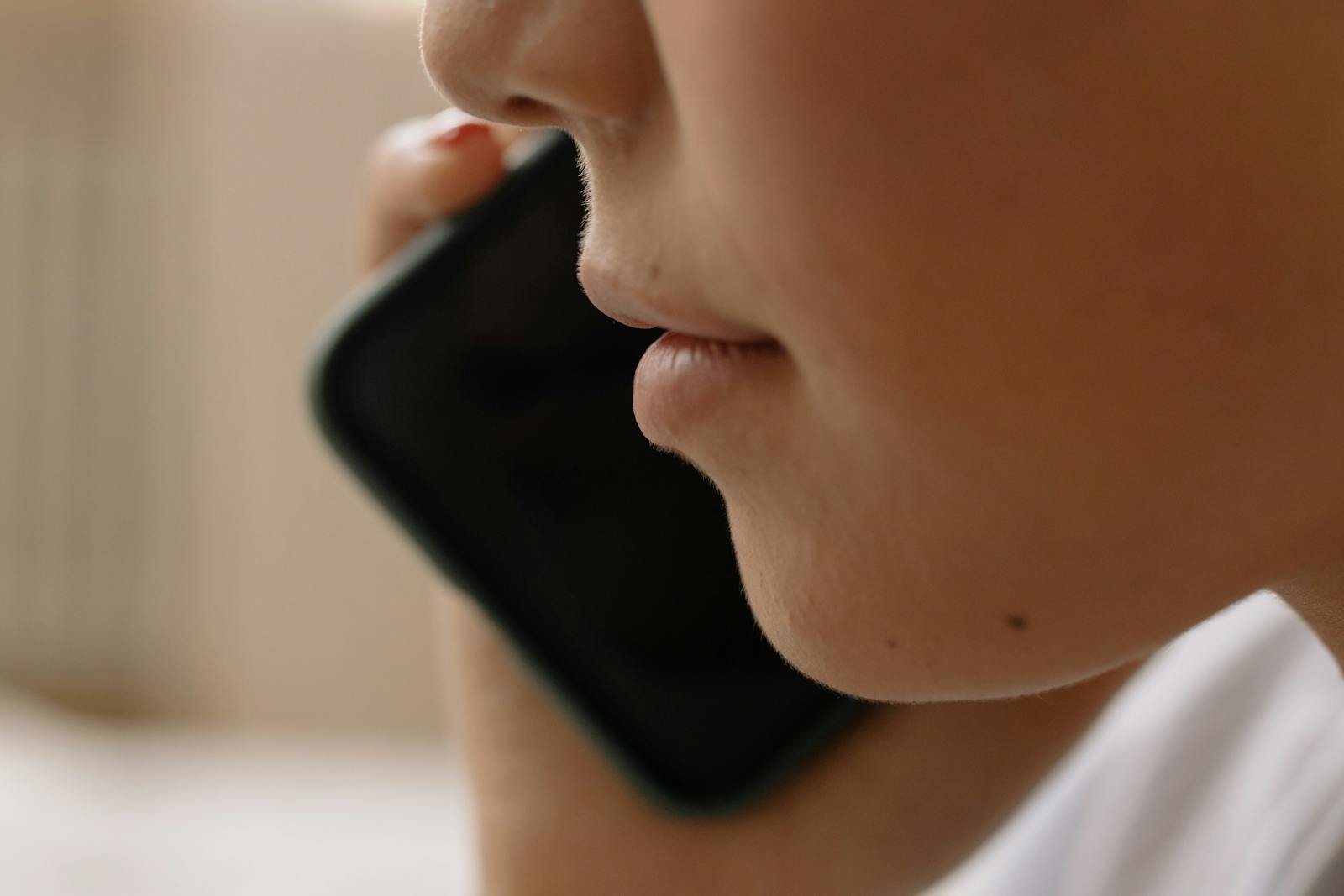
Photo by Yan Krukau on Pexels