

Space law protects you from falling debris, but there are no legal penalties for leaving junk in orbit
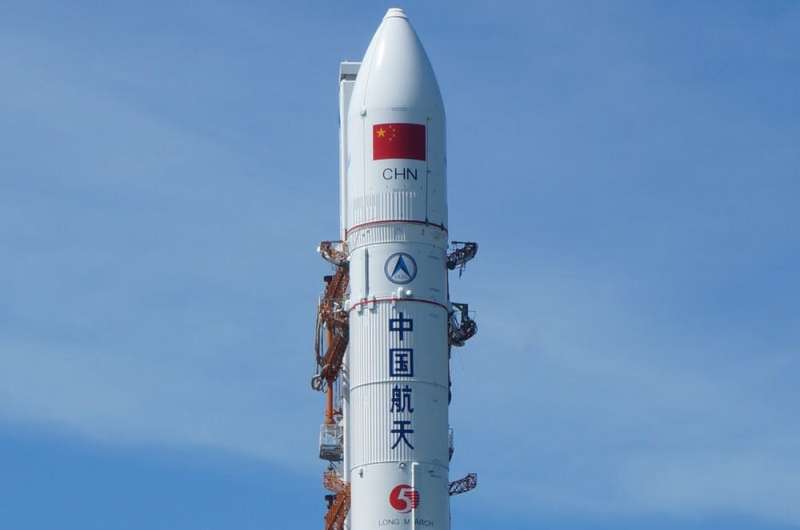
On May 8, 2021, a piece of space junk from a Chinese rocket fell uncontrolled back to Earth and landed in the Indian Ocean near the Maldives. A year ago, in May 2020, another Chinese rocket met the same fate when it plummeted out of control into the waters off the West African coast. No one knew when or where either of these pieces of space junk were going to hit, so it was a relief when neither crashed on land or injured anyone.
Space debris is any nonfunctional human-made object in space.As a professor of space and society focused on space governance, I've noticed that there are three questions the public always asks when falling space debris gets into the news.
Dark Energy Spectroscopic Instrument (DESI) starts 5-year survey
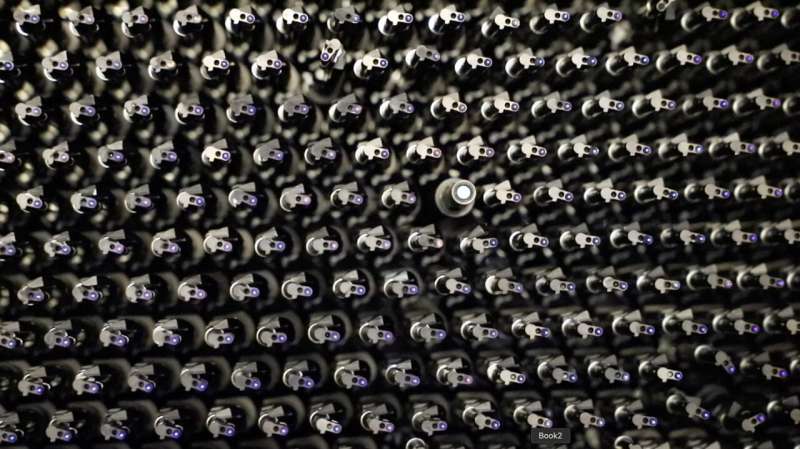
A five-year quest to map the universe and unravel the mysteries of "dark energy" is beginning officially today, May 17, at Kitt Peak National Observatory near Tucson, Arizona. To complete its quest, the Dark Energy Spectroscopic Instrument (DESI) will capture and study the light from tens of millions of galaxies and other distant objects in the universe.
DESI is an international science collaboration managed by the Department of Energy's Lawrence Berkeley National Laboratory, or Berkeley Lab, with primary funding from DOE's Office of Science.
By gathering light from some 30-million galaxies, project scientists say DESI will help them construct a 3D map of the universe with unprecedented detail.
60 years later, is it time to update the Drake equation?
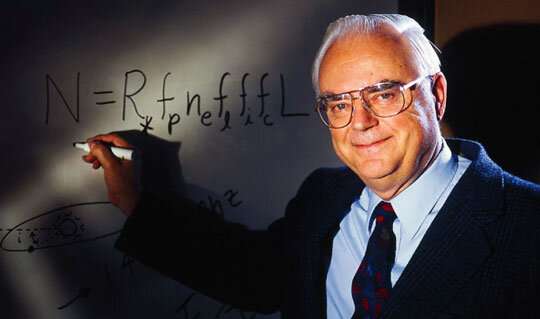
On November 1, 1961, a number of prominent scientists converged on the National Radio Astronomy Observatory in Green Bank, West Virginia, for a three-day conference. A year earlier, this facility had been the site of the first modern SETI experiment (Project Ozma), where famed astronomers Frank Drake and Carl Sagan used the Green Bank telescope (aka "Big Ear") to monitor two nearby sun-like stars—Epsilon Eridani and Tau Ceti.
While unsuccessful, Ozma became a focal point for scientists who were interested in this burgeoning field known as the Search for Extraterrestrial Intelligence (SETI). As a result, Drake and Sagan were motivated to hold the very first SETI conference, wherein the subject of looking for possible extraterrestrial radio signals would be discussed. In preparation for the meeting, Drake prepared the following heuristic equation:
N = R* • fp • ne • fl • fi • fc • L
This would come to be known as the "Drake equation," which is considered by many to be one of the most renowned equations in the history of science.
Name the mission
 Video:
00:01:56
Video:
00:01:56
We need a name for our new spacecraft. Its mission? To spot potentially hazardous solar storms before they reach Earth.
Between them, our greatest minds have come up with ... not very much.
ESA needs you.
Tyvak satellite on SpaceX rideshare mission carries tiny space telescope
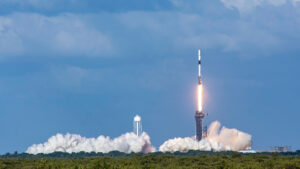
WASHINGTON — The Tyvak-0130 rideshare payload that flew to orbit May 15 on a SpaceX Falcon 9 carries a miniature space telescope for possible commercial use.
The technology was developed by Tyvak Nano-Satellite Systems and the Lawrence Livermore National Laboratory under a four-year agreement to advance compact telescopes for commercial applications, Tyvak’s CEO Christian “Boris” Becker said in an interview with SpaceNews.
NASA adds astronaut to commercial crew mission
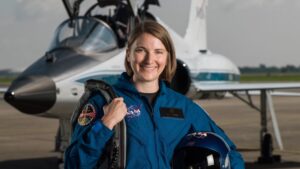
WASHINGTON — NASA announced May 17 it has assigned another astronaut to the next commercial crew mission to the International Space Station, a sign that NASA no longer expects to complete a seat barter agreement with Roscosmos in time for that flight.
Space Force to increase spending on technologies to turn data into knowledge
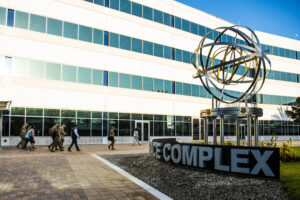
WASHINGTON — The U.S. Space Force plans to spend billions of dollars over the next decade to convert huge amounts of data that resides in separate systems into a digital enterprise architecture.
NASA launches rocket in search of aurora answers
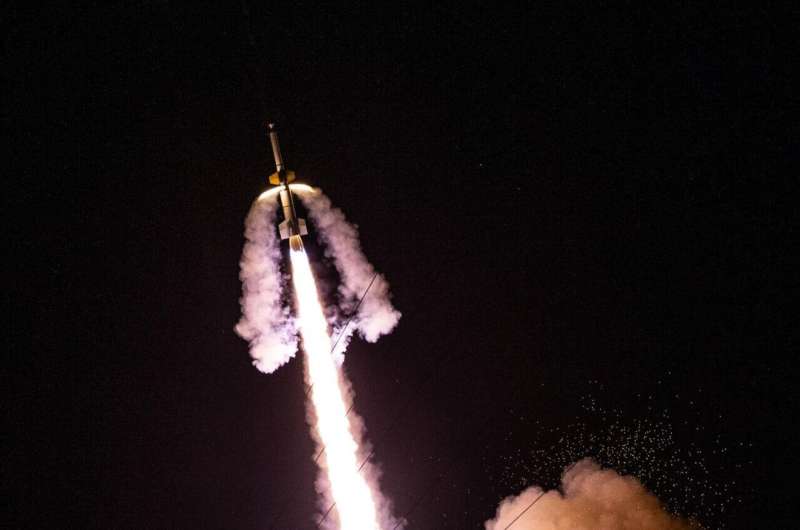
NASA launched one of its largest sounding rockets Sunday from an East Coast facility in an experiment led by a University of Alaska Fairbanks Geophysical Institute space physics professor.
The four-stage Black Brant XII rocket carrying the KiNET-X experiment of principal investigator Peter Delamere lifted off from NASA's Wallops Flight Facility in Virginia at 8:44 p.m. Eastern time. The ascent of the rocket, which flew on an arc into the ionosphere before beginning its planned descent over the Atlantic Ocean near Bermuda, could be seen along the East Coast.
The experiment seeks to understand how a large mass of plasma such as the solar wind interacts at the particle level with, for example, the plasma of Earth's space environment.
Monitoring coastal changes in Greece
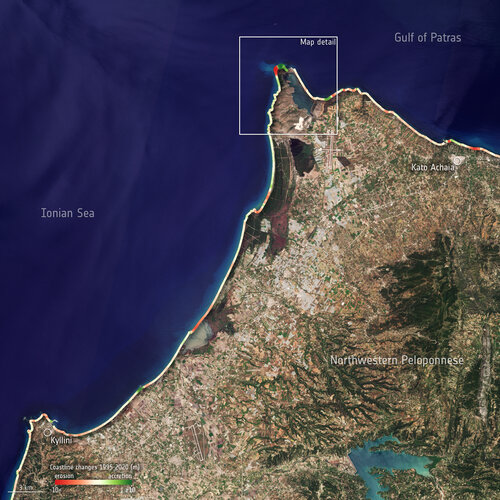
Hundreds of satellite images spanning over 25 years have been compiled to show the evolution of Greece’s ever-changing coastlines.
Understanding muscle wasting in space at the molecular level
 Most of us have imagined how free it would feel to float around, like an astronaut, in conditions of reduced gravity. But have you ever considered what the effects of reduced gravity might have on muscles? Gravity is a constant force on Earth which all living creatures have evolved to rely on and adapt to. Space exploration has brought about many scientific and technological advances, yet manned


