

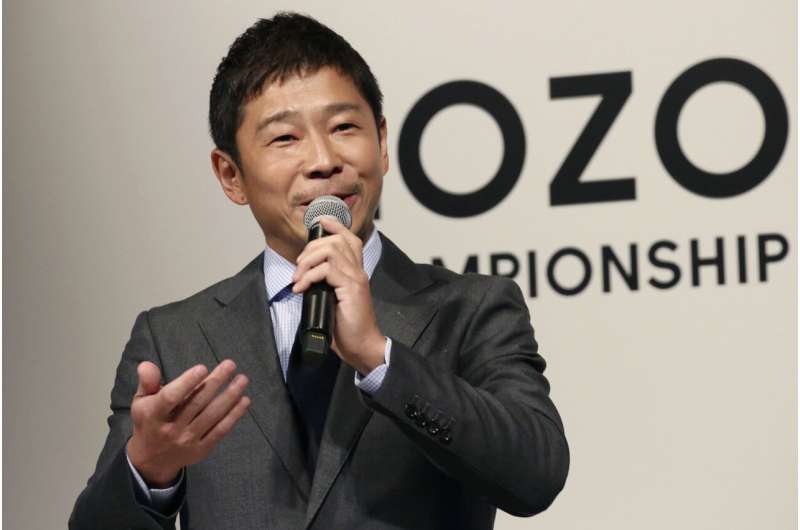
Japanese tycoon planning space station visit, then moon trip
Crashing Chinese rocket highlights growing dangers of space debris
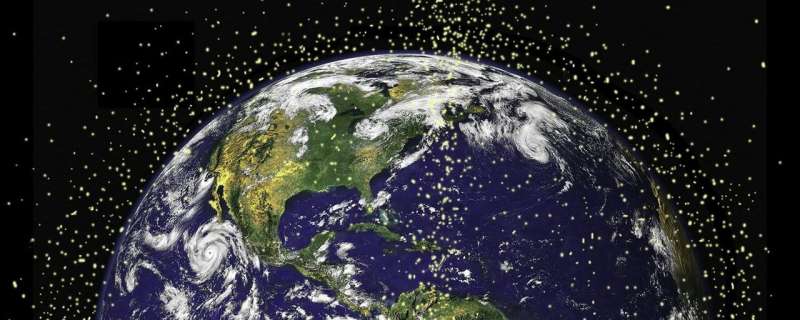
This weekend, a Chinese rocket booster, weighing nearly 23 tons, came rushing back to Earth after spending more than a week in space—the result of what some critics, including NASA Administrator Bill Nelson, have attributed to poor planning by China. Pieces of the rocket, dubbed Long March 5B, are believed to have splashed down in the Indian Ocean near the Maldives, and no one was injured.
But the event has shown the potential dangers that come from humanity's expanding presence in space, said Hanspeter Schaub, professor in the Ann and H.J. Smead Department of Aerospace Engineering Sciences.
Schaub is an engineer with an eye for the myriad bits of junk that circle our planet—from meteors the size of grains of dust to manmade rocket stages as big as school buses. As humans launch more objects into space, he said, this debris may increasingly threaten the safety of satellites and human astronauts in orbit. In 2009, a decommissioned Russian satellite crashed into an active satellite called Iridium 33, sending a cloud of shrapnel hurtling around the planet.
Axelspace raises $24 million in Series C round
SAN FRANCISCO – Axelspace, the Japanese firm planning to offer daily global optical imagery, raised 2.58 billion Japanese yen ($23.8 million) in a Series C investment round announced May 14 in Tokyo, May 13 in the United States.
Japanese billionaire, Russian actress to fly to ISS
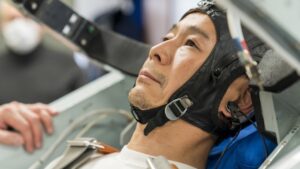
WASHINGTON — A Japanese billionaire best known for buying a SpaceX Starship flight around the moon will go to space first on a Russian Soyuz spacecraft to the International Space Station, two months after a Russian actress and director visit the station.
Earth from Space: Qeshm Island

The Copernicus Sentinel-2 mission takes us over Qeshm Island – the largest island in Iran.
Getting ready to rocket
 Image:
The pieces are stacking up for the launch of Artemis 1 mission around the Moon and back. The massive Space Launch Systems (SLS) rocket that will launch the first crewless test flight of the Orion spacecraft, powered by the European Service Module, is being integrated at the Vehicle Assemble Building at NASA’s Kennedy Space Center in Florida, USA.
Visible in this image are the twin solid fuel rocket boosters, now fully stacked atop the mobile launcher. The boosters will be mated with the rocket’s 65 m tall core stage that recently barged in to Florida aboard the Pegasus
Rocket Lab to make second booster recovery attempt
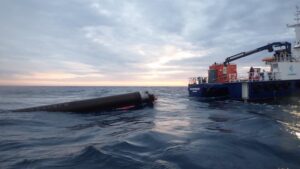
WASHINGTON — The next launch of Rocket Lab’s Electron rocket will be the second mission where the company attempts to recover the vehicle’s first stage as part of its efforts to reuse the booster.
An Electron rocket is scheduled to launch no earlier than 6 a.m.
Week in images: 10 - 14 May 2021
Week in images: 10 - 14 May 2021
Discover our week through the lens
Ariane 6 launch pad water deluge system test
 Video:
00:02:10
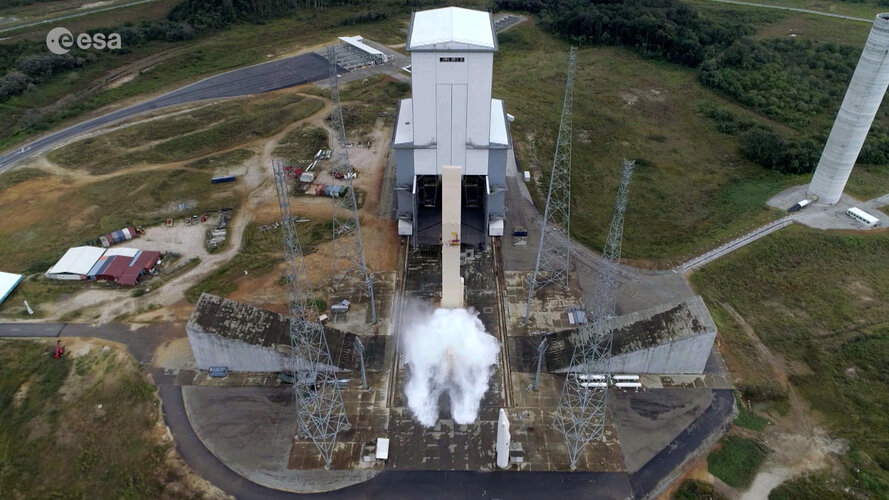
The water deluge system activated at liftoff was put to the test on the Ariane 6 launch pad at Europe’s Spaceport
Video:
00:02:10
The water deluge system activated at liftoff was put to the test on the Ariane 6 launch pad at Europe’s Spaceport Using cell phones as space weather vanes
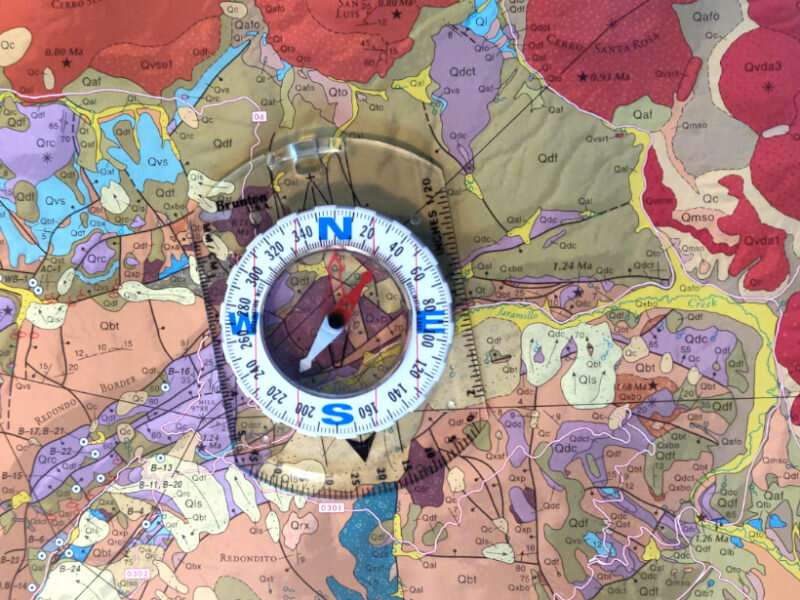
Your smartphone may be able to sense space weather and even get a little disoriented by it, according to researchers, who tested how geomagnetic storms affect the magnetic sensors in cell phones. The new research suggests that apps being developed to use cell phone magnetometers to pinpoint locations could be susceptible to space weather errors. On the other hand, millions of phones sensing changes in Earth's magnetic field could potentially create a vast observatory to help scientists understand these geomagnetic storms.
Cell phone magnetometer chips are being explored as a backup for GPS, which uses satellite signals to triangulate location and thus is often inaccurate or unavailable in places where signals can't penetrate, such as inside large buildings or underground.
"Smartphone magnetometers are being commercially explored for applications as diverse as locating customers in shopping malls for targeted advertising, to precision needle-guided surgery," wrote Sten Odenwald, of NASA's Space Science Education Consortium at Goddard Space Flight Center in Maryland, in Space Weather.


