

Robotic Navigation Tech Will Explore the Deep Ocean
 Terrain-relative navigation helped Perseverance land - and Ingenuity fly - autonomously on Mars. Now it's time to test a similar system while exploring another frontier.
On May 14, the National Oceanic and Atmospheric Administration (NOAA) ship Okeanos Explorer will depart from Port Canaveral in Florida on a two-week expedition led by NOAA Ocean Exploration, featuring the technology demons
Terrain-relative navigation helped Perseverance land - and Ingenuity fly - autonomously on Mars. Now it's time to test a similar system while exploring another frontier.
On May 14, the National Oceanic and Atmospheric Administration (NOAA) ship Okeanos Explorer will depart from Port Canaveral in Florida on a two-week expedition led by NOAA Ocean Exploration, featuring the technology demons Graphene sensor combines temperature and magnetic measurements
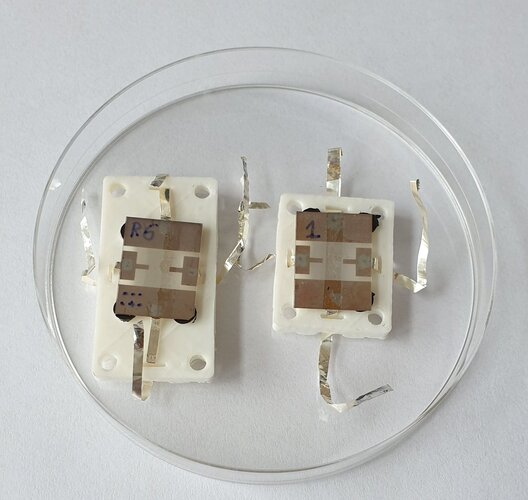
Graphene is the thinnest material known – possessing the thickness of a single atom but 200 times stronger than steel – and has a reputation for versatility. Now an ESA-backed project has come up with yet another use for this ‘wonder stuff’, as the basis for a combined temperature and magnetism sensor.
Rocket Lab says engine issue caused Electron failure
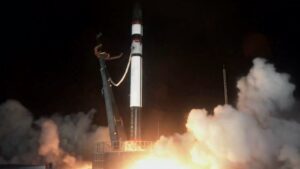
WASHINGTON — Rocket Lab said an Electron rocket failed to reach orbit May 15 when the vehicle’s computer system detected a problem with the second stage engine and shut it down.
In a May 17 statement, the company said it is continuing to review data from the launch, which suffered a malfunction of some kind around the time the second stage separated and ignited its single Rutherford engine.
NASA rocket chasing the source of the sun's hot atmosphere
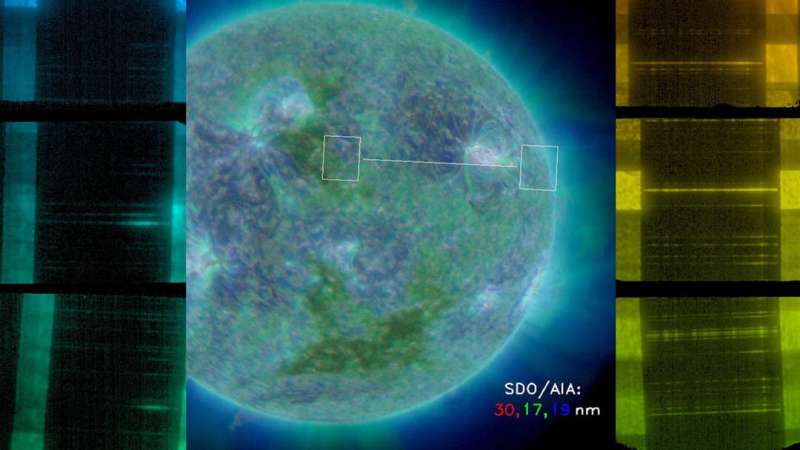
A new space instrument captures its first solar eruption
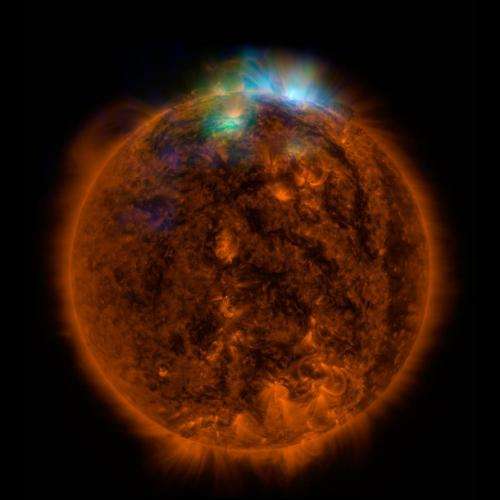
For new sun-watching spacecraft, the first solar eruption is always special.
On February 12, 2021, a little more than a year from its launch, the European Space Agency and NASA's Solar Orbiter caught sight of this coronal mass ejection, or CME. This view is from the mission's SoloHI instrument—short for Solar Orbiter Heliospheric Imager—which watches the solar wind, dust, and cosmic rays that fill the space between the sun and the planets.
It's a brief, grainy view: Solar Orbiter's remote sensing won't enter full science mode until November. SoloHI used one of its four detectors at less than 15% of its normal cadence to reduce the amount of data acquired.
The curious incident of Swarm and sprites in the night-time
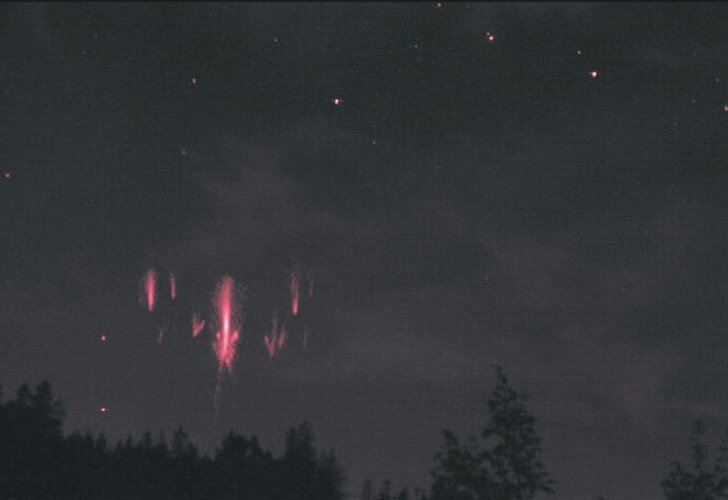
We are all familiar with the bolts of lightning that accompany heavy storms. While these flashes originate in storm clouds and strike downwards, a much more elusive type forms higher up in the atmosphere and shoots up towards space. So, what are the chances of somebody taking photographs of these rarely seen, brief ‘transient luminous events’ at the exact same time as a satellite orbits directly above with the event leaving its signature in the satellite’s data?
Back to the space cradle
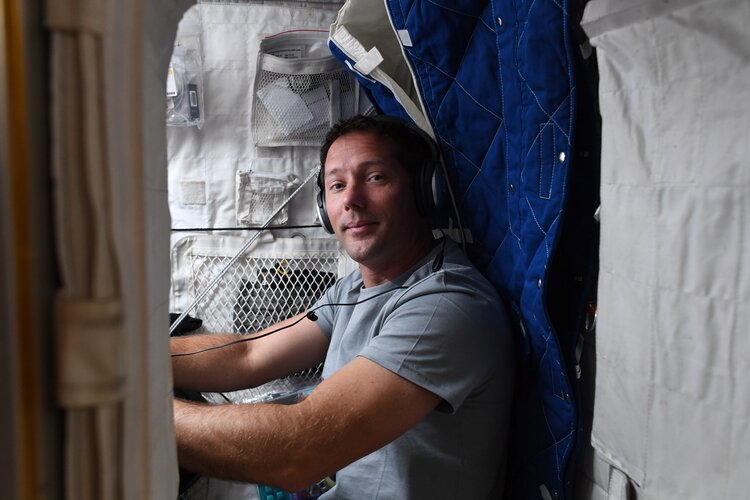
Like an infant adjusting to the new world, ESA astronaut Thomas Pesquet is relearning how to move around the weightless environment of space. His cradle is a familiar place though – this is Thomas’s second mission to the International Space Station, the orbiting lab where he where he broke records for science during his first six months in orbit.
ULA launches U.S. Space Force missile-warning satellite, two rideshare cubesats
WASHINGTON — A United Launch Alliance Atlas 5 rocket carrying a U.S. Space Force missile-warning satellite and two small payloads lifted off May 18 at 1:37 p.m. Eastern from Space Launch Complex-41 at Cape Canaveral Space Force Station, Florida.
Aevum’s autonomous aircraft will deliver cargo and launch rockets
WASHINGTON — Space launch startup Aevum on May 18 revealed that its Ravn X unmanned aircraft will be used to both deliver cargo and launch rockets, pending approval from the Federal Aviation Administration.
South Korea to join NASA’s Artemis project: reports
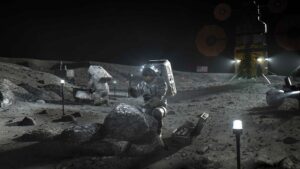
SEOUL, South Korea — South Korea is in last-minute negotiations with the United States to join NASA’s Artemis program, a news outlet here reported May 18, citing government sources.
The negotiations are underway between U.S. officials and South Korea’s Ministry of Foreign Affairs and the Ministry of Science and ICT with the goal of reaching a deal before the May 21 summit between South Korean President Moon Jae-in and his U.S.


