



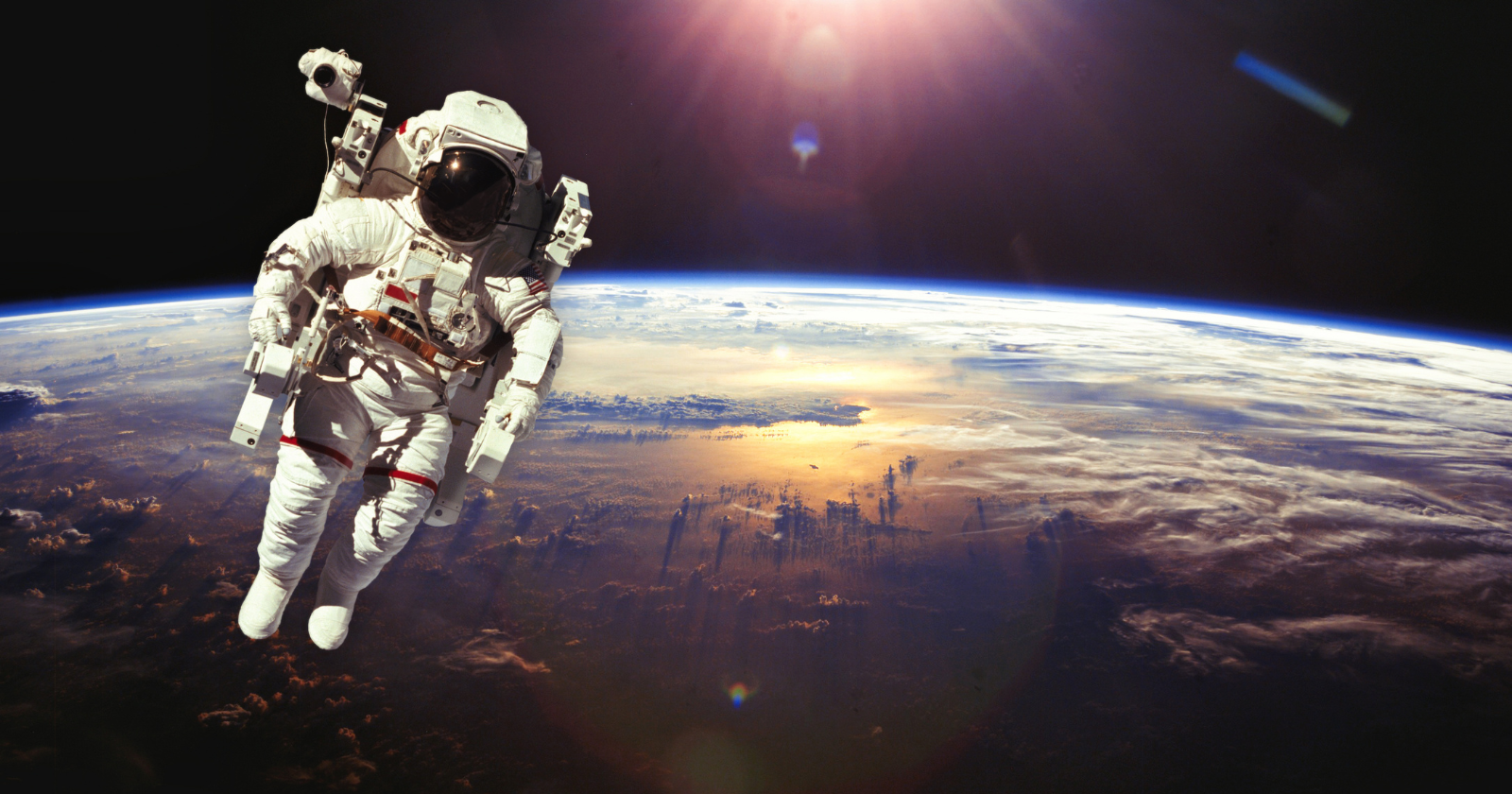
There’s a phenomenon astronauts often describe called the Overview Effect. It’s that radical shift in perspective you get when you see Earth from space. Borders disappear. The squabbles that consumed your attention down on the surface suddenly look ridiculous. You realize, in your bones rather than just your head, that we’re all on the same rock spinning through a void.
I’ve never been to space. Most of us haven’t. But you can catch a faint version of that feeling sometimes. Lying in a field on a clear night. Standing on a beach far from any city. Or in my case, finally getting away from the urban glow. You look up, and for a moment your problems feel right-sized again. Small. Held in something much larger than you.
I had a similar feeling recently, holding my baby daughter in the early hours one morning. She was looking around with that pure, undiluted wonder that babies have, taking in light and shape like it was the first time anyone in the universe had ever seen anything. And maybe, in a sense, it was for her.
I thought about how she’ll grow up in a world where private companies routinely send people to orbit, where rovers are digging in Martian soil, where telescopes like James Webb are pulling images out of the deep past of the universe and beaming them back to our phones. She’ll think it’s all normal. The way I thought the internet was normal when I was a kid.
And I wondered what frontier she’ll fix her eyes on. Because I don’t think we’re done. I don’t think we ever will be.
This is where Borman’s quote really earns its weight. Exploration isn’t a phase. It isn’t something we’ll outgrow when we finally get practical. It’s the same impulse that drove sailors around the curve of the world, the same impulse that put boots on the lunar surface. It’s the part of us that refuses to accept the horizon as the end of the story.
I’ve talked about this before, but humans aren’t built for stillness. Not the unhealthy kind of restlessness that makes us miserable, but the deep curiosity that comes from being conscious in a universe that doesn’t bother to explain itself. We have to look. We have to ask.
There was a stretch in my mid-twenties when I was working a warehouse job in Melbourne, shifting TVs around for not much money, feeling like my life had no horizon at all. Every direction looked like a wall. I’d walk to my car after a shift and the sky above the car park felt completely flat, like a ceiling someone had bolted into place.
What eventually pulled me out of that wasn’t a plan. It was a willingness to explore. I started reading Buddhist books on my breaks. I started writing about what I was learning. Eventually I packed up everything and moved to Southeast Asia, which made no sense to anyone who knew me, and made every kind of sense to me.
I didn’t fly to the Moon. But the underlying impulse was the same one Borman was naming. The refusal to accept that this, right here, is all there is.
Maybe that’s why we’re so quietly obsessed with space. It’s the most honest mirror we have. It reflects back our smallness, our fragility, and our absurd ambition all at once. It humbles us and inspires us in the same breath, which is rare. Most things only do one or the other.
There’s a useful Buddhist principle here. Things look different from a different vantage point. A problem that feels enormous from inside your own head often shrinks the moment you actually step back from it. Space is the ultimate stepping back. And every time we send a probe or a person out there, we’re really sending a small piece of our perspective along with it. Then we get it back, slightly altered, and we’re never quite the same.
Borman flew around the Moon and came back changed. The astronauts who went after him came back changed too. Many of them have spoken about how the experience reorganized their sense of what mattered. And in some smaller, second-hand way, every time we look up at the night sky, we get a sliver of that same reordering.
It’s not really about the rockets. It never was. The rockets are just how we make the asking visible.
We explore because we have to. Because somewhere baked into whatever it means to be a human being, there’s a refusal to stay put. There’s a need to know what’s over the next ridge, across the next ocean, on the other side of the next planet.
Borman called it the essence of the human spirit. Sitting with that quote for a while, I think he was being precise rather than poetic.
The asking is the answer. The looking up is the point. And as long as we keep doing it, we’ll keep finding out who we are.