


Lockheed Martin secures $977.5 million contract extension for missile-warning satellites


NASA faces $80,000 claim after space debris hit family home
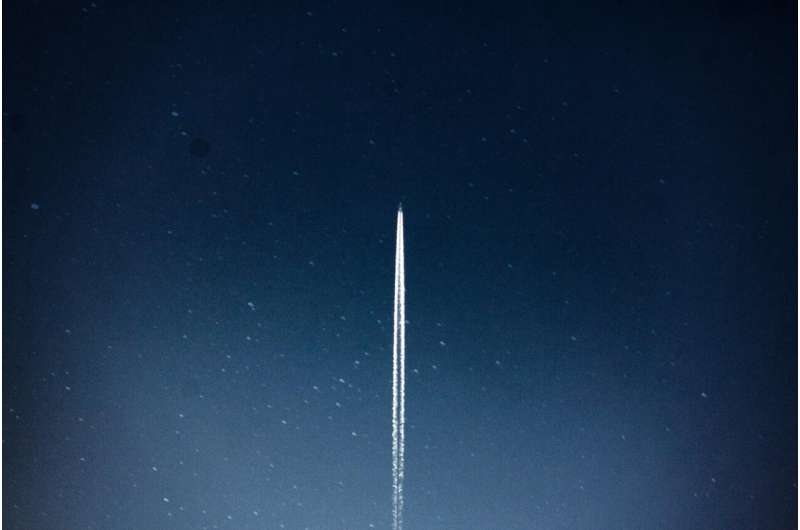
An American family is claiming more than $80,000 from NASA after a small piece of debris fell from space and smashed through the roof of their Florida home, a law firm said Friday.
The problem of space trash has risen in tandem with increased spatial traffic, and NASA's response could set a precedent for how future claims are handled, law firm Cranfill Sumner said in a statement.
On March 8, an object weighing just 700 grams hit Alejandro Otero's home in Naples, Florida, making a hole in the roof.
NASA later confirmed it was part of a cargo pallet of used batteries that was released from the International Space Station as waste in 2021.
Instead of fully disintegrating before falling to Earth, a section remained intact when it reentered the atmosphere, the US space agency said.
Otero's son was at the house at the moment of impact, according to the law firm, which said that NASA has six months to respond to its claim.
"My clients are seeking adequate compensation to account for the stress and impact that this event had on their lives," said lawyer Mica Nguyen Worthy.
China launches Sino-French astrophysics satellite, debris falls over populated area


Boeing Starliner's return to Earth delayed again
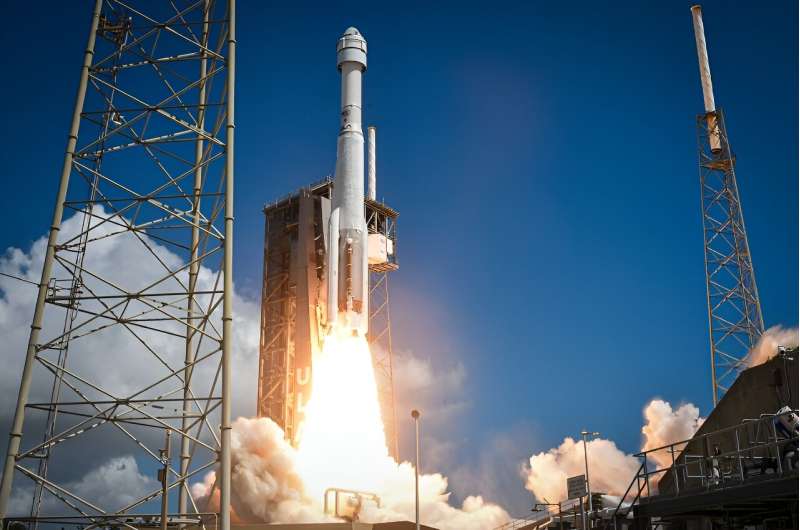
NASA said on Friday the Boeing Starliner's return to Earth from the International Space Station, which was scheduled for next week, has been delayed again.
The delay of the rescheduled June 26 return will allow more time for the review of the thruster malfunctions and helium leaks that caused the first delay, it said.
Starliner's first crewed mission to the ISS, which had initially been scheduled to last about eight days, has been extended to a date yet to be determined.
China, France launch satellite to better understand the universe
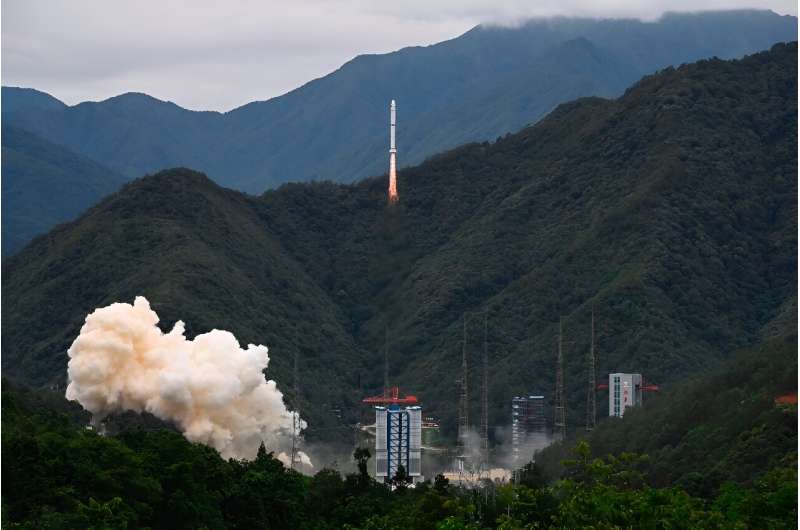
A French-Chinese satellite blasted off Saturday on a hunt for the mightiest explosions in the universe, in a notable example of cooperation between a Western power and the Asian giant.
Developed by engineers from both countries, the Space Variable Objects Monitor (SVOM) is carrying four instruments—two French, two Chinese—that will seek out gamma-ray bursts, the light from which has traveled billions of light years to reach Earth.
The 930-kilogram (2,050-pound) satellite "successfully" took off around 3:00 pm (0700 GMT) aboard a Chinese Long March 2-C rocket from a space base in Xichang, in southwestern Sichuan province, China's National Space Administration said.
Lockheed Martin to Develop GeoXO Weather Satellite Constellation
 NASA has selected Lockheed Martin [NYSE: LMT] to develop and build the nation's next generation weather satellite constellation, Geostationary Extended Observations (GeoXO), for the National Oceanic and Atmospheric Administration (NOAA).
The contract includes three spacecraft with options for four more, totaling an estimated $2.27 billion. The GeoXO mission will extend the capabilities of
NASA has selected Lockheed Martin [NYSE: LMT] to develop and build the nation's next generation weather satellite constellation, Geostationary Extended Observations (GeoXO), for the National Oceanic and Atmospheric Administration (NOAA).
The contract includes three spacecraft with options for four more, totaling an estimated $2.27 billion. The GeoXO mission will extend the capabilities of NEC and Ursa Space team up for satellite image analysis services
 NEC Corporation (NEC) (TSE: 6701) and Ursa Space Systems Inc. (Ursa Space) have agreed to collaborate on satellite image data analysis services. By combining services and technologies, the two companies will provide solutions for various applications for enterprises.
In recent years, the use of satellite image data has been rapidly expanding for various applications, including disaster pre
NEC Corporation (NEC) (TSE: 6701) and Ursa Space Systems Inc. (Ursa Space) have agreed to collaborate on satellite image data analysis services. By combining services and technologies, the two companies will provide solutions for various applications for enterprises.
In recent years, the use of satellite image data has been rapidly expanding for various applications, including disaster pre Sidus Space Demonstrates AI Enhanced Firefighting Software Solution on LizzieSat
 Sidus Space (NASDAQ: SIDU), a space and data-as-a-service satellite company, announced the demonstration of an advanced software solution supported by its FeatherEdge technology aboard its LizzieSat satellite, launched in March 2024 on SpaceX's Transporter-10 mission. This innovation, in collaboration with Xiomas Technologies, is a key milestone in the NASA-funded initiative to develop advanced