Boeing faces critical launch ferrying astronauts to the International Space Station
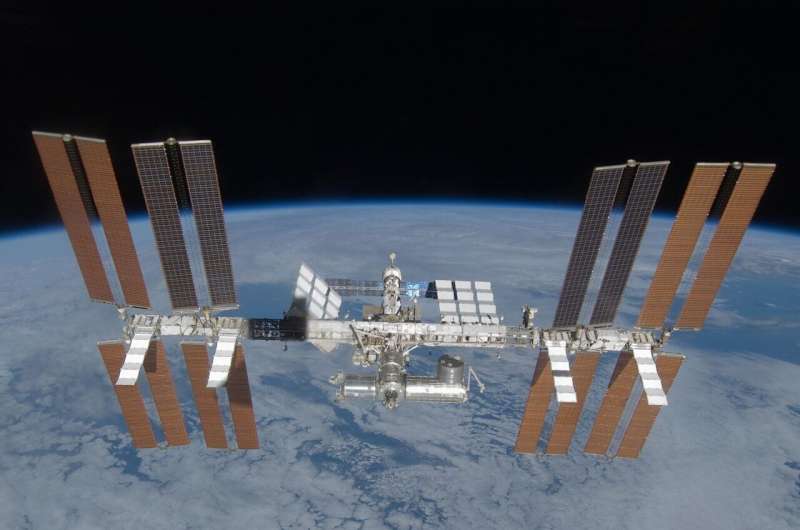
Ferrying astronauts to the International Space Station has almost become routine—but not for Boeing and not on Monday, when after years of delay it's finally set to launch two crew members to the orbiting platform on a critical test flight.
The Arlington, Virginia-based aerospace giant was awarded a $4.2 billion contract in 2014 to build and operate a spacecraft to service the station, while El Segundo rival Space X received $2.6 billion to do the same.
Both were given out under NASA's Commercial Crew Program, established to have American companies taxi astronauts to the station.
The stakes are particulary high for Boeing. Since 2020, SpaceX completed its crewed test flight and has ferried eight operations crews to the base—while Boeing has managed only two unmanned flights, including one that docked remotely in May of last year.
Boeing has long-standing and historic ties to the aerospace industry in Southern California—the Apollo command and service modules were built at North American Aviation's plant in Downey. Its current operations include a satellite facility in El Segundo.
Boeing's new Starliner capsule was scheduled to launch with a crew last summer, but a problem was discovered with its parachute system and the use of flammable tape in the craft, a mile of which was removed.


Muon Space and Earth Fire Alliance to build constellation for wildfire detection and response


Maxar inks agreement with Lockheed Martin to supply imagery for F-35 training simulators


Airbus to continue enhancing Pleiades Neo Next constellation


‘People are going to try to steal your secrets’ Dixon warns


Iceye to allow customers to directly task the company’s imaging satellites


Shining a light on untapped lunar resources
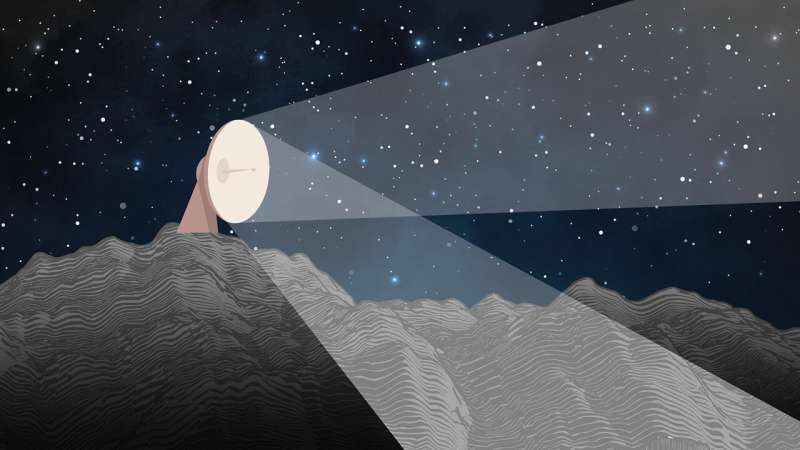
Near the moon's south pole lies a 13-mile wide, 2.5-mile-deep crater known as Shackleton, named for Antarctic explorer Ernest Shackleton. Shackleton—and craters like it—may contain untapped resources that can be accessed with lunar mining.
Solar energy is the optimal energy source to power lunar mining since it does not need to be transported from Earth, but rather is beamed straight from the sun. The problem with using solar energy within craters is that even during the lunar day, some craters may be in complete shadow.
Led by Dr. Darren Hartl, an associate professor of aerospace engineering at Texas A&M University, researchers at Texas A&M have partnered with NASA Langley Research Center to engineer a solution using solar reflectors to get solar power to the bottom of lunar craters.
"If you perch a reflector on the rim of a crater, and you have a collector at the center of the crater that receives light from the sun, you are able to harness the solar energy," said Hartl.
Boeing's first Starliner mission with humans set for historic Space Coast launch tonight
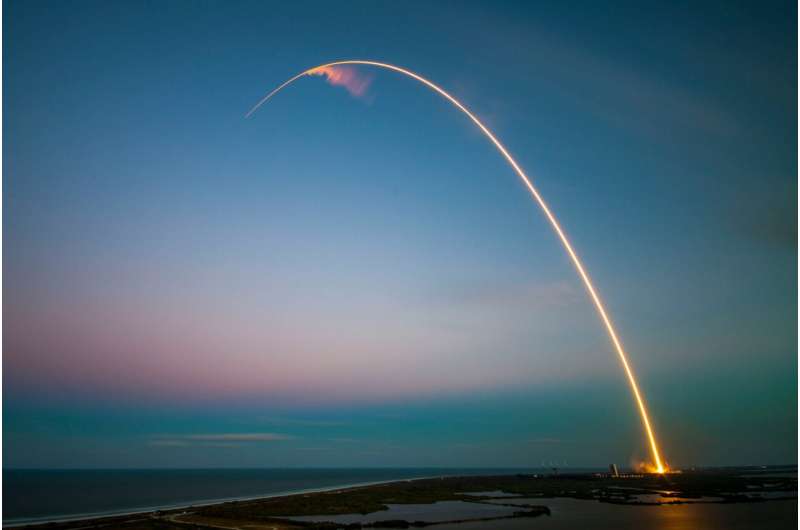
The stage is set for some space history to be made tonight as two veteran NASA astronauts aim to launch in a spacecraft that has never flown with humans before.
Butch Wilmore and Suni Williams will climb aboard Boeing's CST-100 Starliner capsule and lift off atop a United Launch Alliance Atlas V rocket from Cape Canaveral Space Force Station's Space Launch Complex 41 at 10:34 p.m. on the Crew Flight Test (CFT) mission to the International Space Station.
NASA's live coverage of the leadup to launch will begin on NASA TV and its social media channels beginning at 6:30 p.m.
The pair, along with 750 pounds of supplies, would arrive to the station early Wednesday—at 12:46 a.m—to begin an eight-day stay before a return flight home as early as May 15 that would have a primary landing site of White Sands Space Harbor in New Mexico.
"This is a test flight. That brings to bear all the things that the title implies," said NASA Administrator Bill Nelson. "Because it is a test flight, we give extra attention. They're checking out a lot of the systems—the life support, the manual control, all of those things that you want to be checked out.