

ESA, Airbus sign long-delayed Galileo contract after court ruling
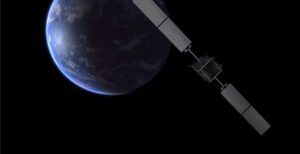
JOHANNESBURG — The European Space Agency announced May 28 that it had signed a long-delayed 700-million-euro contract ($855 million) with Airbus Defence and Space on behalf of the European Commission for six second-generation Galileo satellites.
The European Commission announced Jan.
JAXA using water bottle technology for sample-return missions from the ISS

The International Space Station (ISS) is not only the largest and most sophisticated orbiting research facility ever built, it is arguably the most important research facility we have. With its cutting-edge facilities and microgravity environment, the ISS is able to conduct lucrative experiments that are leading to advances in astrobiology, astronomy, medicine, biology, space weather and meteorology, and materials science.
Unfortunately, the cost of transporting experiments to and from the ISS is rather expensive and something only a handful of space agencies are currently able to do. To address this, the Japanese Aerospace Exploration Agency (JAXA) and Tiger Corporation partnered in 2018 to create a new type of container that would cut the cost of returning samples to Earth. With the success of their initial design, JAXA and Tiger are looking to create a reusable version that will allow for regular sample returns from the ISS.
ASKAP takes a first glimpse at the galactic plane
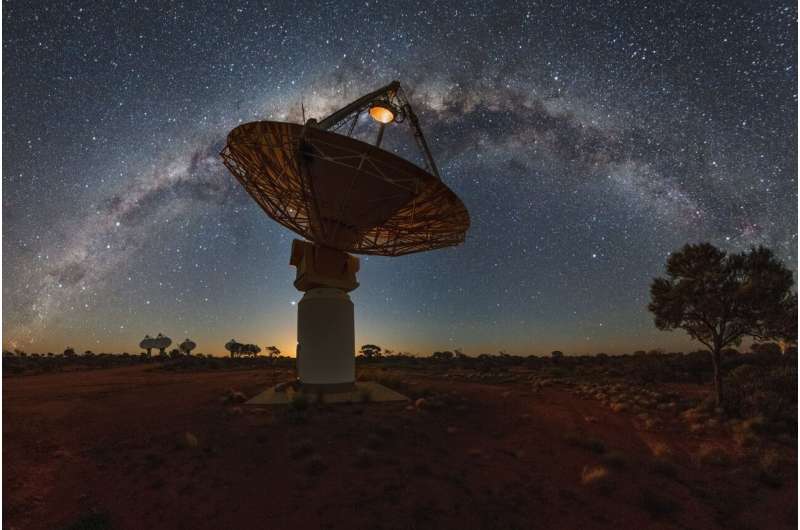
With the findings detailed in two Monthly Notices of the Royal Astronomical Society papers, a group of astronomers, led by the Italian National Institute of Astrophysics (INAF) and Macquarie University, reported the first radio observations toward the galactic plane using the Australian SKA Pathfinder (ASKAP), developed and managed by CSIRO—Australia's national science agency. The region mapped by the researchers includes the entire area of the Stellar Continuum Originating from Radio Physics In Ourgalaxy (SCORPIO) survey, one of the exploration projects of the Evolutionary Map of the Universe (EMU) program, which will use the new ASKAP telescope to make a census of radio sources of the whole southern hemisphere.
As part of the preliminary activities for the EMU project, radio astronomers pointed the ASKAP's antennas in the direction of the Scorpion's tail. At the time observations were carried out, the interferometer wasn't yet fully deployed (15 of the 36 antennas were then operational), and these were used to image an area of about 40 square degrees. The so-called SCORPIO field was included among the first scientific targets of ASKAP, thanks to preliminary work conducted by the Italian team using the Australia Telescope Compact Array (ATCA).
Week in images: 24 - 28 May 2021

Week in images: 24 - 28 May 2021
Discover our week through the lens
Europe picks EuroQCI satellite quantum communications consortium

TAMPA, Fla. — Europe has tasked an Airbus-led group to devise its own quantum communications network as startup Arqit raises $400 million for a space-based system.
Airbus said May 31 the European Commission awarded the group a contract to study a quantum technology-powered network, called EuroQCI, to secure critical infrastructure across Europe.
German startup raises funding for wildfire monitoring satellites
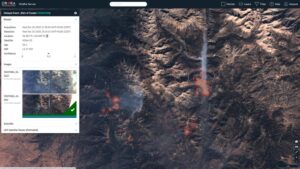
WASHINGTON — A German startup has raised an initial funding round that will enable it to begin launching a constellation of satellites to detect wildfires.
Orora Technologies, or OroraTech, announced June 1 it closed a Series A round worth 5.8 million euros ($7.1 million).
D-Orbit unveils third mission for ION Satellite Carrier
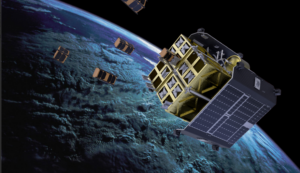
SAN FRANCISCO – D-Orbit plans to transport satellites into six distinct orbits in addition to hosting three payloads on a June flight of the Italian firm’s In-Orbit Now (ION) Satellite Carrier.
Customers for the third ION mission, which D-Orbit calls Wild Ride, include Elecnor Deimos of Spain, Bulgaria’s EnduroSat and Kuwaiti Orbital Space.
Uncovering the Hidden Arctic
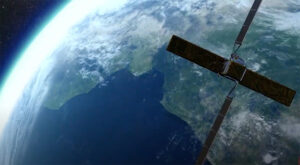
The Arctic. Bitterly cold and crossed by blinding storms. Shrouded in darkness half the year. A place of legend where polar bears roam and gigantic icebergs plunge into the sea.
But the Arctic is changing. The six years ending in 2019 were the warmest ever recorded.
Viasat wants FCC to review Starlink’s government funding
TAMPA, Fla. — Satellite operator Viasat is stepping up efforts to stop Starlink’s growing constellation, taking aim at the nearly $900 million of rural broadband subsidies that SpaceX won in December.
The operator is asking the Federal Communications Commission to review decisions made around the Rural Digital Opportunity Fund (RDOF), claiming differential treatment and a lack of transparency.
Lithuania joins Global Space Markets Challenge

Eligible companies from Lithuania can now submit applications to ESA’s Global Space Markets Challenge. The competition’s application deadline for all participants has been extended to 30 June 2021 (23:59 CEST).


