

Albedo raises $10 million for business to offer ultra-high-resolution Earth imagery
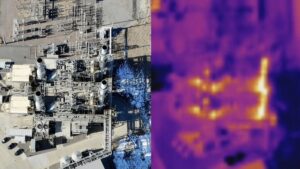
SAN FRANCISCO – Albedo, the space startup planning to offer Earth imagery with a resolution of 10 centimeters per pixel, raised $10 million in a seed funding round led by Initialized Capital. Additional investors include Liquid 2 Ventures, Soma Capital, Jetstream and Rebel Fund.
OQ Technology secures launches for propriety satellites as connected device market ramps up

TAMPA, Fla. — OQ Technology, a Luxembourg space startup created to connect internet of things (IoT) devices to 5G technology, has signed a multi-launch deal with rideshare specialist Spaceflight to loft its own small satellites.
Op-ed | Space is Vital for Earth Day
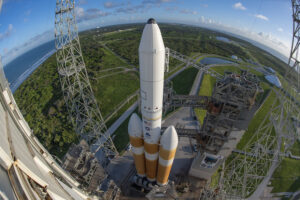
Space is vital to the mission and spirit of Earth Day. One might even say that Space is really all about Earth. From Space, we monitor forests, deserts and regions under stress in order to better protect them.
Mars' changing habitability recorded by ancient dune fields in Gale crater
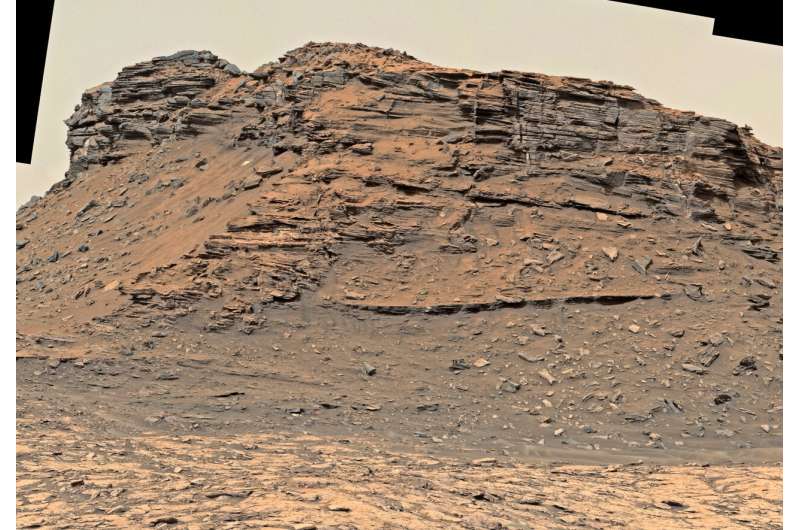
Understanding whether Mars was once able to support life has been a major driving force for Mars research over the past 50 years. To decipher the planet's ancient climate and habitability, researchers look to the rock record—a physical record of ancient surface processes which reflect the environment and the prevailing climate at the time the rocks were deposited.
In a new paper published in JGR: Planets, researchers on the NASA-JPL Mars Science Laboratory mission used the Curiosity rover to add another piece to the puzzle of Mars' ancient past by investigating a unit of rocks within Gale crater.
They found evidence of an ancient dune field preserved as a layer of rocks in Gale crater, which overlies rock layers that were deposited in a large lake. The rock remnants of the dune field are known today as the Stimson formation.
The findings help scientists understand surface and atmospheric processes—such as the direction the wind blew sand to form dunes—and potentially how Mars' climate evolved from an environment that potentially harbored microbial life, to an uninhabitable one.
Catch comet R4 ATLAS as it nears Earth
Looking to do some springtime astronomy? With temperatures warming up in the northern hemisphere in April through May, galaxy season is upon us. At dusk, the area in the Bowl of Virgo asterism rising in the east is rife with clusters of galaxies that spill over into the adjacent constellations of Coma Berenices and Boötes…
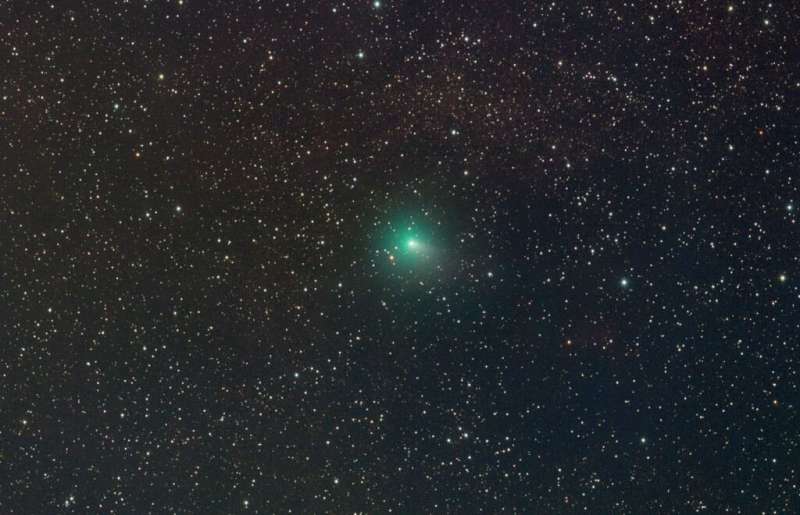
But this May, keep an eye out for a fuzzball interloper that is not a galaxy: Comet C/2020 R4 ATLAS.
Discovered on the night of September 12, 2020, by the prolific automated Asteroid Terrestrial Impact Last Alert System (ATLAS) sky survey based in Haleakala (ALTAS-HKO) and Mauna Loa (ATLAS-MLO) Hawaii, R4 ATLAS has proven to be an over-achiever. In fact, it was never initially predicted to top +10th magnitude… until a surprise outburst in late December 2020 shot it up 100-fold in brightness, from +18th to +13th magnitude. As of writing this, it sits at about +8th magnitude "with a bullet," and may top out +7th magnitude this week.
NASA's Webb Telescope to study young exoplanets on the edge
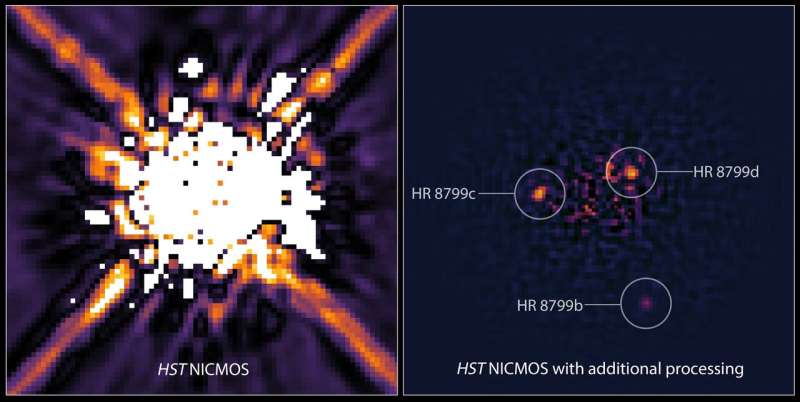
California Institute of Technology
NASA and the new urgency of climate change

“Climate change” is changing. There has been a growing push by scientists, environmental advocates and others to refer to the Earth’s changing climate as a “climate crisis” or even “climate emergency” to better reflect the severity of the problem and the urgency to take action to mitigate the worst of its effects.
Space Force selects Boeing, Northrop Grumman to develop jam-resistant communications satellites
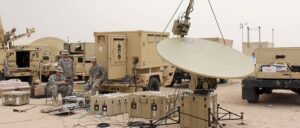
WASHINGTON — Boeing and Northrop Grumman have been selected to develop jam-resistant communications payloads for the U.S. Space Force’s Protected Tactical Satcom program.
The Space and Missile Systems Center in February 2020 and March 2020 awarded Boeing, Lockheed Martin and Northrop Grumman contracts for $191 million, $240 million and $253 million, respectively, to design prototype payloads for the Protected Tactical Satcom program known as PTS.
SPAC rule changes add complexity and delays for space companies eying public markets

TAMPA, Fla. — New accounting rules have thrown a wrench into a SPAC machine that has been catapulting space companies to the public markets.
Changing guidance from the U.S. Securities and Exchange Commission (SEC) are adding complexities, and delays, for SPACs (special-purpose acquisition companies) that merge with businesses after listing on the public market.


