
Hera spacecraft trio to fly safe with inter-linked radio
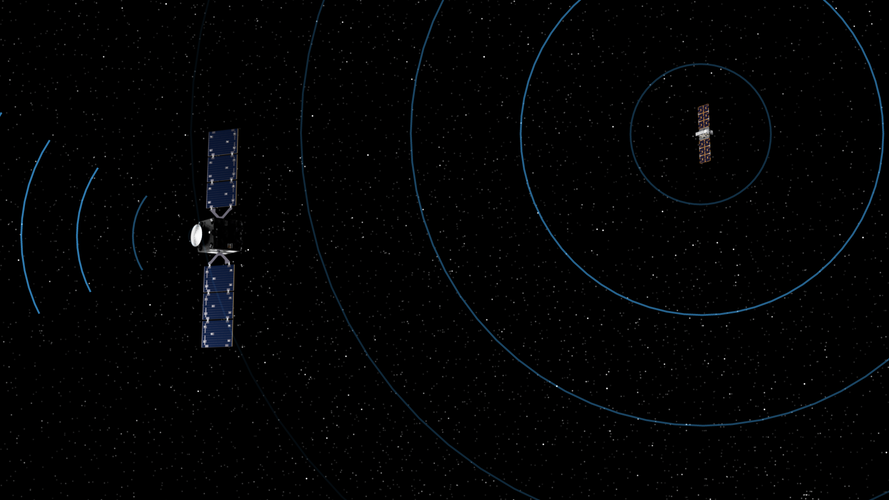
ESA’s Hera mission for planetary defence involves not just one spacecraft but three: two shoebox-sized CubeSats will fly up to a few dozen kilometres away from their mothership around the Didymos binary asteroid system. Keeping this trio in communication to fulfil their own mission needs while also ensuring their safe separation is the task of a novel inter-satellite link radio technology, produced by a Portuguese company best known for terrestrial drone systems.


Webb images new, cold exoplanet 12 light-years away

An international team of astronomers using the NASA/ESA/CSA James Webb Space Telescope have directly imaged an exoplanet roughly 12 light-years from Earth. While there were hints that the planet existed, it had not been confirmed until Webb imaged it. The planet is one of the coldest exoplanets observed to date.

Satellite solutions for seamless in-flight internet

In today's connected world, staying online even when travelling at 9000 m is becoming increasingly important. ESA is working to advance in-flight connectivity through satellite technology, ensuring internet access in the air is as seamless as it is on the ground.
Astranis fully funds Omega with $200 million fundraise


SES providing “managed satcom” services to U.S. Army


China’s domestic turmoil risks escalating space tensions

Star Catcher banks $12.25 million for orbital energy grid


NASA streams first 4K video from aircraft to space station and back
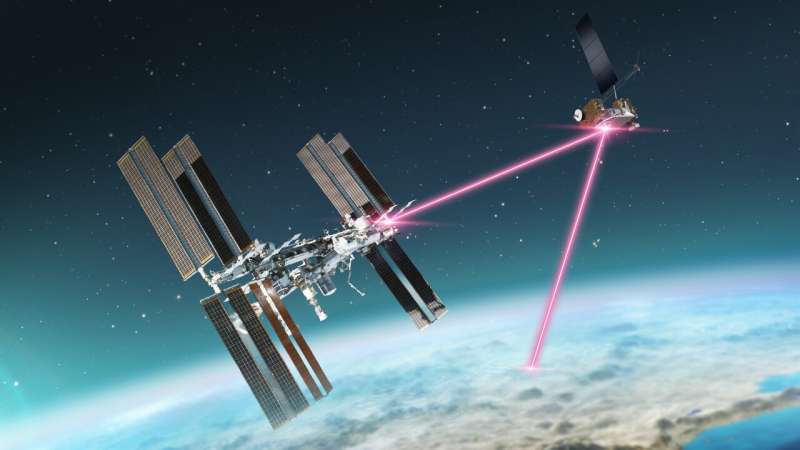
A team at NASA's Glenn Research Center in Cleveland has streamed 4K video footage from an aircraft to the International Space Station and back for the first time using optical (laser) communications. The feat was part of a series of tests on new technology that could provide live video coverage of astronauts on the moon during the Artemis missions.
Historically, NASA has relied on radio waves to send information to and from space. Laser communications use infrared light to transmit 10 to 100 times more data faster than radio frequency systems.
Working with the Air Force Research Laboratory and NASA's Small Business Innovation Research program, Glenn engineers temporarily installed a portable laser terminal on the belly of a Pilatus PC-12 aircraft.