
Renesas unveils space-grade power management solution for AMD Versal AI Edge SoC
 Renesas Electronics Corporation (TSE:6723), a leading supplier of advanced semiconductor solutions, has announced a comprehensive space-ready reference design for the AMD Versal AI Edge XQRVE2302 Adaptive SOC. Developed in collaboration with AMD, the ISLVERSALDEMO3Z power management reference design incorporates key space-grade components for effective power management.
This design targets
Renesas Electronics Corporation (TSE:6723), a leading supplier of advanced semiconductor solutions, has announced a comprehensive space-ready reference design for the AMD Versal AI Edge XQRVE2302 Adaptive SOC. Developed in collaboration with AMD, the ISLVERSALDEMO3Z power management reference design incorporates key space-grade components for effective power management.
This design targets Sentinel-2C arrives in French Guiana

The Sentinel-2C satellite, the third Copernicus Sentinel-2 satellite, has arrived at the European spaceport in French Guiana for liftoff on the final Vega rocket in September. Sentinel-2C, like its predecessors, will continue to provide high-quality data for Copernicus – the Earth observation component of the EU Space Programme.
Senate appropriators say spending bill includes NASA increase


ESA and UK Space Agency announce new funding call

ESA and the UK Space Agency are pleased to announce a new joint funding call ‘InCubed2 - Innovation in Public Services with Satellite Earth Observation’ for all UK-based entities developing innovative and commercially viable Earth observation projects. The deadline for pitch proposal submissions is 12 September 2024.
NASA's Artemis II moon mission rocket core stage on way to Kennedy Space Center
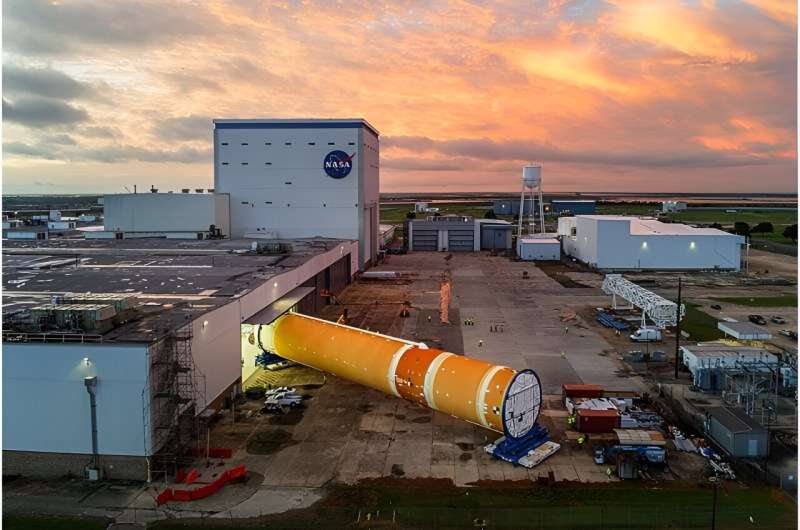
The biggest piece of the puzzle to send humans on a trip around the moon for the first time in more than half a century is on its way to Kennedy Space Center.
The Boeing-built core stage of NASA's Space Launch System rocket was loaded onto NASA's Pegasus barge from the Michoud Assembly Facility in New Orleans, and is now taking the 900-mile trip to Florida.
The flight hardware that includes the four RS-25 engines made by Aerojet Rocketdyne from the space shuttle era will then be taken to the Vehicle Assembly Building where it will be turned upright standing 212 feet tall. It will be married to other components of the SLS rocket including two solid rocket boosters from Northrop Grumman that when combined produce 8.8 million pounds of thrust on liftoff.
The next flight is Artemis II, which is targeting launch from KSC's Launch Pad 39-B no earlier than September 2025. That mission will take NASA astronauts Reid Wiseman, Victor Glover and Christina Koch along with Canadian astronaut Jeremy Hansen on a trip out to the moon and back aboard the Orion spacecraft built by Lockheed Martin.
Pentagon’s Arctic strategy emphasizes space and satellite capabilities

Astroscale unlocks remaining space agency funds to de-orbit OneWeb satellite


Europe sees Ariane 6 launch as an end to its “launcher crisis”


China wants 50 countries involved in its ILRS moon base