NASA Cloud-Based Platform Could Help Streamline, Improve Air Traffic
 Just like your smartphone navigation app can instantly analyze information from many sources to suggest the best route to follow, a NASA-developed resource is now making data available to help the aviation industry do the same thing.
To assist air traffic managers in keeping airplanes moving efficiently through the skies, information about weather, potential delays, and more is being gathe
Just like your smartphone navigation app can instantly analyze information from many sources to suggest the best route to follow, a NASA-developed resource is now making data available to help the aviation industry do the same thing.
To assist air traffic managers in keeping airplanes moving efficiently through the skies, information about weather, potential delays, and more is being gathe How melting icecaps impacts the rotation of Earth
 Climate change is causing significant melting of ice masses in Greenland and Antarctica, leading to a substantial flow of water into the world's oceans, particularly around the equator. "This means that a shift in mass is taking place, and this is affecting the Earth's rotation," explains Benedikt Soja, Professor of Space Geodesy at the Department of Civil, Environmental and Geomatic Engineering
 Food aroma study may help explain why meals taste bad in space
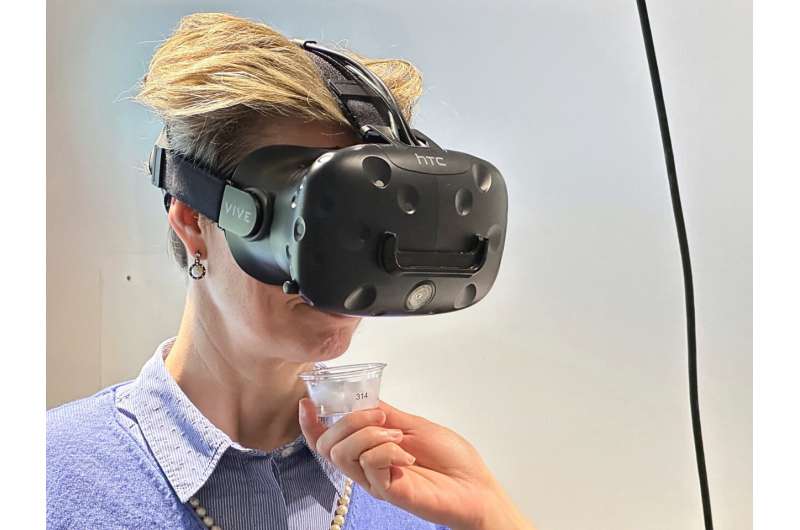
Scientists from RMIT University have led a world-first study on common food aromas that may help explain why astronauts report that meals taste bland in space and struggle to eat their normal nutritional intake.
This research, which is published in the International Journal of Food Science and Technology, has broader implications for improving the diets of isolated people, including nursing home residents, by personalizing aromas to enhance the flavor of their food.
Previous research has shown that aroma plays a big role in the flavor of food.
The team in this study tested how people perceived vanilla and almond extracts, and how lemon essential oil changed from normal environments on Earth to the confined setting of the International Space Station (ISS), which was simulated for participants with virtual reality goggles.
Up close and personal: Ariane 6 liftoff from the launchpad
 Video:
00:02:00
Video:
00:02:00
While no person could get this close during Ariane 6’s inaugural flight on 9 July 2024, several small cameras bravely witnessed its take-off from the launchpad.
After years of preparations, the Vulcain main stage engine ignites, arms providing cryogenic fuels to the rocket until the very last moment retract and boosters fire – Ariane 6 is space-bound. As it lifts off, vast amounts of water are pumped at high speed to dampen vibrations at the launch site, which then come rushing towards one of these small cameras in a dramatic swirl, hiding the departing rocket from view.
Ariane 6 launched
PLD Space launches SPARK Programme, offering free access to first two MIURA 5 flights to promote space innovation


KBR to acquire defense and space contractor LinQuest for $737 million


Refuellable satellites offer critical edge amidst intensifying threats in space


Study finds increased fire risk on future space missions
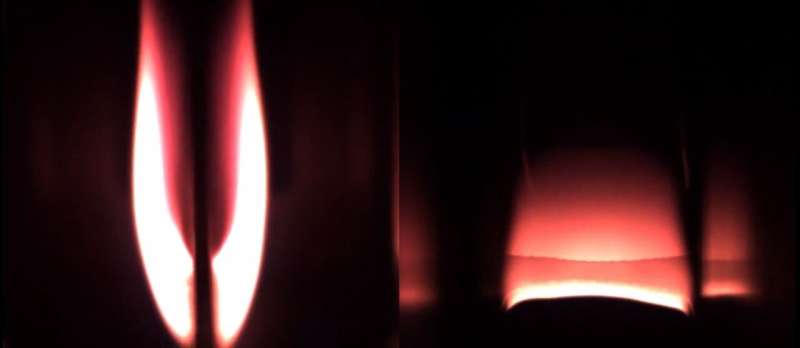
A research team from the Center of Applied Space Technology and Microgravity (ZARM) at the University of Bremen has investigated the risk of fire on spacecraft in a recent study. The results show that fires on planned exploration missions, such as a flight to Mars, could spread significantly faster than, for example, on the International Space Station (ISS). This is due to the planned adjustment to a lower ambient pressure on spacecraft.
"A fire on board a spacecraft is one of the most dangerous scenarios in space missions," explains Dr. Florian Meyer, head of the Combustion Technology research group at ZARM.
Ramon.Space creates UK space computing engineering hub