
GPS startup bets on advanced signal to counter jamming threats


GOP platform lays out aggressive space agenda to counter China

U.S. Space Force chief emphasizes international partnerships


Video: Ariane 6 liftoff from the launchpad
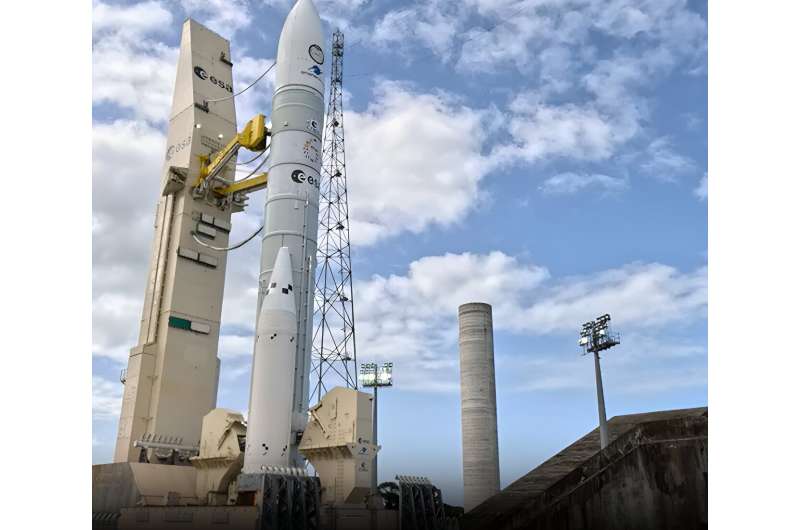
While no person could get this close during Ariane 6's inaugural flight on 9 July 2024, several small cameras bravely witnessed its take-off from the launchpad.
After years of preparations, the Vulcain main stage engine ignites, arms providing cryogenic fuels to the rocket until the very last moment retract and boosters fire—Ariane 6 is space-bound. As it lifts off, vast amounts of water are pumped at high speed to dampen vibrations at the launch site, which then come rushing towards one of these small cameras in a dramatic swirl, hiding the departing rocket from view.
Ariane 6 launched from Europe's Spaceport in French Guiana at 16:00 local time (20:00 BST, 21:00 CEST), designed to provide more launch power with higher flexibility and at a lower cost than its predecessors.
The launcher's configuration—with an upgraded main stage, a choice of either two or four powerful boosters and a new restartable upper stage—will provide Europe with greater efficiency and a wider range of launch services, including for the launch of multiple payloads into different orbits on a single flight.
A meteor streaked across the NYC skyline before disintegrating over New Jersey
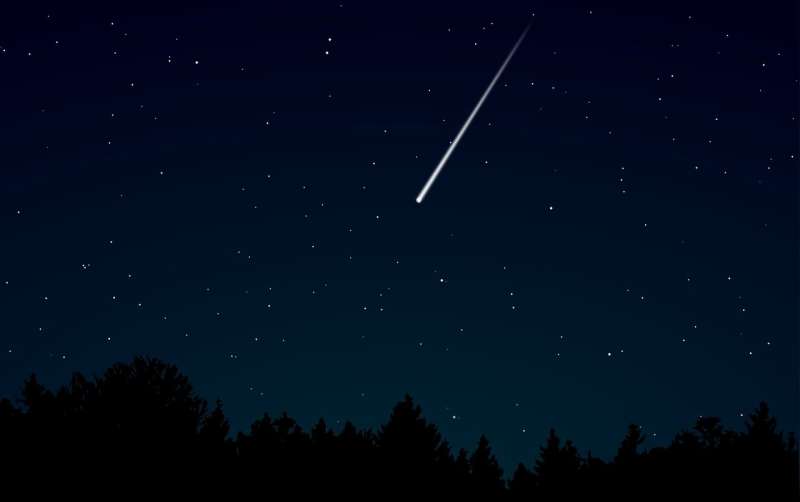
A meteor streaked across the New York City skyline before disintegrating over nearby New Jersey, according to NASA.
William Cooke, the head of the space agency's Meteoroid Environments Office, said the fireball was first sighted at an altitude of 51 miles (82 kilometers) above Manhattan at around 11:17 a.m. Tuesday.
The meteor passed over the southern part of Newark, New Jersey, before disintegrating 31 miles (50 kilometers) above the town of Mountainside, he said. No meteorites or other fragments of space debris reached the planet's surface.
The space rock moved at a speed of about 41,000 mph (66,000 kph) and descended at a relatively steep angle of 44 degrees from vertical, Cooke said.
Its exact trajectory is uncertain, since reports are based only on eyewitness accounts and no camera or satellite data is currently available, he said.
As of Wednesday morning, there had been approximately 40 eyewitness reports filed on the American Meteor Society website, which the agency used to generate its estimates, Cooke said.
The fireball was not part of the Perseid meteor shower, and reports of loud booms and shaking could be explained by military aircraft in the vicinity around the time of its appearance, he said.
Lunar leap: GNSS-powered autonomous navigation for moon-bound spacecraft
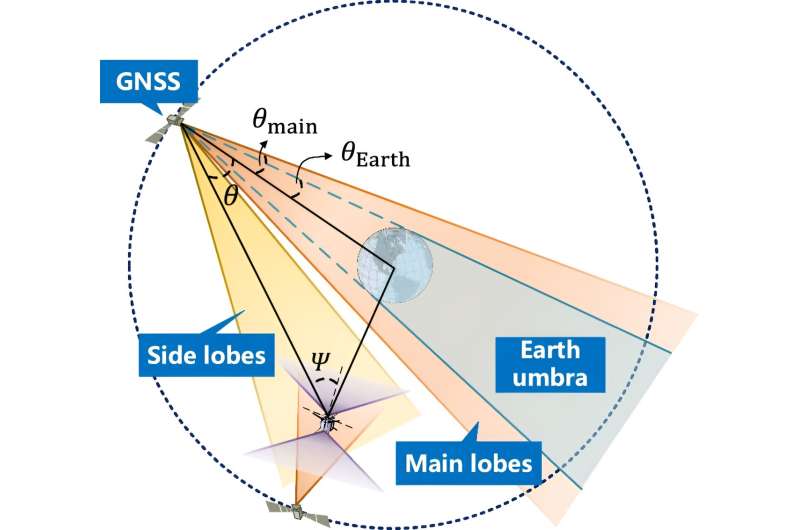
As lunar missions gain momentum, the demand for advanced navigation technologies that exceed traditional Earth-based systems grows. A new study addresses the challenges of weak Global Navigation Satellite System (GNSS) signals and spacecraft maneuvers in the lunar space, emphasizing the need for sophisticated integrated navigation systems.
Combining GNSS, Inertial Navigation System (INS), and star trackers, this research paves the way for enhanced accuracy and stability in space navigation, essential for the success of future space exploration.
Researchers from Shandong University, in collaboration with the Shandong Key Laboratory of Optical Astronomy and Solar-Terrestrial Environment, have published the study in Satellite Navigation on July 1, 2024. The study introduces an adaptive Kalman filter to enhance GNSS performance for spacecraft navigating in the Earth–moon space.


U.S. Space Command chief expresses confidence in Falcon 9’s prompt return to flight