


Weather satellite passes bake and shake tests with flying colours

As climate change drives more frequent and severe weather events, the need for accurate and timely forecasting has never been more critical. And now, the next Meteosat Third Generation weather satellite has passed its environmental test campaign with flying colours, taking it a significant step closer to launch.


Juice’s lunar-Earth flyby: all you need to know

ESA’s Jupiter Icy Moons Explorer (Juice) will return to Earth on 19–20 August, with flight controllers guiding the spacecraft first past the Moon and then past Earth itself. This ‘braking’ manoeuvre will take Juice on a shortcut to Jupiter via Venus.
Space Team Europe for Ariane 6: We did it!
 Video:
00:02:44
Video:
00:02:44
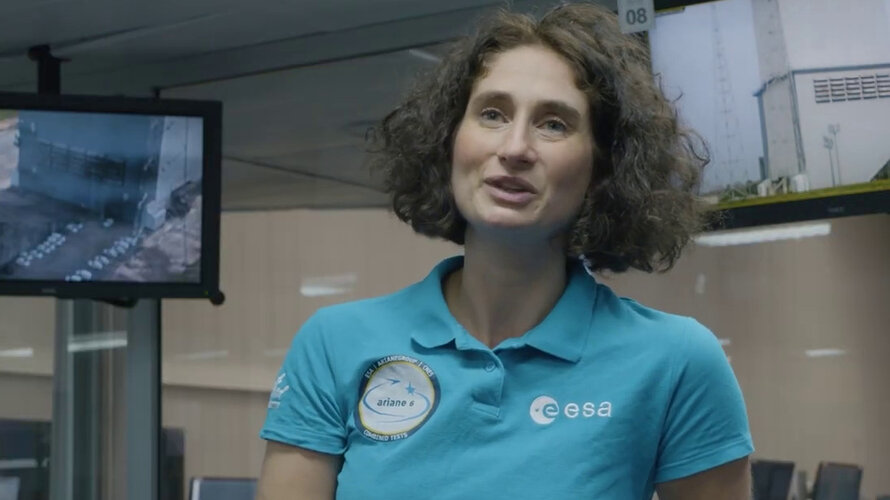
After many long hours, working through the night, plenty of sacrifices, tense moments during countdown and hot-fire tests – as well as months spent in masks and keeping a safe distance during the COVID-19 pandemic – Space Team Europe has done it. Ariane 6 took flight on 9 July 2014 and restored Europe’s autonomous access to space.
Thousands of people from different backgrounds, with different nationalities and speaking different languages all united around a shared vision: taking Europe to space.
Thank you Space Team Europe for your commitment, incredible team spirit and expertise. Go Ariane 6!
Ariane 6 launched on
ESA astronaut class of 2022: Astro Chat with Alexander Gerst
 Video:
00:38:42
Video:
00:38:42
ESA astronaut Alexander Gerst, an experienced spaceflyer, spacewalker, and former ISS commander, shares insights into his role as head of astronaut operations at ESA’s European Astronaut Centre. Tune in as he talks with us about guiding the next generation of astronauts through training and preparing them for their future in space exploration.
This is Episode 8 of our ESA Explores podcast series, delving into everything you want to know about the ESA astronaut class of 2022. Recorded in April 2024.
Find out more about Alexander.
U.S. nuclear command satellites need hardening against attacks, report warns


NASA’s CAPSTONE is testing “Autopilot” software suite for cislunar operations


Could resources on Mars support human explorers?
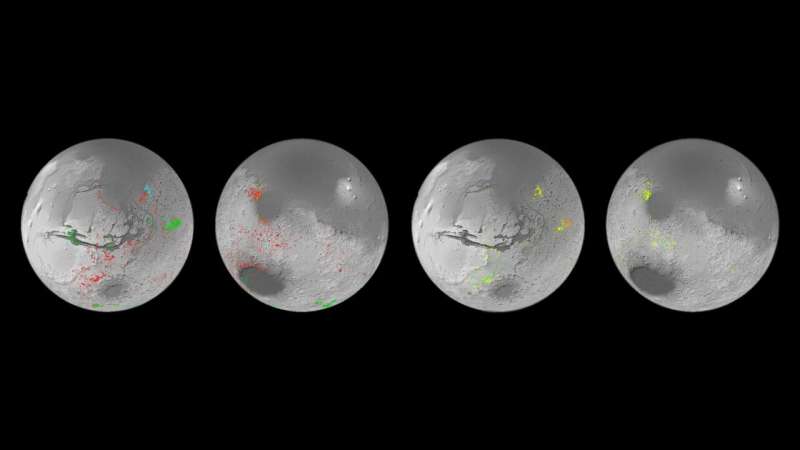
In the coming decades, multiple space agencies and private companies plan to establish outposts on the moon and Mars. These outposts will allow for long-duration stays, astrobiological research, and facilitate future solar system exploration. However, having crews operating far from Earth for extended periods will also present some serious logistical challenges.
Given the distances and costs involved, sending resupply missions will be both impractical and expensive. For this reason, relying on local resources to meet mission needs—aka. In-situ resource utilization (ISRU)—is the name of the game.
The need for ISRU is especially important on Mars as resupply missions could take six to nine months to get there. Luckily, Mars has abundant resources that can be harvested and used to provide everything from oxygen, propellant, water, soil for growing food, and building materials.
Existence of lunar lava tube cave demonstrated
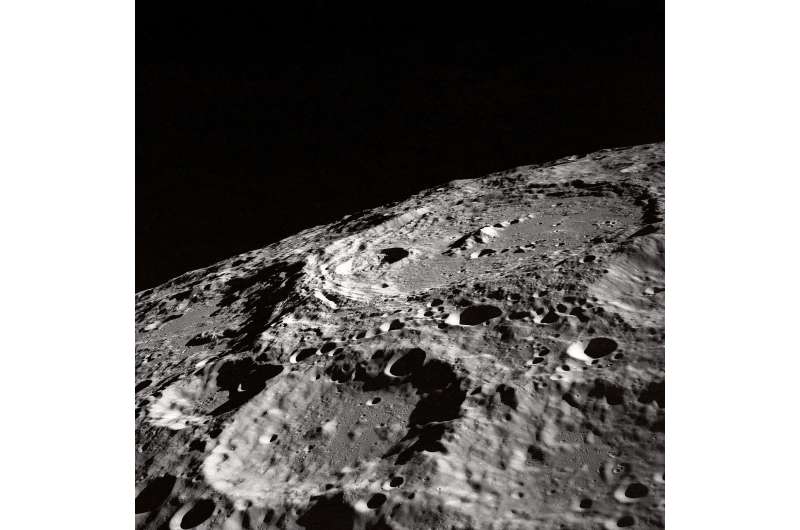
The presence of conduits below the lunar surface has been theorized and extensively debated for at least 50 years. Now, an analysis of NASA Lunar Reconnaissance Orbiter radar data reveals what lies below the Mare Tranquillitatis.
For the first time, scientists have demonstrated the existence of a tunnel in the lunar subsurface. It seems to be an empty lava tube. The study, published in Nature Astronomy, is the result of an international collaboration.
"These caves have been theorized for over 50 years, but it is the first time ever that we have demonstrated their existence," explains Lorenzo Bruzzone, professor at the University of Trento.
Bruzzone explains, "In 2010, as part of the ongoing LRO NASA mission, the Miniature Radio-Frequency (Mini-RF) instrument acquired data that included a pit in Mare Tranquilitatis.
"Years later, we have reanalyzed these data with complex signal processing techniques we have recently developed, and have discovered radar reflections from the area of the pit that are best explained by an underground cave conduit. This discovery provides the first direct evidence of an accessible lava tube under the surface of the moon.