Terran Orbital receives $100M investment from Lockheed Martin
 Terran Orbital Corporation (NYSE: LLAP), a global leader in satellite-based solutions primarily serving the United States and Allied aerospace and defense industries, announced that it has entered into a note and warrant purchase agreement pursuant to which Terran Orbital received a $100 million investment from Lockheed Martin (NYSE: LMT) in exchange for convertible notes and warrants issued by
 Bye-Bye Biomass: forest monitoring satellite departs for final testing before launch
 Biomass, the European Space Agency's (ESA) forest measuring satellite has left the Airbus Defence and Space site in Stevenage and is on its way to Toulouse for final testing ahead of launch.
The comprehensive environmental test programme for the spacecraft will include thermal vacuum tests, mechanical vibration, acoustic and electromagnetic compatibility testing to replicate the conditions
Biomass, the European Space Agency's (ESA) forest measuring satellite has left the Airbus Defence and Space site in Stevenage and is on its way to Toulouse for final testing ahead of launch.
The comprehensive environmental test programme for the spacecraft will include thermal vacuum tests, mechanical vibration, acoustic and electromagnetic compatibility testing to replicate the conditions Virgin Galactic delays introduction of second suborbital spaceship
Virgin Galactic’s second suborbital spaceplane won’t enter service in 2023 as previously planned because of demands on company personnel to both return the first spaceplane to flight and begin work on a next generation of vehicles.
The post Virgin Galactic delays introduction of second suborbital spaceship appeared first on SpaceNews.
Long March 5B rocket reenters over Pacific Ocean after forcing airspace closures in Europe
A large rocket stage used to launch the final module for China’s space station made an uncontrolled reentry into the atmosphere Friday after precautionary airspace closures took effect in southern Europe.
Week in images: 31 October - 4 November 2022

Week in images: 31 October - 4 November 2022
Discover our week through the lens
How do you keep a solar sail stable?
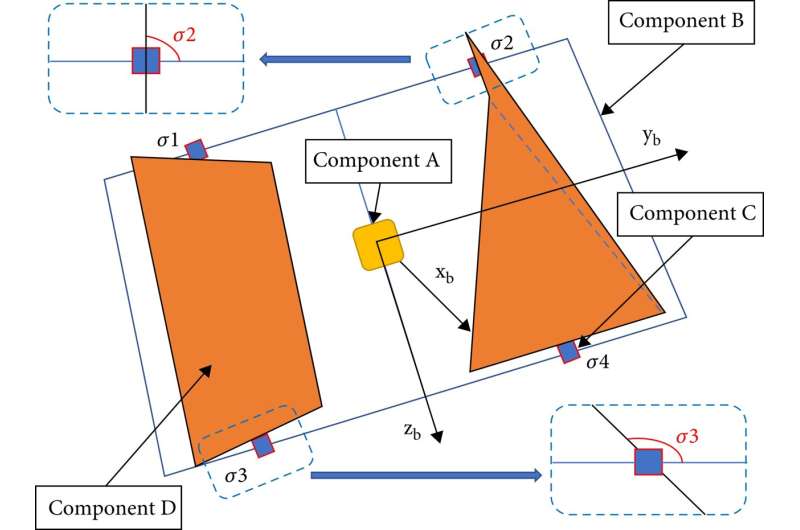
Solar sailing seems like a simple concept—instead of being pushed along by the wind, as in a typical sailing ship, a spacecraft can use highly reflective said to be pushed along simply by sunlight. But as with almost all engineering challenges, that technique is much easier said than done. Sunlight can head up one side of a sail more than another, causing the ship to rotate unexpectedly. Other unforeseen situations could arise that can also have catastrophic consequences for any mission using this propulsion technology.
Luckily, there is a way to account for those situations, though it involves a lot of math. Control theory is common in system design, and now researchers at Beihang University have devised a control scheme that they think could help minimize the risk to solar sails.
Control systems are relatively easy to understand in concept. A system has a series of inputs; in the case of a solar sail, those inputs might be the solar force pushing on it from the sun and maybe the gravity of any nearby object.
NASA's moon rocket returns to pad for next launch attempt
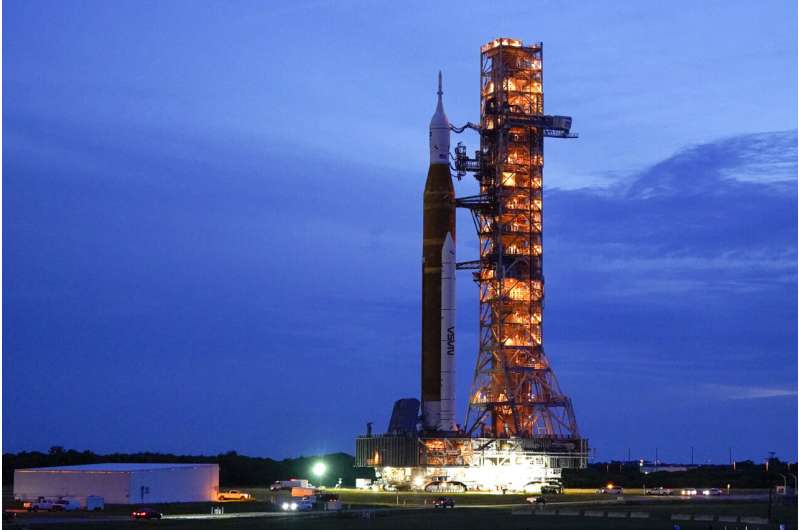
NASA's moon rocket is back on the pad for another launch attempt, following more repairs.
The 322-foot (98-meter) rocket departed its hangar in the middle of the night and completed the 4-mile (6.4-kilometer) trip shortly after sunrise Friday.
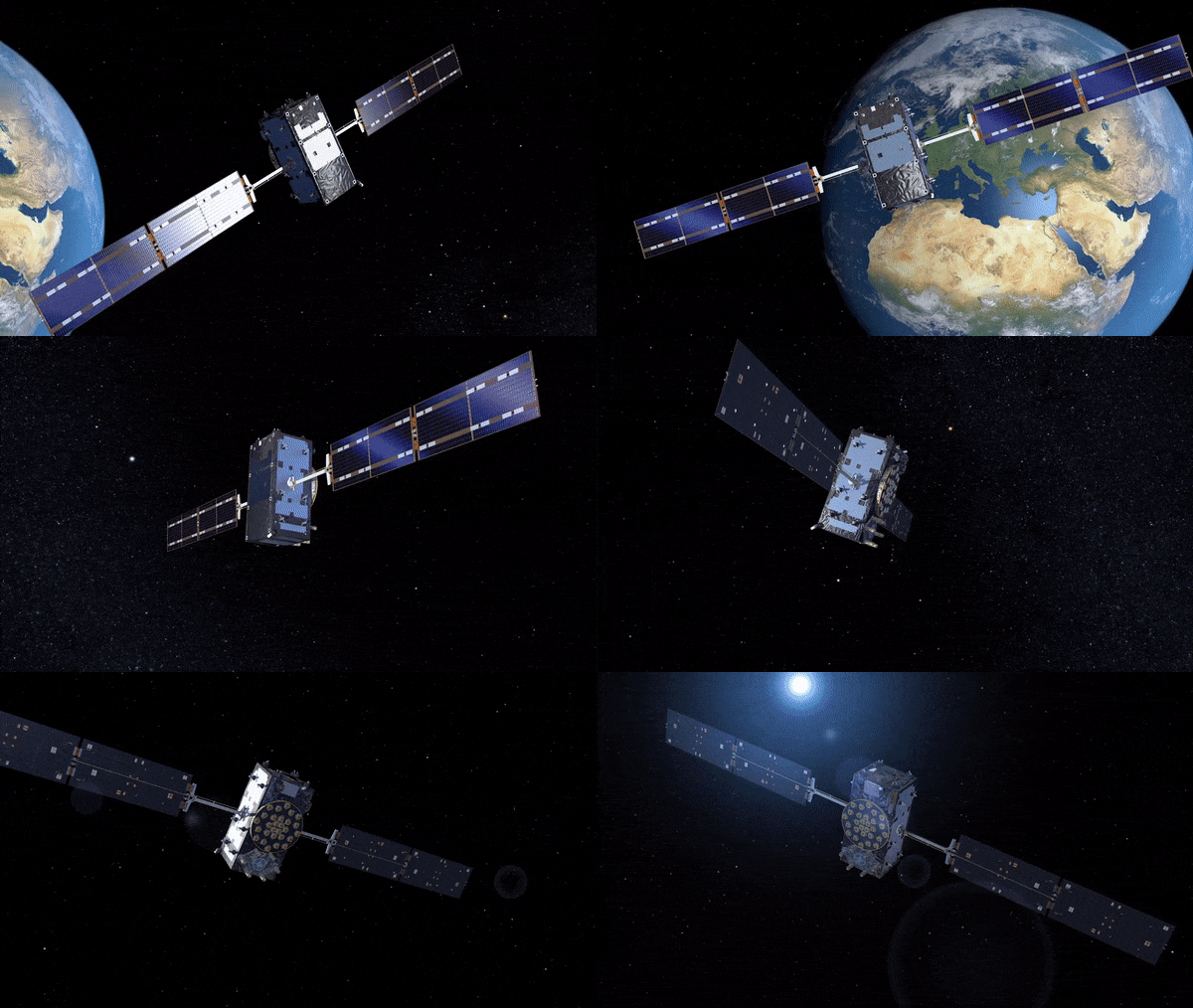
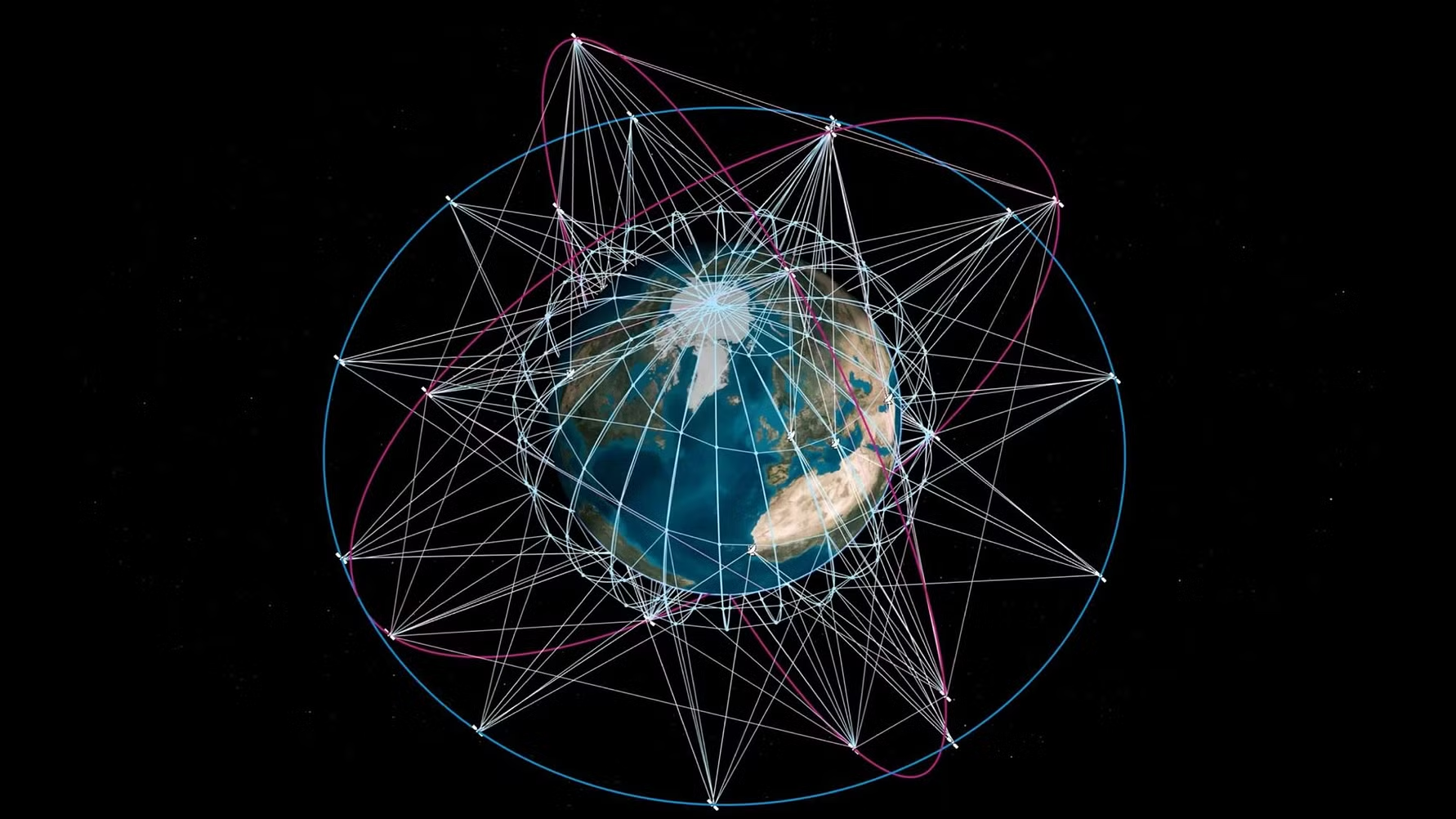
Video: Testing Galileo for space
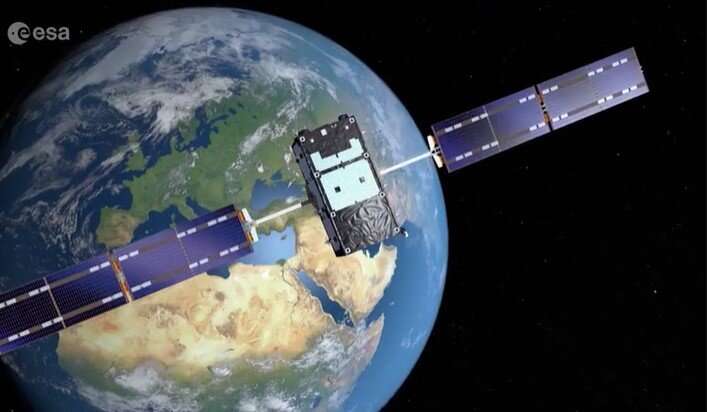
Galileo has grown to become Europe's single largest satellite constellation, and the world's most accurate satellite navigation system, delivering meter-level positioning to more than 3.5 billion users around the globe.
It all began at ESTEC's Test Center, Europe's largest satellite testing facility. This is where the very first positioning fix took place in March 2013, after the launch into orbit of the initial four IOV satellites. Following that, all 34 Galileo Full Operational Capability satellites also passed by ESTEC for their pre-flight testing.
This 3000 sq. m environmentally-controlled complex, operated and managed by European Test Services for ESA, hosts an array of test equipment able to simulate all aspects of spaceflight, from the noise and vibration of launch to the vacuum and temperature extremes of Earth orbit.
The production line at manufacturer OHB in Germany completed one new satellite every six weeks. After integration each satellite was then shipped to the ESTEC Test Center for a three-month test campaign, after which it would be accepted by the Agency and declared ready for flight. Some facilities have had to be adapted specifically for Galileo, and the ESTEC Test Center had to institute new security protocols because this was the first time that satellites with security restrictions were being tested at the site.
Rocket Lab launches Swedish satellite, fails to catch booster
Rocket Lab successfully launched a Swedish atmospheric science satellite on an Electron rocket Nov. 4, but a telemetry problem kept the company from attempting a mid-air recovery of the rocket’s booster.
SLS returns to the pad for next Artemis launch attempt
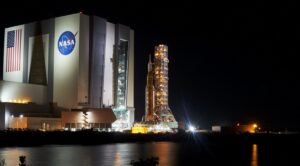
The Space Launch System and Orion spacecraft rolled back out to the launch pad Nov. 4 as the agency prepares for the third attempt to launch the vehicle on Artemis 1 mission later this month.