

Stellar feedback and an airborne observatory; scientists determine a nebula younger than believed
 In the southern sky, situated about 4,300 light years from Earth, lies RCW 120, an enormous glowing cloud of gas and dust. This cloud, known as an emission nebula, is formed of ionized gases and emits light at various wavelengths.
An international team led by West Virginia University researchers studied RCW 120 to analyze the effects of stellar feedback, the process by which stars inject e
In the southern sky, situated about 4,300 light years from Earth, lies RCW 120, an enormous glowing cloud of gas and dust. This cloud, known as an emission nebula, is formed of ionized gases and emits light at various wavelengths.
An international team led by West Virginia University researchers studied RCW 120 to analyze the effects of stellar feedback, the process by which stars inject e India's telecom regulator assessing Starlink system before accepting beta
 Elon Musk's space company SpaceX recently launched its Starlink satellite internet service that claims to be capable of delivering 50Mbps to 150Mbps internet access to "any part" of the Earth under the sky. The global roll-out of this internet service is expected to be completed by 2022.
SpaceX has offered to pre-sell its Starlink satellite internet service in India, and the country's Depa
Elon Musk's space company SpaceX recently launched its Starlink satellite internet service that claims to be capable of delivering 50Mbps to 150Mbps internet access to "any part" of the Earth under the sky. The global roll-out of this internet service is expected to be completed by 2022.
SpaceX has offered to pre-sell its Starlink satellite internet service in India, and the country's Depa Indonesian Govt deploys Iridium Push-to-Talk to overcome remote communications challenges
 Iridium Communications reports that the Republic of Indonesia's government has adopted Iridium Push-to-Talk (PTT) devices to support communication efforts across the country. By fully deploying 500 Iridium PTT handsets, the Indonesian government now has a reliable "grab-and-go" real-time satellite communications solution, ideal for communications on-the-move applications across the country's div
  Image:
Time keeping
Image:
Time keeping Iceye establishes U.S. headquarters and manufacturing facility in Irvine, California
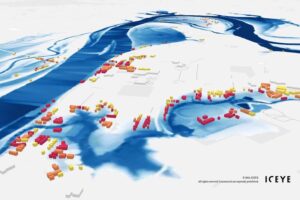
SAN FRANCISCO – Iceye has established a satellite manufacturing facility, research and development laboratory, and mission operations center for U.S.-licensed spacecraft at its new Iceye U.S. headquarters in Irvine, California.
“A huge part of our nation’s space industrial base and centers for innovation are located here in Southern California,” Jerry Welsh, Iceye U.S.
SpaceX adds to latest funding round

WASHINGTON — SpaceX has added more than $300 million to a fundraising round announced earlier this year to support continued work on its Starship launch system and Starlink satellite constellation.
In an amended filing with the U.S. Securities and Exchange Commission April 14, the company revised a filing in February that disclosed raising $850 million.
Satellite imagery key to powering Google Earth

One of the most comprehensive pictures of our changing planet is now available to the public. Thanks to the close collaboration between Google Earth, ESA, the European Commission, NASA and the US Geological Survey, 24 million satellite photos from the past 37 years have been embedded into a new layer of Google Earth – creating a new, explorable view of time on our planet.
Space law is an important part of the fight against space debris
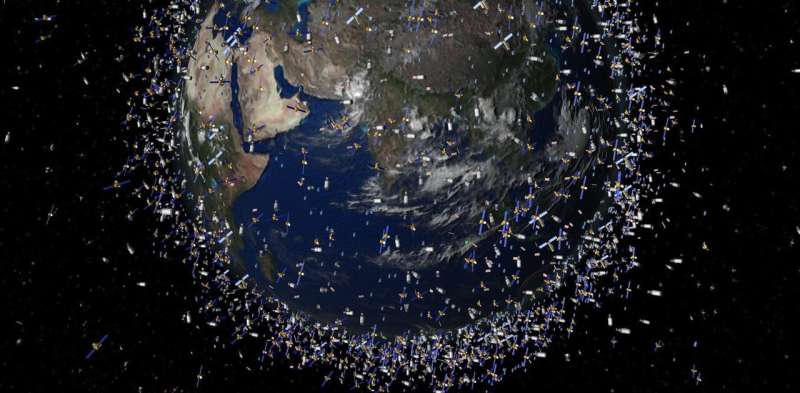
Space is getting crowded. More than 100 million tiny pieces of debris are spinning in Earth orbit, along with tens of thousands of bigger chunks and around 3,300 functioning satellites.
Large satellite constellations such as Starlink are becoming more common, infuriating astronomers and baffling casual skywatchers. In the coming decade, we may see many more satellites launched than in all of history up to now.
Collisions between objects in orbit are getting harder to avoid. Several technologies for getting space debris out of harm's way have been proposed, most recently the plan from Australian company Electro Optic Systems (EOS) to use a pair of ground-based lasers to track debris and "nudge" it away from potential collisions or even out of orbit altogether.
Tools like this will be in high demand in coming years. But alongside new technology, we also need to work out the best ways to regulate activity in space and decide who is responsible for what.
Active debris removal
EOS's laser system is just one of a host of "active debris removal" (ADR) technologies proposed over the past decade.
Galileo sunspot sketches versus modern 'deep learning' AI
It's a fascinating thought to consider.
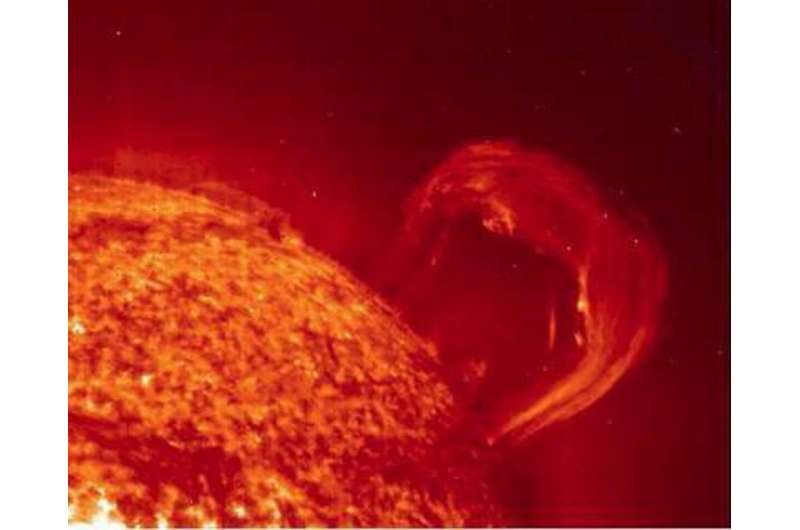
What exactly did the Sun look like, centuries ago? What would we see, if astronomers back in the time of Kepler and Galileo had modern technology monitoring the Sun across the electromagnetic spectrum, available to them?
Thanks to modern artificial intelligence, there may be a way to actually 'see' just what state the Sun was in, way back in those days of yore. A recent study, titled "Generation of Modern Satellite Data from Galileo Sunspot Drawings in 1612 by Deep Learning" out February 2021 in the Astrophysical Journal of the American Astronomical Society used an innovative set of deductions to compare sketches of sunspots with modern views from ground and space-based observations. The study was led by Harim Lee from Kyung Hee University in the Republic of South Korea.
Galileo and the Sun
Sunspot records represent one of the longest sets of astronomical data available, going all the way back to Chinese observations in 1128 A.D.
Top EU court rejects European Aviation Network challenge, but legal action continues
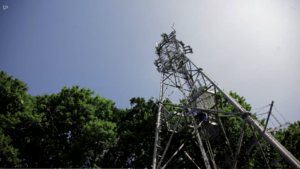
TAMPA, Fla. — Inmarsat’s competitors have vowed to continue pursuing legal action to block its hybrid satellite and cellular European Aviation Network (EAN), after the European Union’s highest court rejected their challenge.


