

60 years after Gagarin, Russia lags in the space race
 A station on the moon! A mission to Venus! A next generation spacecraft!
Sixty years after the Soviet Union made history by launching Yuri Gagarin into space on April 12, 1961, Russia continues to have lofty extraterrestrial ambitions, but its ability to realise them is more down to earth.
Project after project has been announced and then delayed, as grand designs fall victim to funding
A station on the moon! A mission to Venus! A next generation spacecraft!
Sixty years after the Soviet Union made history by launching Yuri Gagarin into space on April 12, 1961, Russia continues to have lofty extraterrestrial ambitions, but its ability to realise them is more down to earth.
Project after project has been announced and then delayed, as grand designs fall victim to funding Mapping North Carolina's ghost forests from 430 miles up
 Emily Ury remembers the first time she saw them. She was heading east from Columbia, North Carolina, on the flat, low-lying stretch of U.S. Highway 64 toward the Outer Banks. Sticking out of the marsh on one side of the road were not one but hundreds dead trees and stumps, the relic of a once-healthy forest that had been overrun by the inland creep of seawater.
"I was like, 'Whoa.' No leav
Emily Ury remembers the first time she saw them. She was heading east from Columbia, North Carolina, on the flat, low-lying stretch of U.S. Highway 64 toward the Outer Banks. Sticking out of the marsh on one side of the road were not one but hundreds dead trees and stumps, the relic of a once-healthy forest that had been overrun by the inland creep of seawater.
"I was like, 'Whoa.' No leav The long-term sustainability of space
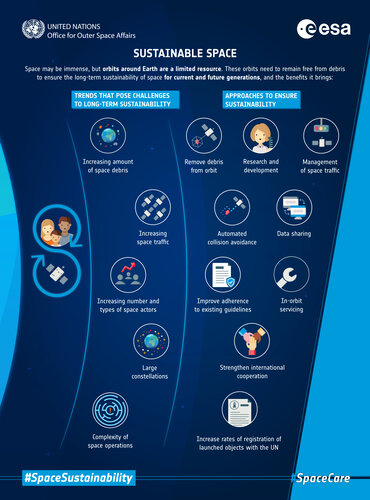 Image:
How do we tackle the debris problem, to secure the sustainability of space long term?
Image:
How do we tackle the debris problem, to secure the sustainability of space long term? Telesat completing financing for Lightspeed constellation
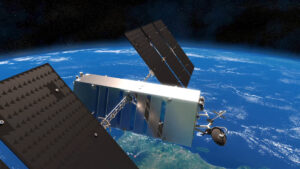
WASHINGTON — Telesat expects to finalize the financing for its Lightspeed broadband constellation in the next few months, along with contracts to launch the fleet of nearly 300 satellites.
Agenda 2025 Media Briefing
 Video:
01:00:59
Video:
01:00:59
ESA Director General Josef Aschbacher spoke to journalists on 7 April 2021 to introduce ESA Agenda 2025, setting out ESA's strategic priorities and goals.
Introducing ESA Agenda 2025

ESA Director General Josef Aschbacher has worked with our Member States to define new priorities and goals for ESA for the coming years.
Op-ed | Build a Robot Base on Mars
The triumphant landing of the Perseverance rover has inspired all Americans, and indeed much of the world. President Biden should follow it up by launching the program to send humans to Mars.
While robotic rovers are wonderful, they cannot resolve the fundamental scientific questions that Mars poses to humanity, which relate to the potential prevalence and diversity of life in the universe.
Former NASA administrator advising acquisition-hungry Voyager Space Holdings
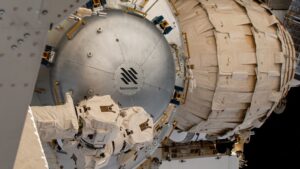
TAMPA, Fla. — Denver-based Voyager Space Holdings, which has been buying businesses to build a vertically integrated space exploration company, has appointed former NASA administrator Jim Bridenstine to chair its advisory board.
It is the second corporate announcement in a week for Bridenstine, who joined satellite operator Viasat’s board of directors April 1.
ESA, CNSA heads discuss future space plans

HELSINKI — The heads of the European Space Agency and China National Space Administration held a video call April 1 to outline respective plans for the coming years.
Lunar Gateway will maintain its orbit with a 6 kW ion engine
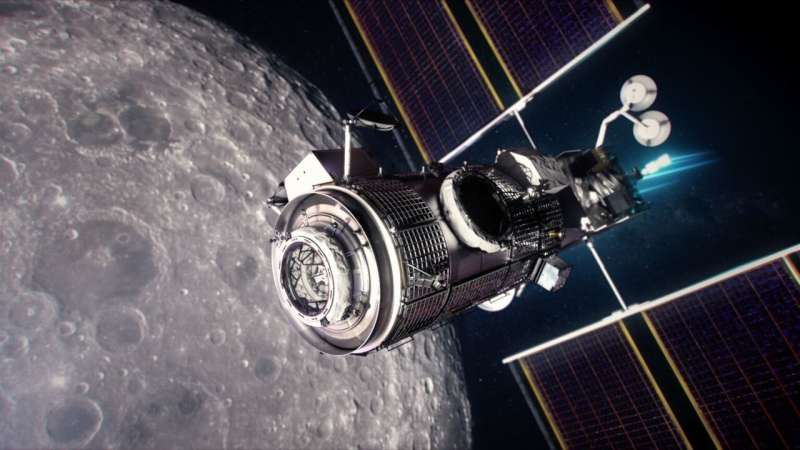
When NASA sends astronauts back to the moon as part of the Artemis Program, they will be taking the long view. Rather than being another "footprints and flags" program, the goal is to create a lasting infrastructure that will ensure a "sustained program of lunar exploration." A major element in this plan is the Lunar Gateway, an orbital habitat that astronauts will use to venture to and from the surface.
The first step in establishing the Gateway is the deployment of two critical modules—the Habitation and Logistics Outpost (HALO) and the Power and Propulsion Element (PPE). According to a recent update, NASA (along with Maxar Technologies and Busek Co.) recently completed a hot-fire test of the PPE propulsion subsystem—the first of many that will ensure that the PPE and HALO will be ready for launch by 2024.
This propulsion subsystem is a cluster of Hall effect thrusters (aka ion engines), which use electromagnetic fields to accelerate ionized gas through engine nozzles to generate thrust. In this case, the engine system is a 6-kilowatt solar electric propulsion (SEP) concept that incorporates Maxar-built electronics and a xenon feed system with four Busek-built BHT-600 thrusters.


