

Getting the CubeSats moving at ESA
 ESA's M-Argo mission will be the first CubeSat to traverse interplanetary space under its own power. Due to launch in 2024-5, the suitcase-sized spacecraft will travel to a near-Earth asteroid, up to 150 million km away.
CubeSats are small, cheap satellites assembled from standardised parts in 10 cm boxes - M-Argo is a 12-unit CubeSat. Originally intended for educational purposes and techn
ESA's M-Argo mission will be the first CubeSat to traverse interplanetary space under its own power. Due to launch in 2024-5, the suitcase-sized spacecraft will travel to a near-Earth asteroid, up to 150 million km away.
CubeSats are small, cheap satellites assembled from standardised parts in 10 cm boxes - M-Argo is a 12-unit CubeSat. Originally intended for educational purposes and techn Carbon's interstellar journey to Earth
 We are made of stardust, the saying goes, and a pair of studies including University of Michigan research finds that may be more true than we previously thought. The first study, led by U-M researcher Jie (Jackie) Li and published in Science Advances, finds that most of the carbon on Earth was likely delivered from the interstellar medium, the material that exists in space between stars in a gal
 Hawkeye 360 announces commissioning of second satellite cluster
 HawkEye 360 Inc., the first commercial company to use formation-flying satellites to create a new class of radio frequency (RF) data and data analytics, today announced that its recently-launched "Cluster 2" satellites have achieved initial operating capability.
The trio of satellites, which entered orbit aboard a SpaceX Falcon 9 rocket in January, have completed functional testing, moved
HawkEye 360 Inc., the first commercial company to use formation-flying satellites to create a new class of radio frequency (RF) data and data analytics, today announced that its recently-launched "Cluster 2" satellites have achieved initial operating capability.
The trio of satellites, which entered orbit aboard a SpaceX Falcon 9 rocket in January, have completed functional testing, moved Technology race against China a key concern for Pentagon acquisition nominee

WASHINGTON — Michael Brown, a veteran tech industry executive who has led the Pentagon’s commercial outreach office since 2018, is President Biden’s pick for the Defense Department’s top procurement job, the White House announced April 2.
NASA's Ingenuity helicopter dropped on Mars' surface ahead of flight

NASA's Ingenuity mini-helicopter has been dropped on the surface of Mars in preparation for its first flight, the US space agency said.
The ultra-light aircraft had been fixed to the belly of the Perseverance rover, which touched down on the Red Planet on February 18.
"MarsHelicopter touchdown confirmed!" NASA's Jet Propulsion Laboratory tweeted Saturday.
"Its 293 million mile (471 million kilometer) journey aboard @NASAPersevere ended with the final drop of 4 inches (10 centimeter) from the rover's belly to the surface of Mars today. Next milestone? Survive the night."
A photograph accompanying the tweet showed Perseverance had driven clear of the helicopter and its "airfield" after dropping to the surface.
Ingenuity had been feeding off the Perseverance's power system but will now have to use its own battery to run a vital heater to protect its unshielded electrical components from freezing and cracking during the bitter Martian night.
Russia continues discussions with China on lunar exploration cooperation
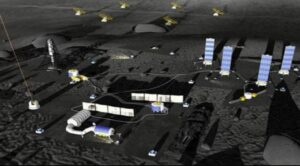
WASHINGTON — The Russian space agency Roscosmos anticipates additional negotiations with China at a conference in June, building upon an agreement on lunar exploration announced in February.
Lockheed Martin makes block buy of launches from ABL Space Systems
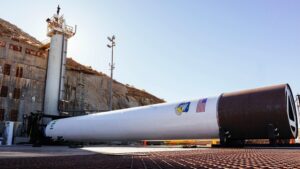
WASHINGTON — Lockheed Martin has signed a contract with small launch vehicle developer ABL Space Systems for as many as 58 launches over the next decade, a deal potentially worth several hundred million dollars.
The contract, announced April 5, covers up to 26 launches of ABL’s RS1 rocket through 2025, and an additional 32 launches from 2026 through 2029.
Crew Dragon moves to new docking port at ISS
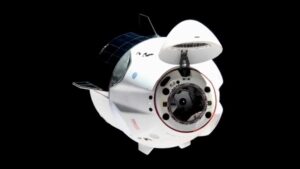
WASHINGTON — A SpaceX Crew Dragon spacecraft moved from one docking port to another on the International Space Station April 5, marking the start of a busy month spacecraft arrivals and departures on the station.
The Crew Dragon spacecraft Resilience undocked from the forward port on the station’s Harmony module at 6:30 a.m.
Op-ed | Space Settlement Act should guide Nelson’s NASA tenure
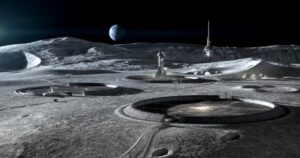
As former U.S. lawmaker Bill Nelson awaits Senate confirmation of his nomination to lead NASA, it is perhaps time to recall a policy he voted for some 30 years ago.
As chairman of a House space subcommittee, Nelson presided over consideration of the Space Settlement Act of 1988, which was added as a provision to the NASA Authorization Act, and ultimately signed into law by President Ronald Reagan.
With Air Force funding, Numerica deploys telescopes to monitor space in broad daylight
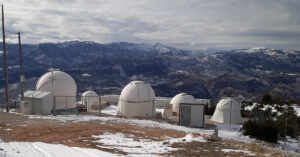
WASHINGTON — Numerica, a company that operates a network of ground-based telescopes to track objects in deep space, is deploying new sensors that can observe orbiting satellites in broad daylight.
The telescopes were funded with $3 million the company won in 2019 at a pitch day event hosted by the U.S.


