

View from Hera’s Asteroid Deck
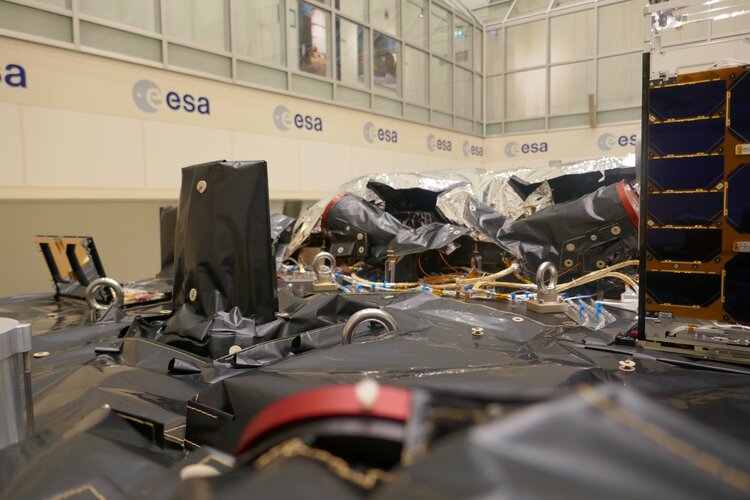 Image:
View from Hera’s Asteroid Deck
Image:
View from Hera’s Asteroid Deck MaiaSpace to use former Soyuz launch pad in French Guiana


NASA funds Starfish Space debris inspection mission


D-Orbit raises 150 million euros in two-part Series C round


Earth to capture a 'second moon' this weekend, NASA says
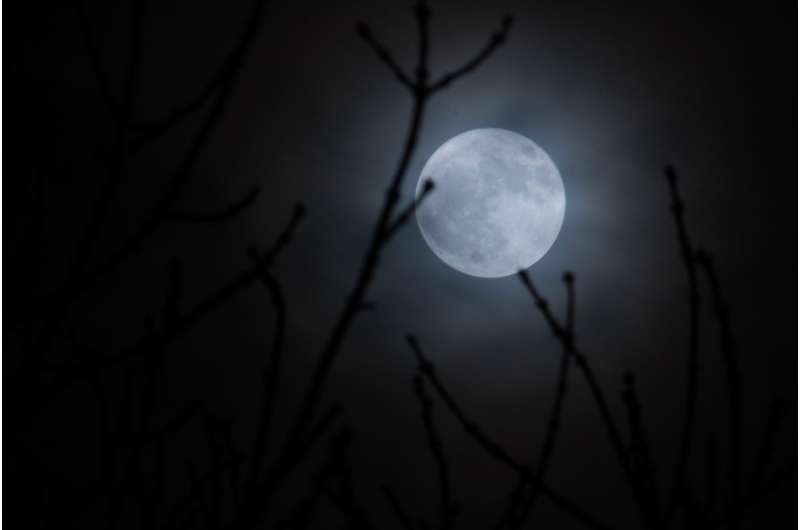
Earth will capture a miniature, "second moon" this week, according to NASA scientists.
The new moon is actually a tiny asteroid dubbed 2024 PT5. It will start orbiting the planet in a horseshoe path and stick around for a little less than two months before escaping Earth's gravitational pull and going back to its regular orbit around the sun.
"According to the latest data available from NASA's Jet Propulsion Laboratory Horizons System, the temporary capture will start at 15:54 EDT (on Sunday) and will end at 11:43 EDT on November 25," mini-moon event expert and Universidad Complutense de Madrid professor Carlos de la Fuente Marcos told Space.com.
2024 PT5 is part of "the Arjuna asteroid belt, a secondary asteroid belt made of space rocks that follow orbits very similar to that of Earth at an average distance to the sun of about 93 million miles," Marcos said.
He added that the asteroid, which poses no threat to the planet, will travel about 2,200 miles per hour while maintaining a distance of around 2.8 million miles from Earth.
Week in images: 23-27 September 2024

Week in images: 23-27 September 2024
Discover our week through the lens
University researchers flag cislunar space debris concerns

Scientists begin testing space thruster that could boldly go where no one has gone before

Deep space exploration might no longer be confined to sci-fi after scientists began testing a rocket thruster which promises to boldly go further than ever before.
Astro engineers from the University of Southampton are trialing a new propulsion system which can power spaceships through the stars using any type of metal as fuel.
They say this means crafts fitted with the technology could fly indefinitely by refilling their tanks using minerals harvested from asteroids or far-off moons.
Lead scientist Dr. Minkwan Kim, from the University of Southampton, has been tasked with testing the propulsion system in his labs to measure its thrust.
He said the tech could help spaceships and probes travel to regions of the universe previously thought unreachable.
Dr. Kim added, "Spacecraft have limited amounts of fuel because of the enormous cost and energy it takes to launch them into space.
"But these new thrusters are capable of being powered by any metal that can burn, such as iron, aluminum or copper.
Lunar dust dynamics: Unveiling the charging properties and particle behavior of Chang'e-5 samples in an electric field

A study published in Engineering has shed new light on the behavior of lunar regolith particles under the influence of an external electric field, a discovery that could revolutionize space exploration and lunar resource utilization. The research, conducted by a collaborative team of scientists from the Qian Xuesen Laboratory of Space Technology, Tsinghua University, and other institutions, focuses on the charging properties and particle dynamics of lunar samples brought back by China's Chang'e-5 mission.
Europe en route for Moon with new simulator, says astronaut Pesquet
 Europe has embarked on the mission to put humans back on the Moon with a new lunar simulator launched in Germany, French astronaut Thomas Pesquet told AFP.
Pesquet was at the German Aerospace Center (DLR) in Cologne on Wednesday to test out LUNA, a facility built to resemble the surface of the Moon.
The 46-year-old astronaut, a national icon in France for his missions to the Internationa
Europe has embarked on the mission to put humans back on the Moon with a new lunar simulator launched in Germany, French astronaut Thomas Pesquet told AFP.
Pesquet was at the German Aerospace Center (DLR) in Cologne on Wednesday to test out LUNA, a facility built to resemble the surface of the Moon.
The 46-year-old astronaut, a national icon in France for his missions to the Internationa 


