

SpaceX shuts down launches after problem with Crew-9 mission's 2nd stage

SpaceX celebrated the first human spaceflight from its Cape Canaveral launch site on Saturday, and while the two humans aboard the Crew Dragon Freedom are safely on their way to the International Space Station, a problem arose with the rocket's second stage that prompted the company to shut down future launches for now.
"After today's successful launch of Crew-9, Falcon 9's second stage was disposed in the ocean as planned, but experienced an off-nominal deorbit burn," SpaceX posted on X. "As a result, the second stage safely landed in the ocean, but outside of the targeted area. We will resume launching after we better understand [the] root cause."
The first victim of the shutdown was a planned launch Sunday from California of a Falcon 9 with a plan to send up the OneWeb Launch 20 mission for EutelsatGroup.
The Federal Aviation Administration still has that launch on its operations plan advisory for as early as Oct. 1, but the last two times SpaceX had an "off-nominal" issue with a Falcon 9 launch, the FAA had grounded the rocket.
The most recent was a fiery landing of a Falcon 9's first-stage booster last month during a Starlink mission.
Stuck NASA astronauts welcome SpaceX capsule that'll bring them home next year

October's 'ring of fire' solar eclipse will dazzle parts of South America and the Pacific

A "ring of fire" eclipse of the sun is coming.
Hera asteroid mission
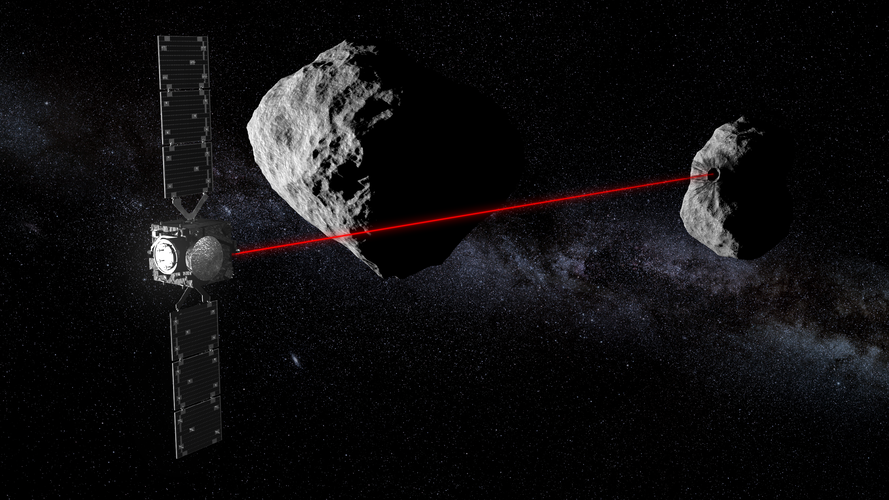
Hera asteroid mission
ESA's first planetary defence mission, headed to a binary asteroid
ESA releases new strategy for Earth observation

ESA has released its new Earth Observation Science Strategy, Earth Science in Action for Tomorrow’s World. Responding to the escalating threats from climate change, biodiversity loss, pollution and extreme weather and the need to take action to address these threats, this forward-looking strategy outlines a bold vision for Earth science through to 2040.
The government should investigate supply chains in the space economy

Commerce begins beta tests of space traffic coordination system

Commercial space’s critical role in the race to outpace adversaries

CubeSats, the tiniest of satellites, are changing the way we explore the solar system

Most CubeSats weigh less than a bowling ball, and some are small enough to hold in your hand. But the impact these instruments are having on space exploration is gigantic. CubeSats—miniature, agile and cheap satellites—are revolutionizing how scientists study the cosmos.
A standard-size CubeSat is tiny, about 4 pounds (roughly 2 kilograms). Some are larger, maybe four times the standard size, but others are no more than a pound.
As a professor of electrical and computer engineering who works with new space technologies, I can tell you that CubeSats are a simpler and far less costly way to reach other worlds.
Rather than carry many instruments with a vast array of purposes, these Lilliputian-size satellites typically focus on a single, specific scientific goal—whether discovering exoplanets or measuring the size of an asteroid. They are affordable throughout the space community, even to small startup, private companies and university laboratories.
New mission to create total solar eclipses in space
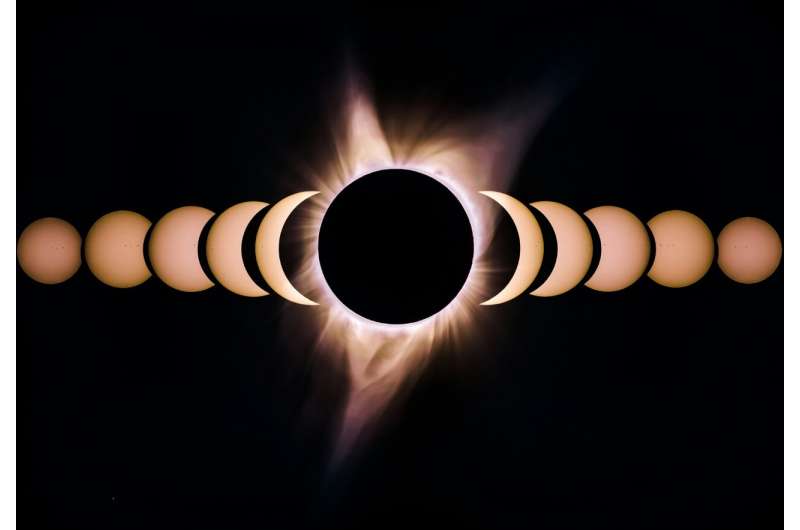
A UK team of researchers including UCL's Professor Lucie Green are working on the launch of a spacecraft mission that will allow us to view the sun's atmosphere in more detail than ever before.
The proposed MESOM mission will enable researchers to study the conditions that create solar storms, leading to improvements in forecasts of space weather on Earth.
The MESOM spacecraft will fly on a peculiar trajectory enabled by the gravitational attraction of the Earth, the sun and the moon, and will use the shadow of the moon to re-create a total solar eclipse in space once every lunar month lasting almost 50 minutes.
Total solar eclipses seen from Earth are much shorter and only last between 10 seconds and 7.5 minutes, with the annular solar eclipse in the Southern Hemisphere this Wednesday 2 October expected to last around seven minutes.
Creating a longer eclipse in space will enable the MESOM team to take high-quality images and measurements of the sun's corona, filling gaps in existing understanding of the physical processes taking place in the solar atmosphere that lead to space weather.


