

Sentinel-2C captures stunning glimpse of the Moon
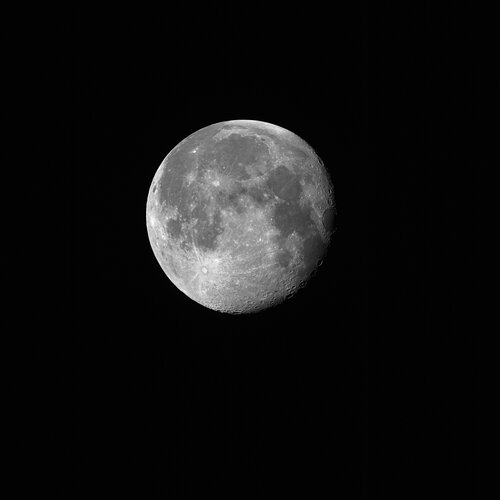 Image:
On 20 September, the Copernicus Sentinel-2C satellite captured its first stunning image of the Moon, achieved by rolling the satellite sideways in a unique manoeuvre. Although Sentinel-2C is primarily designed for Earth observation, this image – intended for calibration and cross-mission comparisons – exceeded expectations.
Image:
On 20 September, the Copernicus Sentinel-2C satellite captured its first stunning image of the Moon, achieved by rolling the satellite sideways in a unique manoeuvre. Although Sentinel-2C is primarily designed for Earth observation, this image – intended for calibration and cross-mission comparisons – exceeded expectations. Turbulence in the Sun’s corona
 Video:
00:00:29
Video:
00:00:29
Solar wind is a never-ending stream of charged particles coming from the Sun. Rather than a constant breeze, this wind is rather gusty. As solar wind particles travel through space, they interact with the Sun's variable magnetic field, creating chaotic and fluctuating motion known as turbulence.
This video confirms something long suspected: the turbulent motion of solar wind begins very close to the Sun, inside the solar atmosphere known as the corona. Small disturbances affecting solar wind in the corona are carried outward and expand, generating turbulent flow further out in space.
By blocking out direct light coming from
Look inside ESA’s Hera asteroid mission
 Video:
00:02:02
Video:
00:02:02
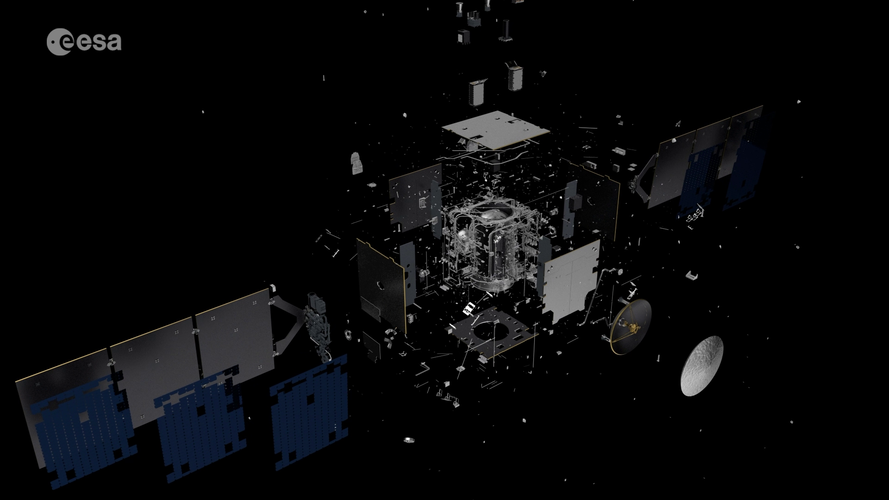
Hera is ESA's first planetary defence mission, set to probe the lingering mysteries of a unique target among the 1.3 million known asteroids of our Solar System: the first body to have had its orbit shifted by human action.
Spacecraft are among the most complex machines ever built, so need to be broken down into sets of subsystems, and this video shows how ESA and European industry put together Hera.
Hera’s chemical propulsion subsystem is what moves it through space, while its electrical power subsystem supplies and regulates electrical power throughout the spacecraft as needed. Its data handling subsystem
Hubble sees black hole beam boosting stellar eruptions

In a surprise finding, astronomers using the NASA/ESA Hubble Space Telescope have discovered that the blowtorch-like jet from a supermassive black hole at the core of a huge galaxy seems to cause stars to erupt along its trajectory. The stars, called novae, are not caught inside the jet, but apparently in a dangerous neighbourhood nearby.


Katie Wall, True Anomaly Director of Government Affairs — Leading Women in Space


Space Force kicks off $1 billion cloud-based satellite operations program


Space Force hails progress in missile-warning satellite program


Air France plans to connect entire fleet to Starlink Wi-Fi


NASA's Artemis science instrument gets tested in moon-like sandbox

On Sept. 9 and 10, scientists and engineers tested NASA's LEMS (Lunar Environment Monitoring Station) instrument suite in a "sandbox" of simulated moon regolith at the Florida Space Institute's Exolith Lab at the University of Central Florida in Orlando.
Lunar regolith is a dusty, soil-like material that coats the moon's surface, and researchers wanted to observe how the material would interact with LEMS's hardware, which is being developed to fly to the moon with Artemis III astronauts in late 2026.
Designed and built at NASA's Goddard Space Flight Center in Greenbelt, Maryland, LEMS is one of three science payloads chosen for development for Artemis III, which will be the first mission to land astronauts on the lunar surface since 1972.
The LEMS instrument package can operate both day and night. It will carry two University of Arizona-built seismometers to the surface to perform long-term monitoring for moonquakes and meteorite impacts.
Provided by NASA


