

Cluster’s Salsa satellite primed to reenter and break up
 Video:
00:01:02
Video:
00:01:02
On 8 September 2024, Salsa (Cluster 2), one of four satellites that make up ESA’s Cluster mission, will reenter Earth’s atmosphere over the South Pacific Ocean Uninhabited Area.
Salsa’s reentry marks the end of the historic Cluster mission, over 24 years after the quartet was sent into space to measure Earth’s magnetic environment. Though the remaining three satellites will also stop making scientific observations, discoveries using existing mission data are expected for years to come.
This ‘targeted reentry’ is the first of its kind, and goes well beyond international standards. ESA is committed to ensuring the long-term sustainability of space activities by mitigating the creation of space debris wherever possible
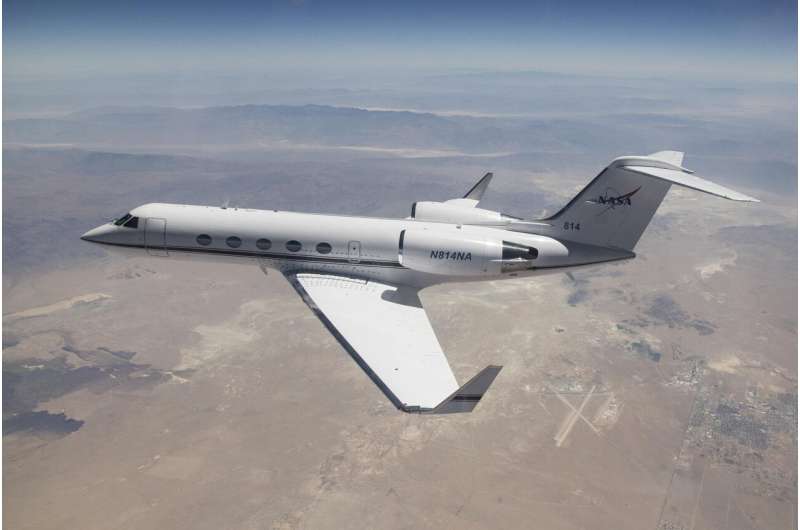
NASA G-IV plane will carry next-generation science instrument
NZ's Space Agency is both regulator and developer of the aerospace industry—that's a point of tension, say researchers
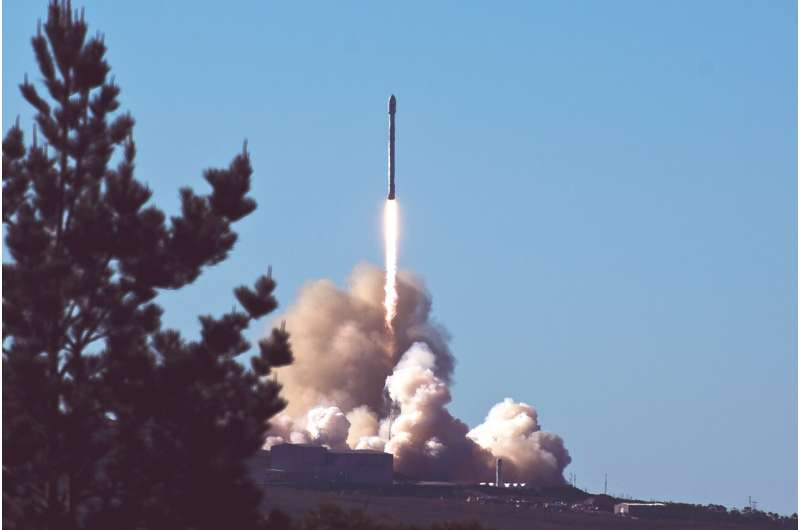
Like the global space industry, which aims to reach a value of US$1.8 trillion by 2035, New Zealand's aerospace sector is growing rapidly.
But as our latest research shows, it is falling short on addressing urgent sustainability issues because of a perception this would incur short-term costs and slow growth.
Many countries are prioritizing the development of national space strategies. Usually, these include plans to increase access to venture capital, grow a specialist workforce and develop flexible regulations and sovereign defense capabilities.
But sustainability leadership in space is crucial, given rising concerns over space debris, and emerging issues such as ozone depletion from rocket launches and the accumulation of alumina and soot particles in Earth's atmosphere as re-entering objects burn up.
The politics of growth
New Zealand's aerospace regulatory system was catalyzed by Rocket Lab U.S.'s commercial decision to launch rockets from a spaceport on the Māhia peninsula.
This was followed by the establishment of New Zealand's Space Agency. This small unit of the Ministry of Business, Innovation and Employment (MBIE) regulates launch payloads and fosters business development by facilitating access to funding for commercial ventures and scientific research.
What type of excavator is most suitable for asteroids?
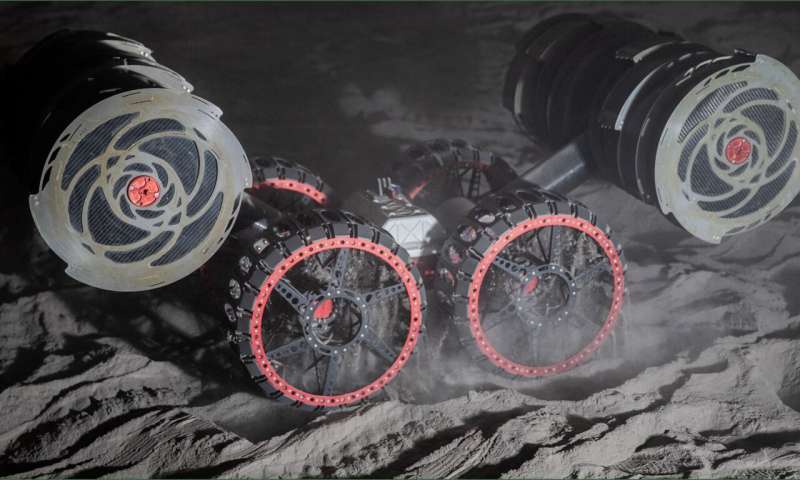
Digging in the ground is so commonplace on Earth that we hardly ever think of it as hard. But doing so in space is an entirely different proposition. On some larger worlds, like the moon or Mars, it would be broadly similar to how digging is done on Earth. But their "milligravity" would make the digging experience quite different on the millions of asteroids in our solar system.
Given the potential economic impact of asteroid mining, there have been plenty of suggested methods on how to dig on an asteroid, and a team from the University of Arizona has published the latest in a series of papers about using a customized bucket wheel to do so.
Bucket wheel designs seem to be gaining popularity in space mining more generally lately. NASA's ISRU Pilot Excavator (IPEx) uses a similar design and has been advanced to Technology Readiness Level 5, according to its latest yearly report.


NASA cuts 2 from next SpaceX flight to make room for astronauts stuck at space station
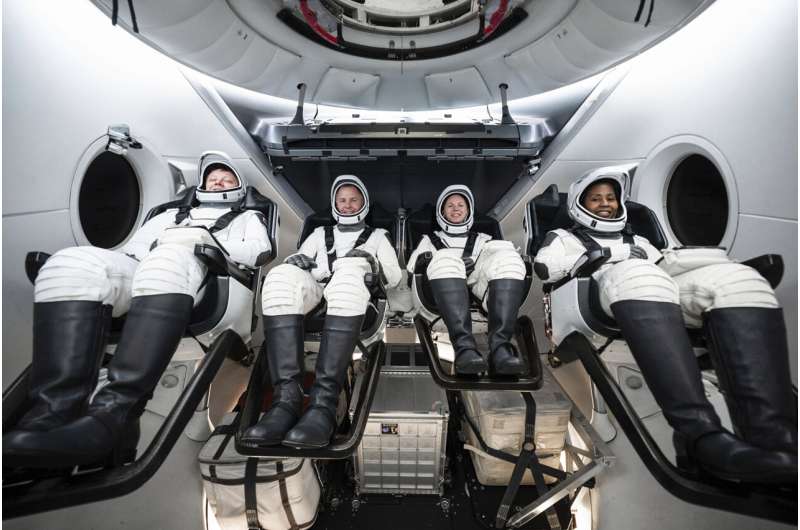
NASA on Friday cut two astronauts from the next crew to make room on the return trip for the two stuck at the International Space Station.
NASA's Nick Hague and Russian Aleksandr Gorbunov will launch in September aboard a SpaceX rocket for the orbiting laboratory. The duo will return with Suni Williams and Butch Wilmore in February. NASA decided it's too risky for Williams and Wilmore to fly home in their Boeing Starliner capsule, marred by thruster troubles and helium leaks.
NASA's new solar sail extends its booms and sets sail
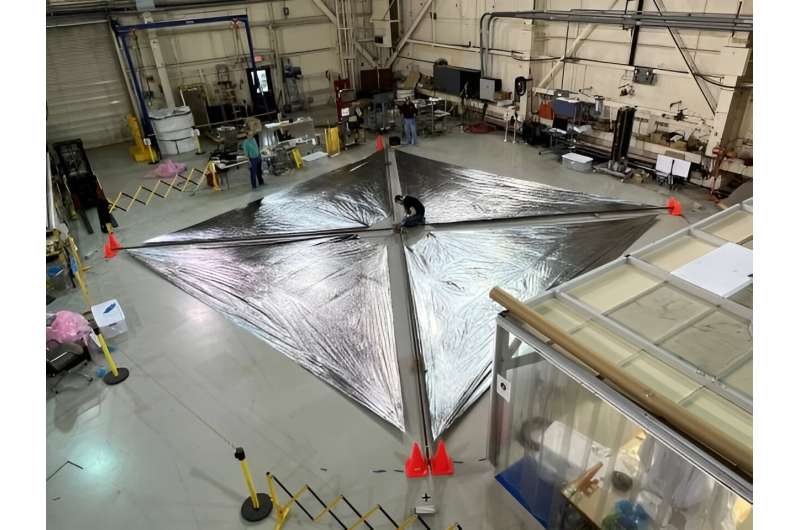
Solar sails are an exciting way to travel through the solar system because they get their propulsion from the sun. NASA has developed several solar sails, and their newest, the Advanced Composite Solar Sail System (or ACS3), launched a few months ago into low Earth orbit.
Naval Research Laboratory's LARADO instrument to detect lethal orbital debris, integrated on STP satellite

General Dynamics secures $491 million contract extension from Space Development Agency


