

Groundwork begins for LISA space detector
 In early 2024, the European Space Agency approved the launch of LISA, the first gravitational-wave observatory in space, set for 2034. Unlike ground-based detectors, LISA will observe a distinct part of the gravitational-wave spectrum, revealing new types of signals.
This advancement presents significant challenges for scientists, who must now develop theoretical frameworks and data-analys
In early 2024, the European Space Agency approved the launch of LISA, the first gravitational-wave observatory in space, set for 2034. Unlike ground-based detectors, LISA will observe a distinct part of the gravitational-wave spectrum, revealing new types of signals.
This advancement presents significant challenges for scientists, who must now develop theoretical frameworks and data-analys UK Space Agency funds innovative satellite data projects to boost UK businesses
 The UK Space Agency has awarded grants of up to GBP 400,000 each to several pilot projects aimed at exploring new ways to use satellite data and services in industries such as transport, logistics, and financial services. These projects will combine satellite data with terrestrial technologies like AI, quantum computing, machine learning, and geospatial data to deliver innovative solutions for U
 Sentinel-2C encapsulated in Vega rocket for upcoming launch
 As the countdown to the launch of the Copernicus Sentinel-2C satellite on September 4th progresses, the team at Europe's Spaceport in Kourou, French Guiana, has completed a crucial step by sealing the satellite within the Vega rocket's fairing.
Once deployed into orbit, Sentinel-2C will continue the mission of delivering high-resolution imagery for diverse applications in land, water, and
As the countdown to the launch of the Copernicus Sentinel-2C satellite on September 4th progresses, the team at Europe's Spaceport in Kourou, French Guiana, has completed a crucial step by sealing the satellite within the Vega rocket's fairing.
Once deployed into orbit, Sentinel-2C will continue the mission of delivering high-resolution imagery for diverse applications in land, water, and US leaders have been warned to focus on GPS and PNT to protect the nation

How biofilms can help or hinder spaceflight

As humans spread into the cosmos, we will take a plethora of initially Earth-bound life with us for the ride. Some might be more beneficial or potentially harmful than others. And there is no lifeform more prevalent on Earth than bacteria. These tiny creatures and fungi, their long-lost cousins on the evolutionary tree, have a habit of clumping together to form a type of structure known as a biofilm.
Biofilms are ubiquitous in Earth-bound environments and have been noticed on space missions for decades. But what potential dangers do they pose? More interestingly, what possible problems can they solve?
A paper from a group of scientists focused on life support systems in the journal Biofilm provides a high-level overview of the state of the science of understanding how biofilms work in space and where it might need to go for us to establish a permanent human presence off-world.
The paper is divided into five sub-sections, each of which examines how biofilms might impact them.
SpaceX delays Polaris Dawn launch again with no new date set
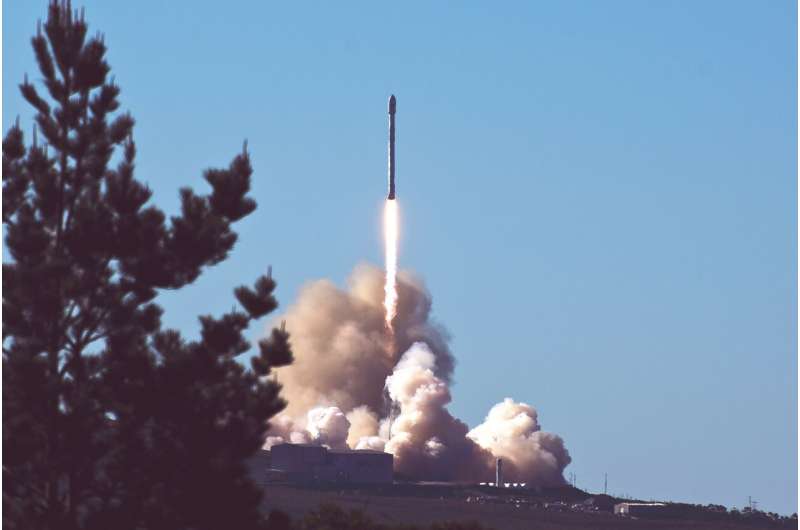
Billionaire Jared Isaacman's return trip to space on the Polaris Dawn mission is having to wait a little longer after a launch pad issue forced one delay and now the weather has taken the next two launch opportunities off the board.
First, a helium leak on the launch pad Monday night forced SpaceX to hold off a planned overnight launch attempt of Isaacman and three crewmates aboard the SpaceX Crew Dragon Resilience atop a Falcon 9 rocket from KSC's Launch Pad 39-A. Then SpaceX said weather in the recovery area would take off both early Wednesday and early Thursday morning opportunities.
"Due to unfavorable weather forecast in Dragon's splashdown areas off the coast of Florida, we are now standing down from tonight and tomorrow's Falcon 9 launch opportunities of Polaris Dawn," SpaceX posted on X late Tuesday. "Teams will continue to monitor weather for favorable launch and return conditions."
It's uncertain if SpaceX would try for an early Friday morning launch opportunity.
"The ascent corridor is go, it's the splashdown locations day 5 that are not favorable," Isaacman posted late Tuesday to X.
With successful airlock test, Lockheed Martin invests in inflatable space structures

NASA’s inspector general predicts continued cost growth for SLS mobile launch platform


New algorithms could enhance autonomous spacecraft safety
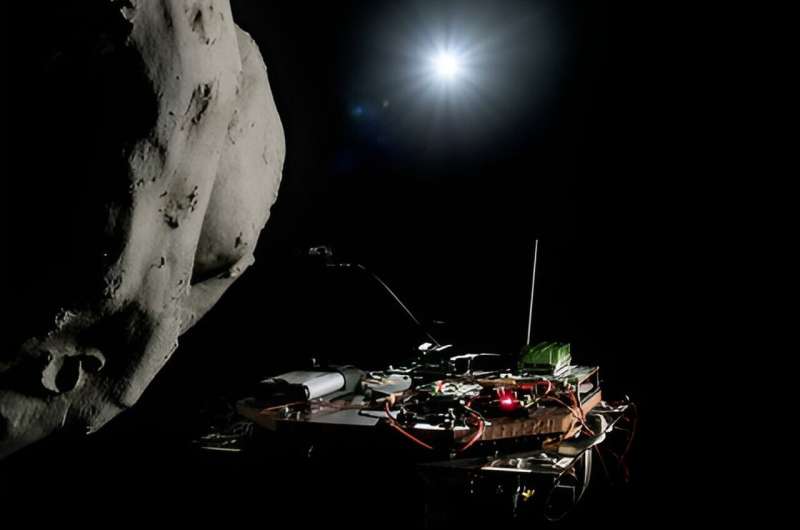
SpaceX's Falcon 9 rocket grounded pending mishap investigation

SpaceX's stalwart Falcon 9 rocket has been grounded while the Federal Aviation Administration investigates why its first-stage booster tipped over and exploded while attempting to land after its latest launch, the agency announced Wednesday.
The rare failure came after the rocket sent the latest batch of 21 Starlink internet satellites into orbit during an early morning launch.
A webcast from Elon Musk's company showed the first stage, which normally fires its thrusters to achieve a precise upright landing, tilting and blowing up as it descended onto a droneship off the Florida coast.
Although landing the booster is a secondary objective, and no lives or public property were at risk, the reusability of the entire rocket system is crucial to SpaceX's business model.
It snapped a more than three-year streak of hundreds of successful booster landings.
"An investigation is designed to further enhance public safety, determine the root cause of the event, and identify corrective actions to avoid it from happening again," the FAA said in a statement.


