

Space weather: prioritization, not policy, is the missing piece in U.S. resilience

U.S. military space domain awareness lags behind expectations


Webinar Replay – Space: The Next Frontier of Strategic Competition


China proposes magnetic launch system for sending resources back to Earth
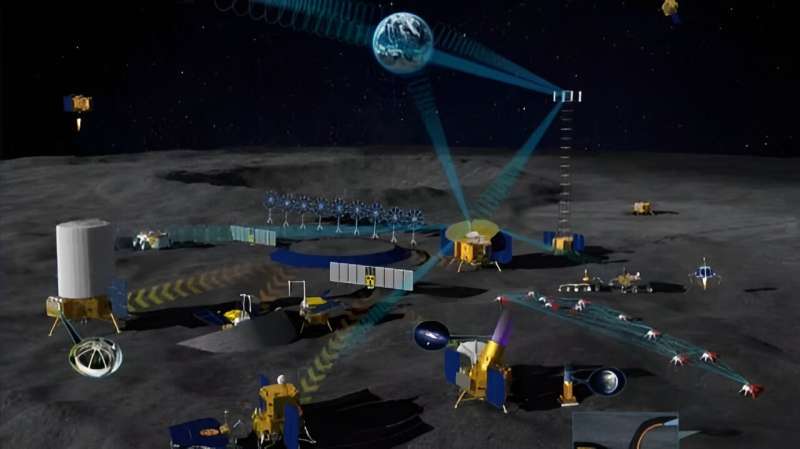
In his famous novel "The Moon is a Harsh Mistress," Robert A. Heinlein describes a future lunar settlement where future lunar residents ("Loonies") send payloads of wheat and water ice to Earth using an electromagnetic catapult.
In the story, a group of Loonies conspire to take control of this catapult and threaten to "throw rocks at Earth" unless they recognize Luna as an independent world. Interestingly enough, scientists have explored this concept for decades as a means of transferring lunar resources to Earth someday.
Given that space agencies are planning on sending missions to the moon to create permanent infrastructure, there is renewed interest in this concept. In a recent paper, a team of scientists from China's Shanghai Institute of Satellite Engineering (SAST) detailed how a magnetic launcher on the lunar surface could provide a cost-effective means of sending resources back to Earth.
Fire, fed by leaking engines, destroyed ABL Space Systems rocket


Military-commercial space divide persists despite policy push, experts say


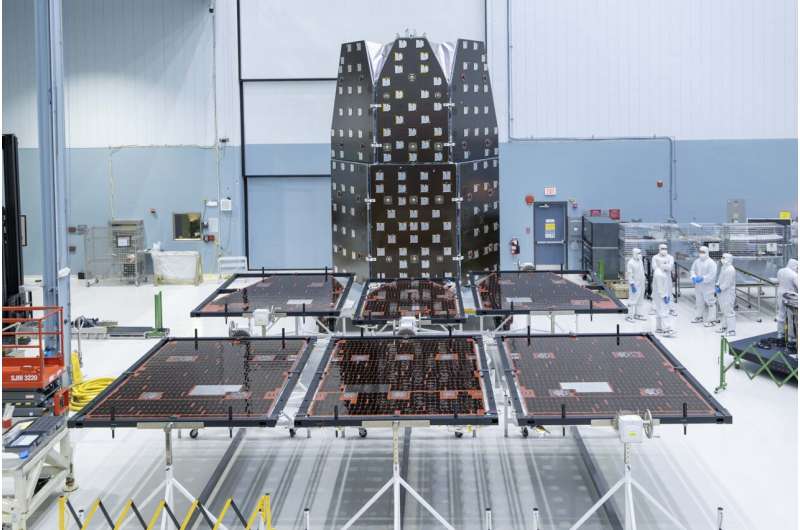
Solar panels for NASA's Roman Space Telescope pass key tests
SpaceX Polaris Dawn launch pushed back after helium leak
 SpaceX on Monday pushed back the historic launch of an all-civilian crew on an orbital expedition set to mark a new chapter in space exploration with the first spacewalk by private citizens.
The Polaris Dawn mission, organized by billionaire entrepreneur Jared Isaacman, was set to lift off early Tuesday from NASA's Kennedy Space Center, but is now targeting early Wednesday after a late techn
SpaceX on Monday pushed back the historic launch of an all-civilian crew on an orbital expedition set to mark a new chapter in space exploration with the first spacewalk by private citizens.
The Polaris Dawn mission, organized by billionaire entrepreneur Jared Isaacman, was set to lift off early Tuesday from NASA's Kennedy Space Center, but is now targeting early Wednesday after a late techn NASA advances solar sail deployment efforts after initial delay
 NASA's Advanced Composite Solar Sail System (ACS3) has initiated deployment operations for its innovative solar sail. However, during the initial attempt to unfurl the sail, the process was paused when an onboard power monitor detected higher-than-expected motor currents. Despite this, communications, power, and attitude control for the spacecraft all remain normal. Mission managers are now focu


