

Space Team Europe for Ariane 6: Ambra Pedrazzini
 Video:
00:02:41
Video:
00:02:41
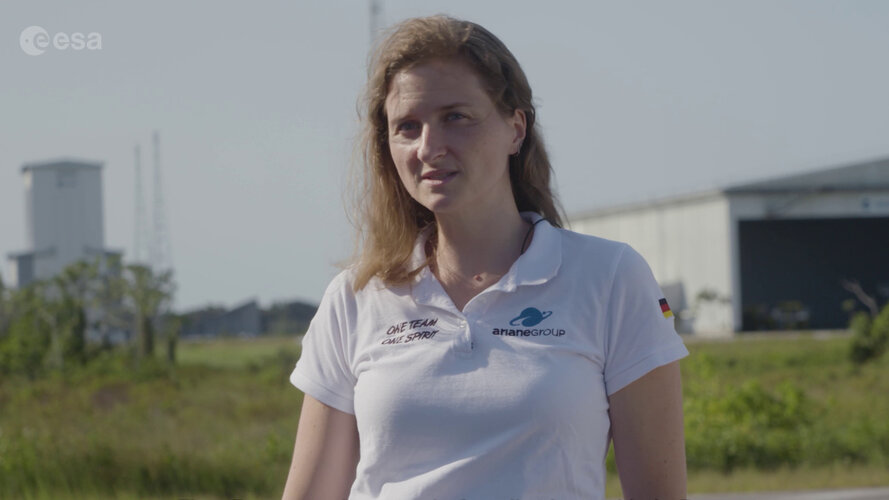
After taking an astronomy class in school, Ambra Pedrazzini now works for Arianespace on Europe’s newest rocket, Ariane 6. With past experience on Ariane 5, Ambra is now Fluid and Mechanical Interfaces Functional Assistant for the Ariane 6 upper liquid propulsion module.
Having worked on the development and implementation of the automatic programmes used during Ariane 6 launch campaign tests at Europe’s Spaceport in French Guiana, Ambra was then part of the team in charge of the rocket’s qualification tests. Ambra is responsible for ‘functional testing’ – verifying that the rocket and its associated launch pad are ready


Week in images: 22-26 July 2024

Week in images: 22-26 July 2024
Discover our week through the lens

ESA's stand at the Farnborough International Airshow 2024
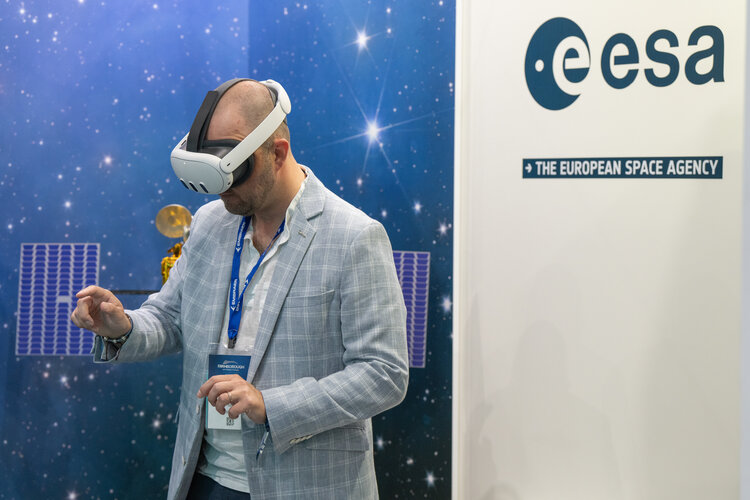 Image:
ESA's stand at the Farnborough International Airshow 2024
Image:
ESA's stand at the Farnborough International Airshow 2024 Image: NASA's Orion spacecraft gets lift on Earth
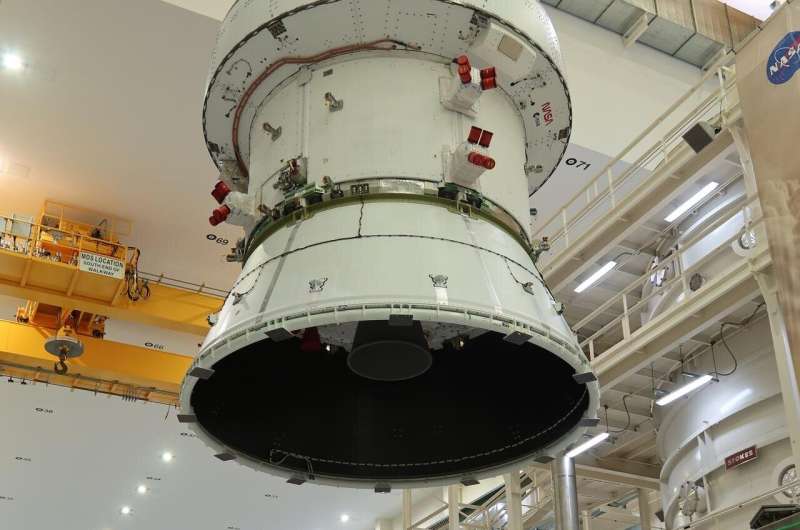
Crane operator Rebekah Tolatovicz, a shift mechanical technician lead for Artic Slope Regional Corporation at NASA's Kennedy Space Center in Florida, operates a 30-ton crane to lift the agency's Artemis II Orion spacecraft out of the recently renovated altitude chamber to the Final Assembly and Systems Testing, or FAST, cell inside NASA Kennedy's Neil A. Armstrong Operations and Checkout Building on April 27.
During her most recent lift July 10, Tolatovicz helped transfer Orion back to the FAST cell following vacuum chamber qualification testing in the altitude chamber earlier this month. This lift is one of around 250 annual lifts performed at NASA Kennedy by seven operator/directors and 14 crane operators on the ASRC Orion team.
"At the time of the spacecraft lift, I focus solely on what's going on in the moment of the operation," explains Tolatovicz. "Listening for the commands from the lift director, making sure everyone is safe, verifying the vehicle is clear, and ensuring the crane is moving correctly."
All Orion crane operators are certified after classroom and on-the-job training focusing on areas such as rigging, weight and center of gravity, mastering crane controls, crane securing, assessing safety issues, and emergency procedures.
NASA supports burst test for orbital reef commercial space station
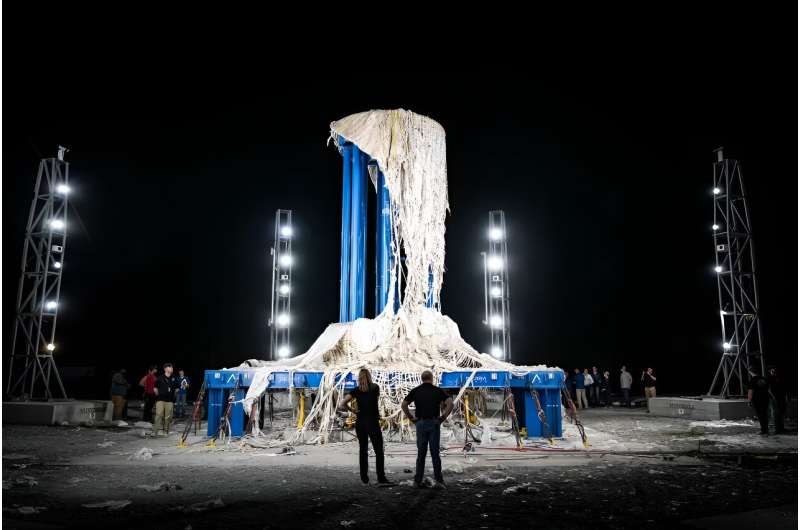
An element of a commercial space station, Orbital Reef, under development by Blue Origin and Sierra Space, recently completed a full-scale ultimate burst pressure test as part of the agency's efforts for new destinations in low Earth orbit.
This milestone is part of a NASA Space Act Agreement awarded to Blue Origin in 2021. Orbital Reef includes elements provided by Sierra Space, including the LIFE (Large Integrated Flexible Environment) habitat structure.
Teams conducted the burst test on Sierra Space's LIFE habitat structure using testing capabilities at NASA's Marshall Space Flight Center in Huntsville, Alabama. The inflatable habitat is fabricated from high-strength webbings and fabric that form a solid structure once pressurized. The multiple layers of soft goods materials that make up the shell are compactly stowed in a payload fairing and inflated when ready for use, enabling the habitat to launch on a single rocket.
SpaceNews Welcomes Clara Swan as Sales and Business Development Manager


SpaceX Successfully Launches Falcon 9 Starlink Mission
 SpaceX successfully launched 23 Starlink broadband satellites early Saturday morning, marking its return to flight operations after a brief hiatus due to a recent anomaly.
The Falcon 9 rocket lifted off from NASA's Kennedy Space Center in Florida at 1:45 a.m. EDT, right within its planned four-hour launch window. SpaceX provided a live stream of the event, showcasing the rocket's journey t
SpaceX successfully launched 23 Starlink broadband satellites early Saturday morning, marking its return to flight operations after a brief hiatus due to a recent anomaly.
The Falcon 9 rocket lifted off from NASA's Kennedy Space Center in Florida at 1:45 a.m. EDT, right within its planned four-hour launch window. SpaceX provided a live stream of the event, showcasing the rocket's journey t