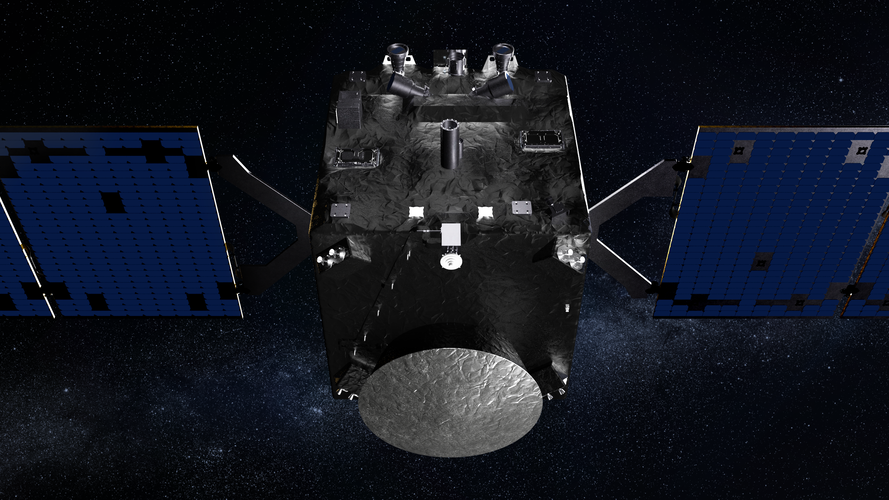
Momentus founders to divest shares after Defense Department concerns
WASHINGTON — The Russian founders of in-space transportation company Momentus have placed their shares into a voting trust and will sell them in the next three years as the company attempts to address U.S.
China rolls out out new Long March 7A for second launch attempt
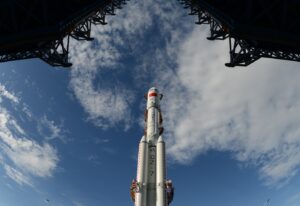
HELSINKI — China has quietly rolled a new-generation Long March 7A rocket at Wenchang ahead of a launch in the coming days.
Early Mars climate was intermittently warm
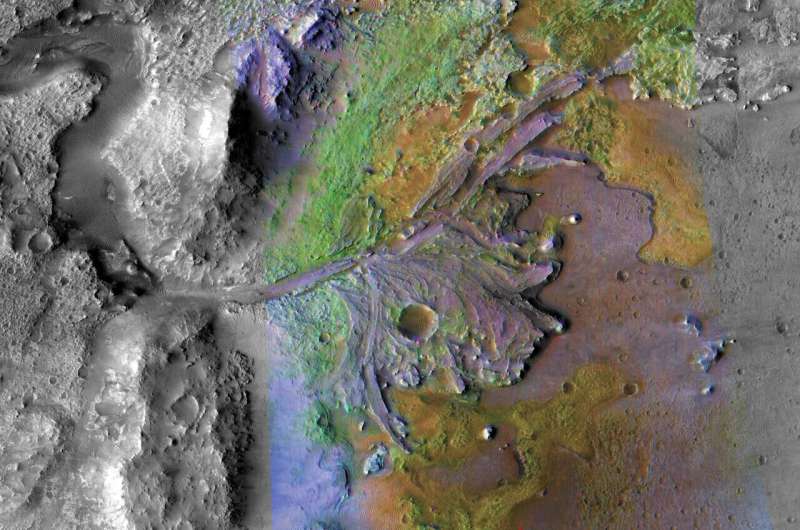
A new study that characterizes the climate of Mars over the planet's lifetime reveals that in its earliest history it was periodically warmed due to the input of greenhouse gases derived from volcanism and meteorites, yet remained relatively cold in the intervening periods, thus providing opportunities and challenges for any microbial life form that may have been emerging on the Red Planet. The study involved a national team of scientists that included Joel Hurowitz, Ph.D., of Stony Brook University. The findings are detailed in a paper published in Nature Geoscience.
An astronaut's guide to out-of-Earth manufacturing
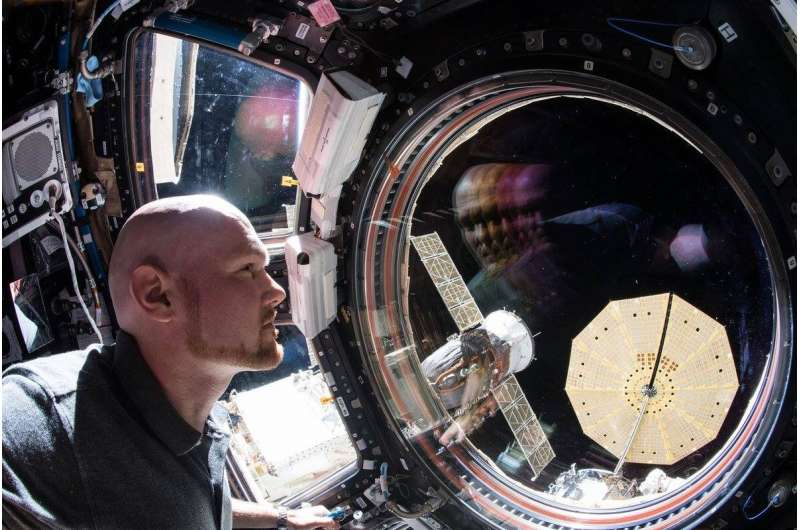
mprovising new stuff from the stuff you have is part of an astronaut's job description—think Apollo 13's crew refitting CO2 filters to save their own lives, or stranded Mark Watney in The Martian, feeding himself on the Red Planet. Now plans are underway to manufacture items in orbit, and ESA astronaut Alexander Gerst argues this could make a big difference to living and working in space.
Alexander—who has spent just under a year in orbit, becoming the second European to command the International Space Station (ISS) – spoke at ESA's Workshop on Advanced Manufacturing, which included a special session on out-of-Earth manufacturing.
While plastic-producing 3D printers have already reached space, the virtual event heard how ESA will fly the first metal 3D printer in 2022, and researchers are also planning large-scale manufacturing such as spacecraft printing their own antennas or solar arrays after launch.
Antarctica’s magnetic link to ancient neighbours
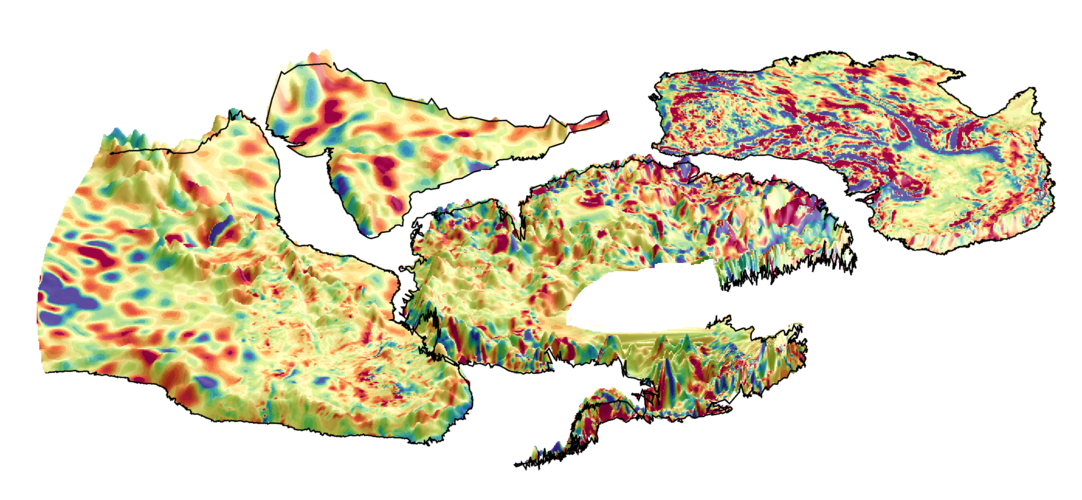
For the first time, an international team of scientists has used magnetic data from ESA’s Swarm satellite mission together with aeromagnetic data to help reveal the mysteries of the geology hidden beneath Antarctica’s kilometres-thick ice sheets, and link Antarctica better to its former neighbours.
Op-ed | Advancing science through human-tended suborbital experiments on commercial vehicles
A volcanologist travels to and descends down the rim of a caldera. A geophysicist travels to and scales a glacier to drill samples. Scientists travel and work across Antarctica. A scientist studying phenomena of liquids and gases for use in the weightlessness of spaceflight sits on the ground.
China, Russia enter MoU on international lunar research station
HELSINKI — The heads of the Chinese and Russian space agencies signed a memorandum of understanding Tuesday on cooperative construction of an international lunar research station.
Vega rocket passes readiness review for April return to flight
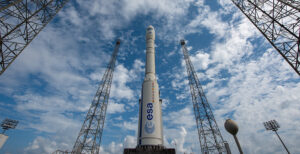
VALLETTA, Malta — Italian rocket maker Avio’s small launch vehicle is set to return to flight in April following a failure late last year that resulted in the loss of two European observation satellites.
Avio spokesperson Francesco Delorenzo told SpaceNews on March 8 that Vega was cleared for the upcoming Vega VV18 mission during a March 3 flight readiness review conducted by Avio, launch partner Arianespace, and the European Space Agency.
Japan budgets a record $4.14 billion for space activities
SEOUL, South Korea — In response to the reignited global space race, Japan is planning a record space budget of 449.6 billion yen ($4.14 billion) in the fiscal year 2021, up 23.1 percent over the current fiscal year that ends March 30, according to draft budget documents.
New study highlights first infection of human cells during spaceflight
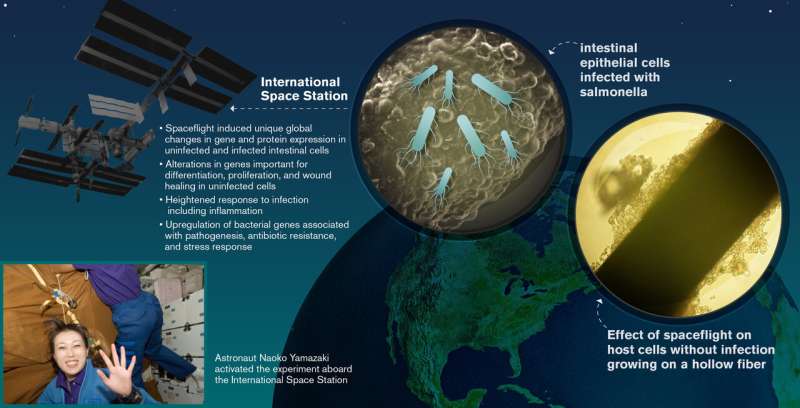
Astronauts face many challenges to their health, due to the exceptional conditions of spaceflight. Among these are a variety of infectious microbes that can attack their suppressed immune systems.
Now, in the first study of its kind, Cheryl Nickerson, lead author Jennifer Barrila and their colleagues describe the infection of human cells by the intestinal pathogen Salmonella Typhimurium during spaceflight. They show how the microgravity environment of spaceflight changes the molecular profile of human intestinal cells and how these expression patterns are further changed in response to infection. In another first, the researchers were also able to detect molecular changes in the bacterial pathogen while inside the infected host cells.