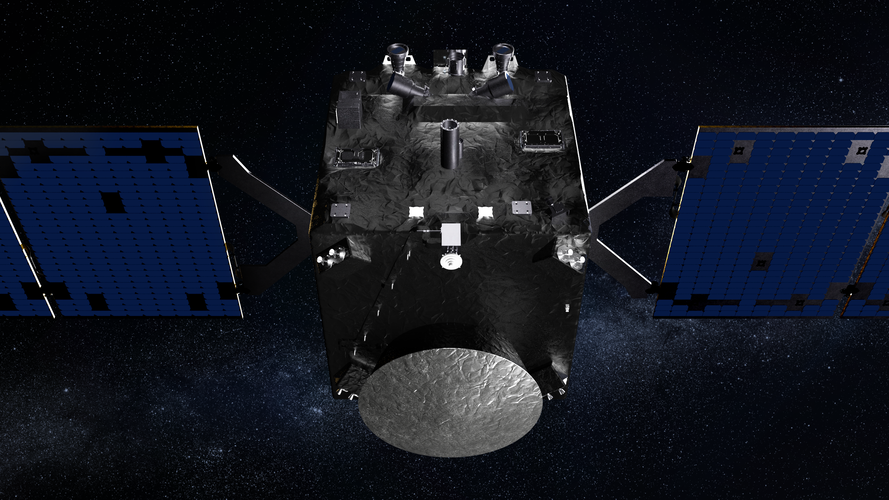
RUAG International transforms into space-focused ‘beyond gravity’

TAMPA, Fla. — Swiss component maker RUAG International is shedding its military businesses to focus solely on space, transforming into a subsystems provider to be called ‘beyond gravity.’
The new company will look to invest in newspace solutions to expand internationally, with a particular focus on the U.S.
How Galileo performed first-ever authenticated positioning fix
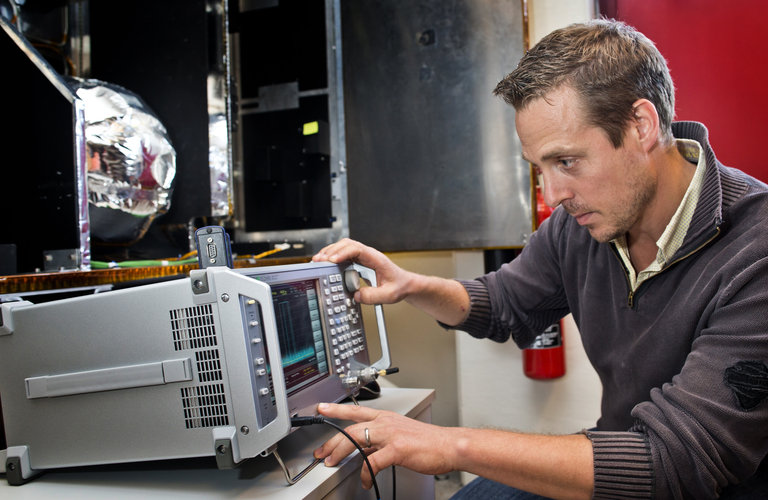
In a first for any satellite navigation system, Galileo has achieved a positioning fix based on open-service navigation signals carrying authenticated data. Intended as a way to combat malicious ‘spoofing’ of satnav signals, this authentication testing began at ESA’s Navigation Laboratory – the same site where the very first Galileo positioning fix took place back in 2013.
Blue Origin to simulate lunar gravity on suborbital flights for NASA
WASHINGTON — NASA has signed an agreement with Blue Origin to use that company’s New Shepard suborbital vehicle for flights that will simulate the reduced gravity on the surface of the moon.
A dose of Moonlight
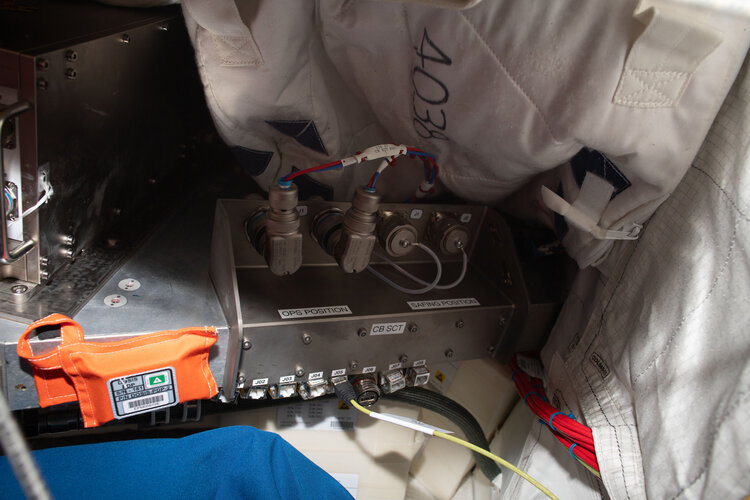 Image:
An orange pouch and a yellow cable are paving the way for missions to the Moon. By monitoring space radiation and enabling faster communications, the Dosis-3D experiment and the Columbus Ka-band or ColKa terminal, respectively, are providing the insights needed to enable safer missions father out in space.
Orange Dosis-3D pouches are everywhere in the Columbus laboratory on the International Space Station. A series of active and passive dosimeters, they measure space radiation inside the module as well as how it penetrates the Space Station’s walls.
Radiation levels in space are up to 15 times higher than on Earth. As soon
The role of reentries
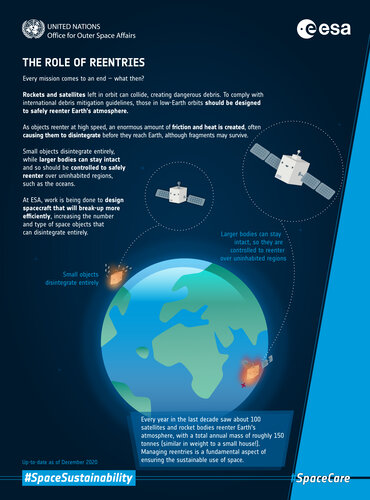 Image:
Using reentries to clean up
Image:
Using reentries to clean up How scientists found rare fireball meteorite pieces on a driveway—and what they can teach us
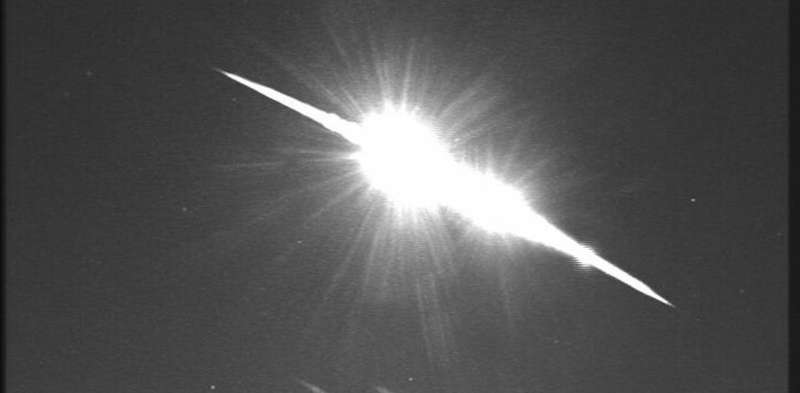
As people in the UK were settling down to watch the late evening news on February 28, a fresh news story, quite literally, appeared in the night sky. A large and very bright fireball was seen over southern England and northern France at 21:54 GMT. It was recorded by many doorbell webcams, so it was a very well-observed fireball. More importantly, it was also captured by the automated cameras of the UK Meteor Observation Network and similar networks.
Working with colleagues in France and Australia, the meteor-watchers worked out the fireball's trajectory and determined where the meteorite pieces could be located, just north of Cheltenham in the UK. Based on their calculations, Ashley King, a specialist in meteorites at the Natural History Museum in London, made an appeal on local TV and radio stations for information about any unusual black rocks seen to have fallen from the sky.
How do you get power into your lunar base? With a tower of concrete several kilometers high
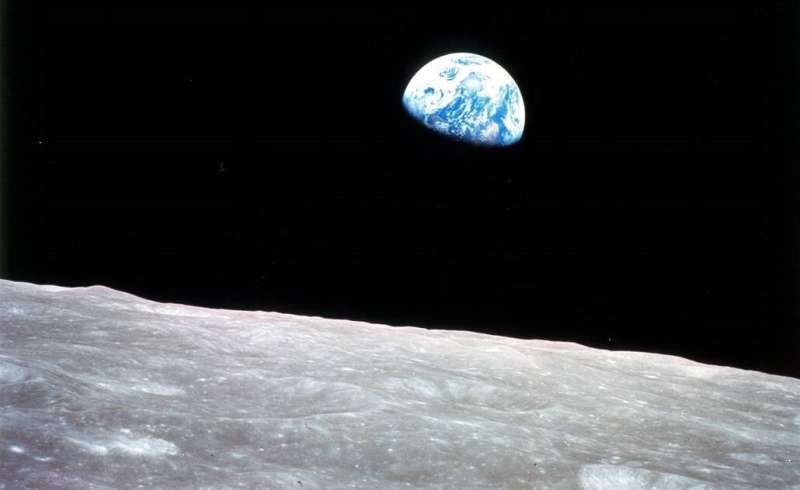
It sounds like science fiction, but building an enormous tower several kilometers high on the lunar surface may be the best way to harness solar energy for long-term lunar exploration. Such towers would raise solar panels above obstructing geological features on the lunar surface, and expand the surface area available for power generation.
A successful future moon base of any size is going to require two key resources: water and power. Ever since evidence of frozen water ice was discovered in the depths of permanently shadowed craters near the moon's South Pole, the polar region has become NASA's primary target for future moon landings. Water can be used for drinking, of course, and growing plants, but also as rocket fuel or separated out at the molecular level to make breathable oxygen. But while the moon's water is found deep in the crater basins, power generation will likely come from high up, above the crater rims, where 'peaks of eternal light' are known to exist. These peaks almost never experience shadow, and would be ideal locations to place solar cells to power water-extraction activities on the moon.
Startup using Soviet-era technology to build satellite servicing vehicle
WASHINGTON — A Ukrainian startup is building an in-orbit servicing vehicle using space docking technology developed decades ago by the former Soviet Union.
The startup, named Kurs Orbital, was co-founded by the former head of Ukraine’s space agency Volodymyr Usov.
In first, scientists trace fastest solar particles to their roots on the Sun
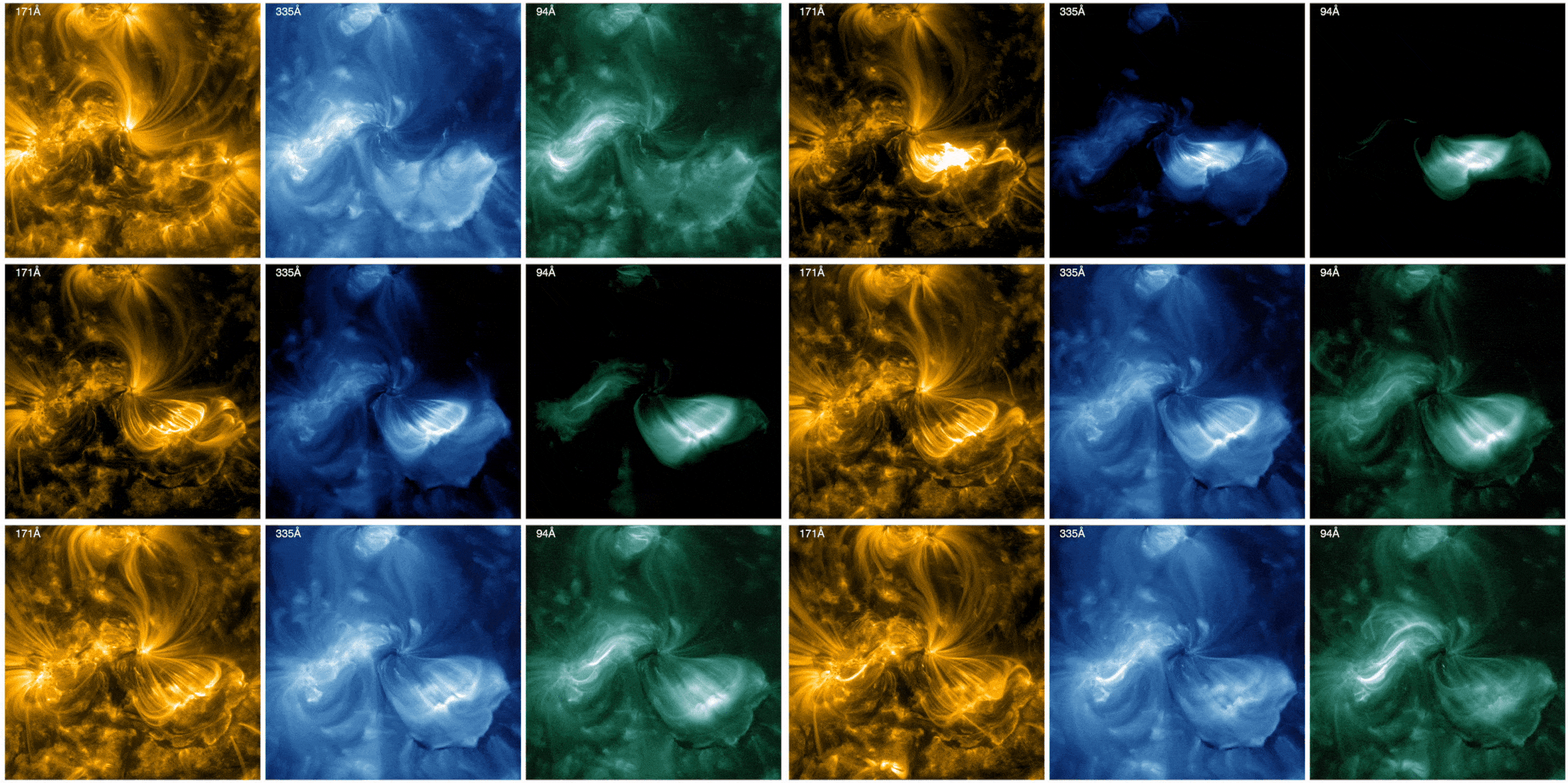
Zipping through space at close to the speed of light, Solar Energetic Particles, or SEPs, are one of the main challenges for the future of human spaceflight.
Space sustainability and debris physics: The role of reentries
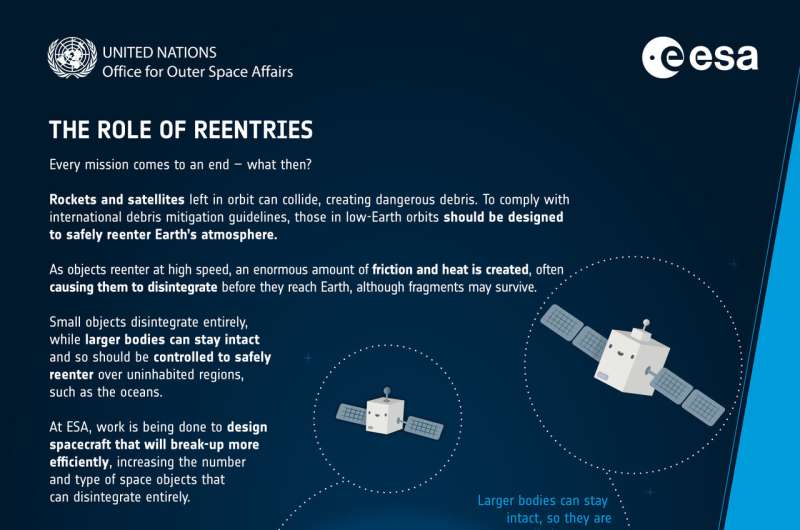
What goes up, nearly always comes back down. When it comes to the objects we send to space, atmospheric reentries are actually a fundamental tool in minimizing the creation of space debris and ensuring a sustainable future in space.
Objects in low-Earth orbit, affected by the 'drag' forces caused by Earth's atmosphere, gradually lower in altitude and then make a rapid and firey descent towards Earth.
Small objects disintegrate as they reenter due to the immense friction and heat created, but parts of larger bodies can reach the ground so should be controlled to land over uninhabited regions.
Join Stijn Lemmens and Jorge del Rio Vera to find out more about why this matters in the joint ESA-UN podcast that narrates this infographic.
Explore further