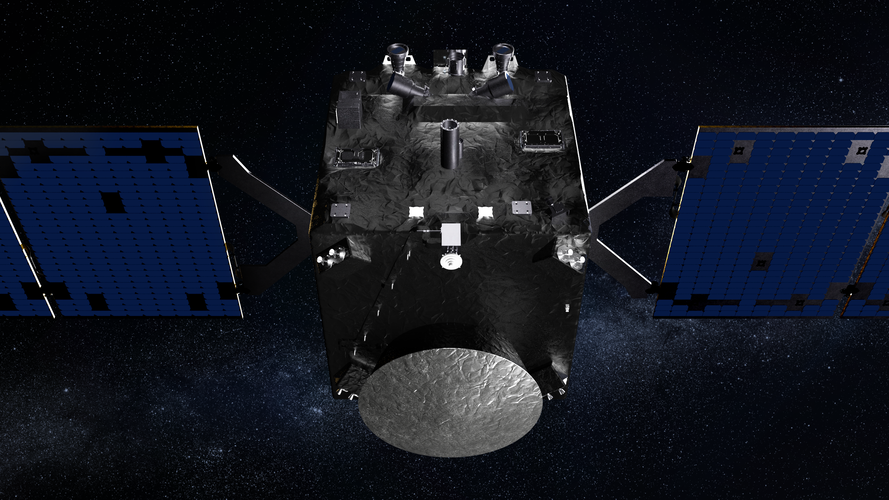

Will this solve the mystery of the expansion of the universe
 The universe was created by a giant bang; the Big Bang 13.8 billion years ago, and then it started to expand. The expansion is ongoing: it is still being stretched out in all directions like a balloon being inflated.
Physicists agree on this much, but something is wrong. Measuring the expansion rate of the universe in different ways leads to different results.
So, is something wrong
The universe was created by a giant bang; the Big Bang 13.8 billion years ago, and then it started to expand. The expansion is ongoing: it is still being stretched out in all directions like a balloon being inflated.
Physicists agree on this much, but something is wrong. Measuring the expansion rate of the universe in different ways leads to different results.
So, is something wrong USTC detects a sharp rise in detection rate of broad absorption line variations
 Gas around black holes and interstellar medium distribution are key factors in understanding the growth of supermassive black holes and the evolution of their host galaxies. However, as a crucial parameter, gas density is hard to be determined reliably, because the general method is not applicable to all quasars.
Researchers from the University of Science and Technology of China (USTC) of
Gas around black holes and interstellar medium distribution are key factors in understanding the growth of supermassive black holes and the evolution of their host galaxies. However, as a crucial parameter, gas density is hard to be determined reliably, because the general method is not applicable to all quasars.
Researchers from the University of Science and Technology of China (USTC) of NSF report estimates Arecibo cleanup cost at up to $50 million
WASHINGTON — A report by the National Science Foundation estimates it will cost up to $50 million to clean up the damage from the collapsed Arecibo radio telescope, but that it is still too soon to determine whether or how to rebuild the famous observatory.
ESA and Mattel help to close the ‘Dream Gap’
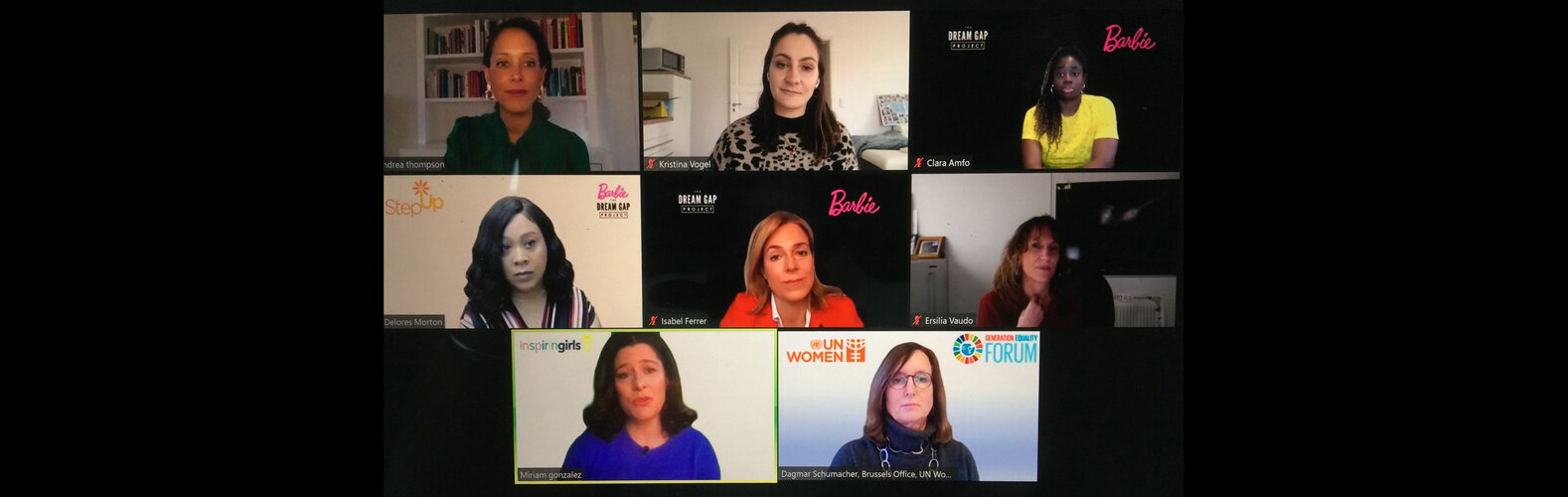
ESA and international toy manufacturer Mattel are taking further steps to raise awareness of the importance of female role models during times of pandemic and beyond.
Op-ed | Do not cancel space station’s new culture of commercial cooperation
I am not into conspiracies. Kennedy was shot by a lone gunman. The World Trade Center was taken down by terrorists. And yes, we really did go to the moon.
How would rain be different on an alien world?

On Titan, Saturn's largest moon, it rains on a regular basis. As with Earth, these rains are the result of liquid evaporating on the surface, condensing in the skies, and falling back to the surface as precipitation. On Earth, this is known as the hydrological (or water) cycle, which is an indispensable part of our climate. In Titan's case, the same steps are all there, but it is methane that is being exchanged and not water.
In recent years, scientists have found evidence of similar patterns involving exoplanets, with everything from molten metal to lava rain! This raises the question of just how exotic the rains may be on alien worlds.
SpaceX takes aim at satellite mobility operators with Starlink expansion

TAMPA, Fla. — SpaceX is seeking regulatory permission to connect moving vehicles to its rapidly expanding Starlink constellation, branching the broadband network out of fixed homes and offices.
The company is asking the FCC for authorization similar to the blanket license it already has for up to a million end-user customer Earth stations.
Telespazio reshapes for emerging space integration opportunities
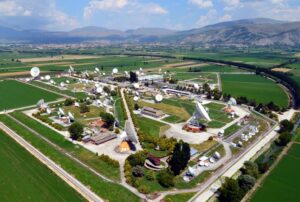
TAMPA, Fla. — European space mission integrator Telespazio is regrouping to go after emerging international initiatives, which it believes will help nearly double revenues in the next five years.
The joint venture between aerospace giants Thales Group of France and Italy’s Leonardo recently made its first acquisition under this strategy, buying the space activities of Italy-based Vitrociset to strengthen its support services.
Space Force planning for a future of smaller, cheaper satellites
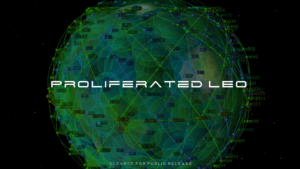
WASHINGTON — The U.S. Space Force procurement arm, the Space and Missile Systems Center, for more than a year has been helping the Pentagon’s Space Development Agency accelerate the procurement of small satellites.
The close collaboration between SMC and SDA may come as a surprise to those who have followed the politics of the Defense Department’s space organizations.
Research contributes to understanding of hypersonic flow
 Using data collected in a NASA Langley Mach 6 wind tunnel, researchers at the University of Illinois Urbana-Champaign replicated the hypersonic flow conditions of a compression ramp flow by means of Direct Numerical Simulation. The simulation yielded an abundance of additional data, which can be used to better understand the phenomena that occur surrounding vehicles traveling at hypersonic speed