
Space Team Europe for Ariane 6: Sergi Inglada
 Video:
00:08:43
Video:
00:08:43
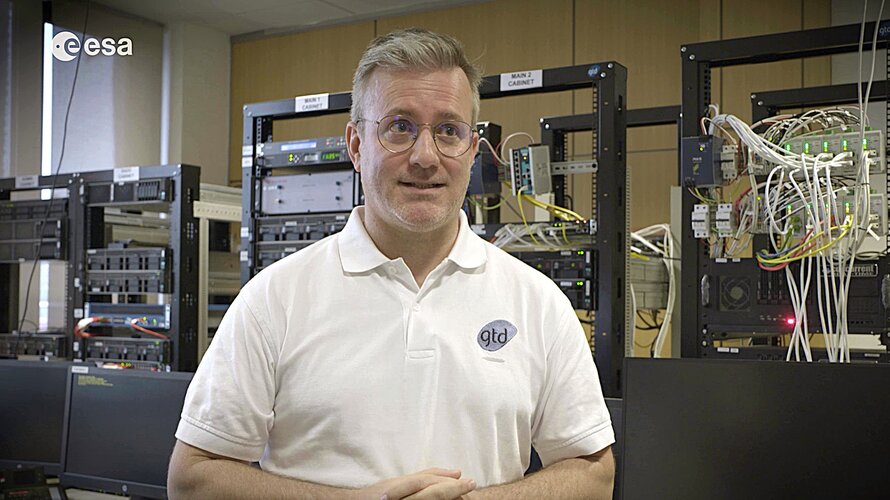
They say it takes a village to raise a child. To launch a rocket, we have the combined expertise and passion of Space Team Europe. Sergi Inglada, Control Bench Technical Manager for GTD, is one of many making the first Ariane 6 launch possible and has been interviewed as part of a series highlighting some of the people that make up this dream team.
Sergi has been interested in space ever since he was a child and studied engineering at INSA in Rennes, France. After discovering the dynamism, operations, diversity and technology at Europe’s Spaceport he started working
Firefly to launch Alpha rockets from Esrange in Sweden


China calls on scientists of all nations to study lunar samples, but notes obstacle with the US
NASA advances research to grow habitats in space from fungi
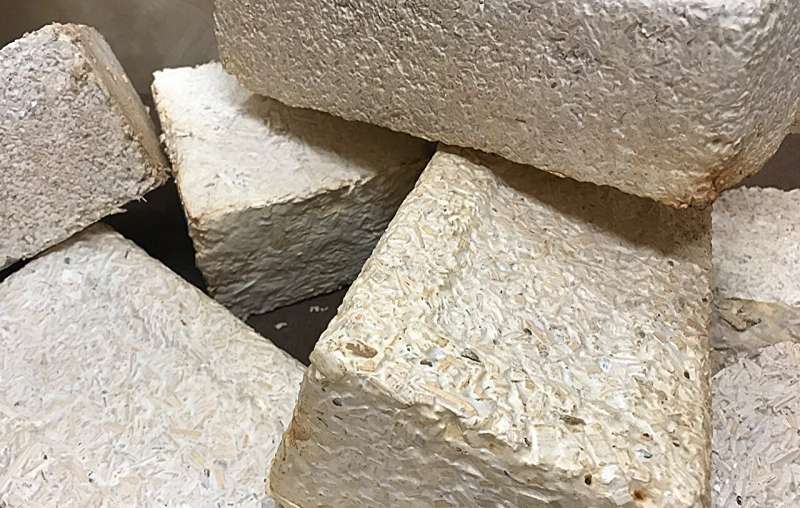
As NASA prepares for long-duration missions to the moon and Mars for the benefit of all, a habitat-growing concept selected Wednesday by the agency could help "grow" homes using fungi for future explorers.
A team of researchers at NASA Ames Research Center in California's Silicon Valley will receive new funding under the NASA's Innovative Advanced Concepts (NIAC) program to propel their habitat research.
The Phase III NIAC award will provide $2 million over two years to continue technology development of the Mycotecture Off Planet project in preparation for a potential future demonstration mission.
Wind tunnel study shows hypersonic jet engine flow can be controlled optically
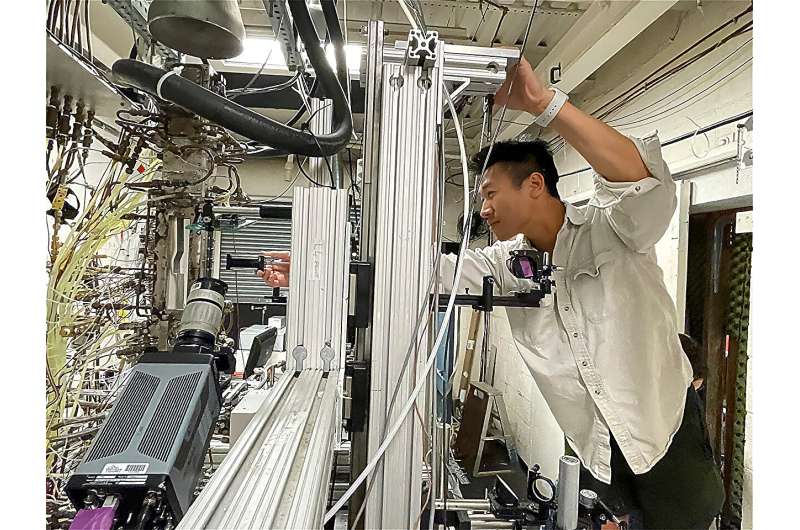
What if the future of space travel were to look less like Space-X's rocket-based Starship and more like NASA's "Hyper-X," the hypersonic jet plane that, 20 years ago this year, flew faster than any other aircraft before or since?
In 2004, NASA's final X-43A unmanned prototype tests were a milestone in the latest era of jet development—the leap from ramjets to faster, more efficient scramjets.
Russian satellite breaks up, creating debris in low Earth orbit


Viasat to supply satellite terminals for Spain’s maritime surveillance aircraft


Beta Project Kuiper broadband services pushed to early 2025


Brig. Gen. Kristin L. Panzenhagen, United States Space Force – Leading Women in Space

SpaceX knocks out morning launch with record booster from Cape Canaveral
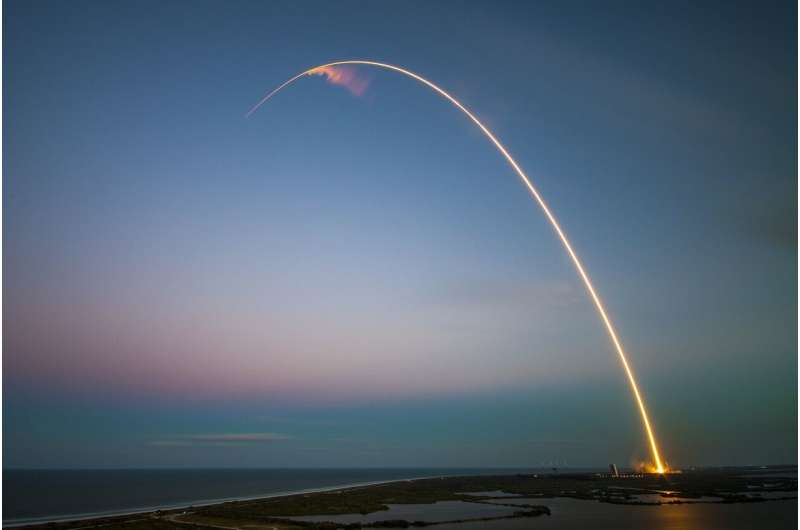
SpaceX got back to a quick pace between launches with another Starlink mission from the Space Coast on Thursday using its fleet-leading booster for a record flight.
A Falcon 9 rocket carrying 23 of its Starlink satellites lifted off from Cape Canaveral Space Force Station's Space Launch Complex 40 at 7:14 a.m.
The first-stage booster for the flight made its record-breaking 22nd trip off the pad, having previously flown crewed missions Inspiration4 and Axiom Space's Ax-1, as well as 19 other missions.
It made another landing downrange in the Atlantic on the droneship Just Read the Instructions.
That marks 325 booster recoveries for the company and 294 reflights. SpaceX has three other boosters with 20 or more flights under their belt.
The launch comes just two days since the first Falcon Heavy launch of the year at nearby Kennedy Space Center and four days since the last launch at Canaveral's SLC-40.
This was the 48th launch from all Space Coast launch pads for the year, with all but three coming from SpaceX.
2024 Orlando Sentinel. Distributed by Tribune Content Agency, LLC.