

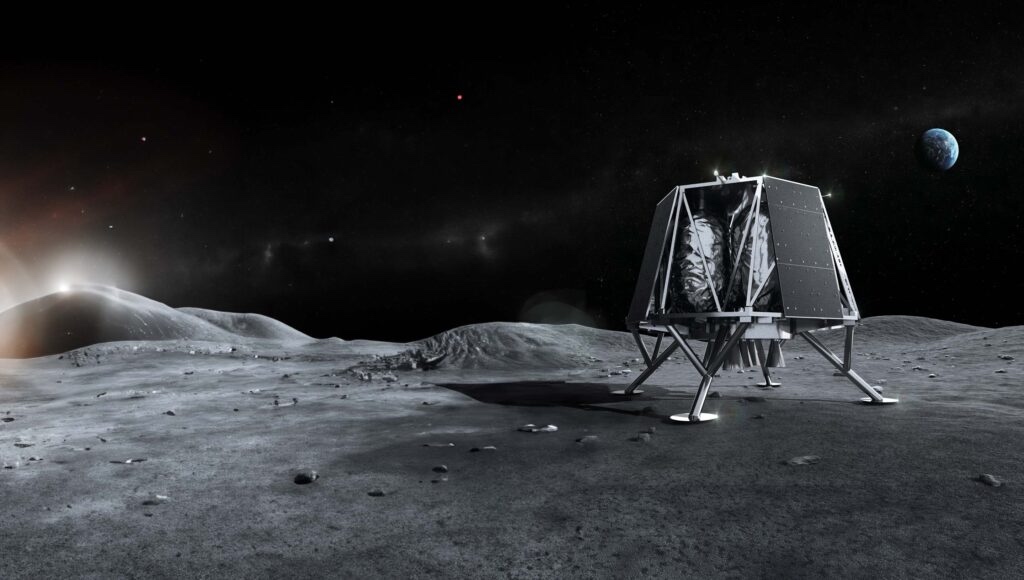
Ispace revises design of lunar lander for NASA CLPS mission
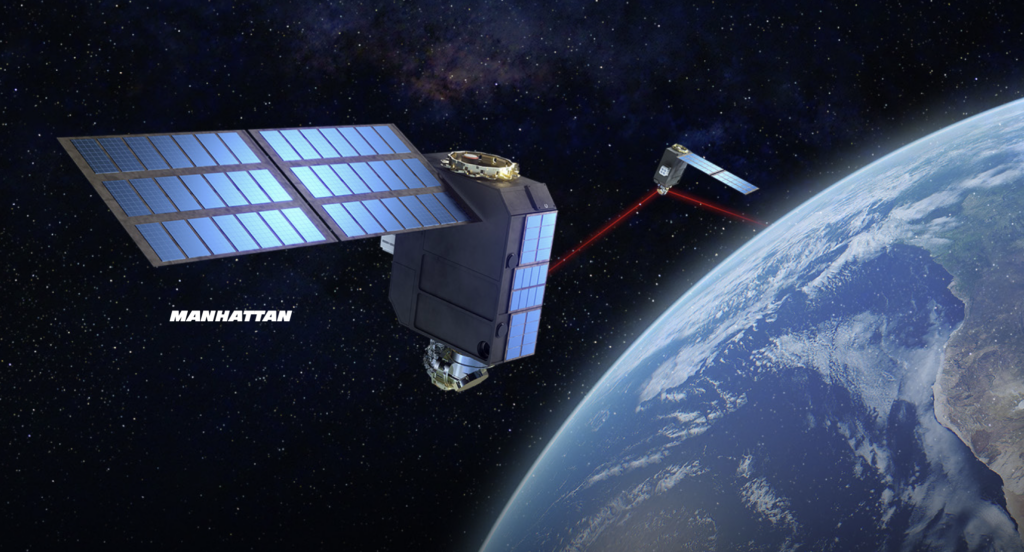
Space Development Agency funds demonstration of satellite laser links in ‘degraded’ environments
NASA's Perseverance captures dust-filled Martian whirlwind
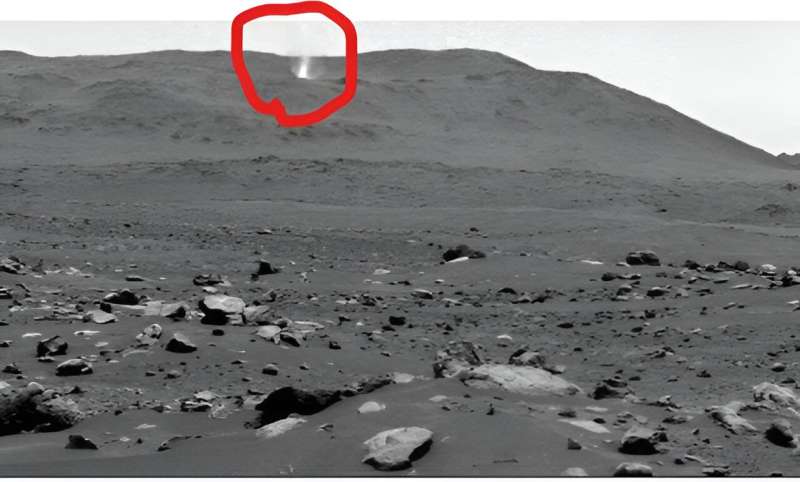
The lower portion of a Martian dust devil was captured moving along the western rim of Mars' Jezero Crater by NASA's Perseverance rover on Aug. 30, 2023, the 899th Martian day, or sol, of the mission. The video, which was sped up 20 times, is composed of 21 frames taken four seconds apart by one of the rover's Navcams.
Much weaker and generally smaller than Earth's tornadoes, dust devils are one of the mechanisms that move and redistribute dust around Mars. Scientists study them to better understand the Martian atmosphere and improve their weather models.
Using data from the imagery, mission scientists determined that this particular dust devil was about 2.5 miles (4 kilometers) away, at a location nicknamed "Thorofare Ridge," and moving east to west at about 12 mph (19 kph). They calculated its width to be about 200 feet (60 meters). And while only the bottom 387 feet (118 meters) of the swirling vortex are visible in the camera frame, the scientists could also estimate its full height.
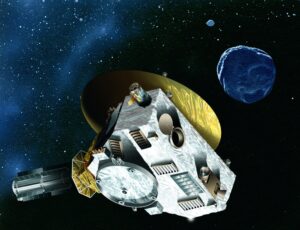
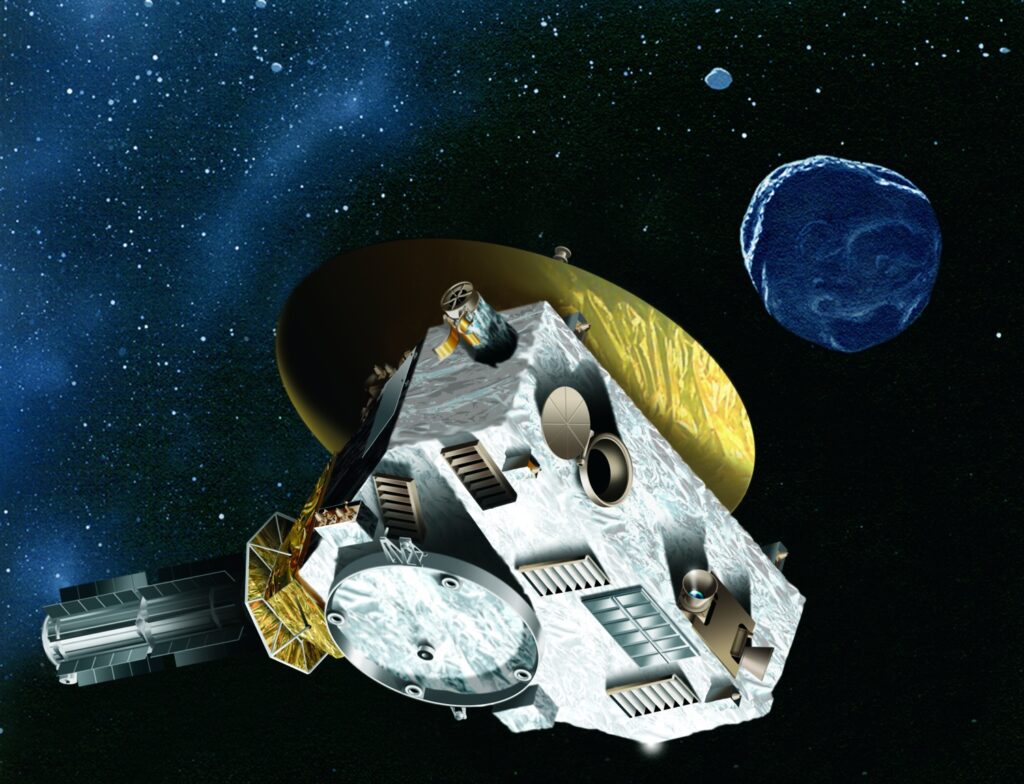
NASA to extend New Horizons mission through late 2020s
Record-breaking launch of SpaceX's Starlink satellites
 SpaceX pushed back the launch time from the original T-0 of 6:49 p.m. EDT (2249 UTC Sep. 30) more than three hours later due to the weather condition. At 10:00 p.m. EDT (0200 UTC Sep. 30), a Falcon 9 rocket launched 22 of SpaceX's "V2 Mini" internet satellites for its Starlink communications network from Space Launch Complex 40 (SLC-40) at the Cape Canaveral Space Force Station (CCSFS) in Florid
 NASA selects SpaceX for rideshare launch of smallsat mission
Indian spacecraft heads towards center of solar system
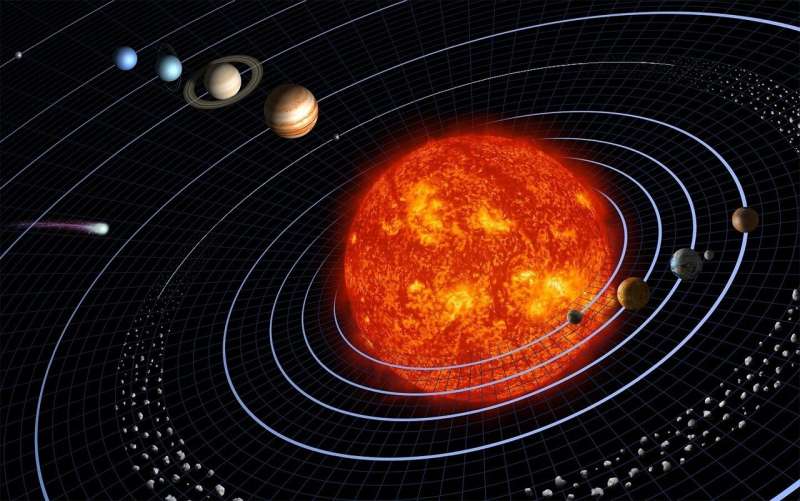
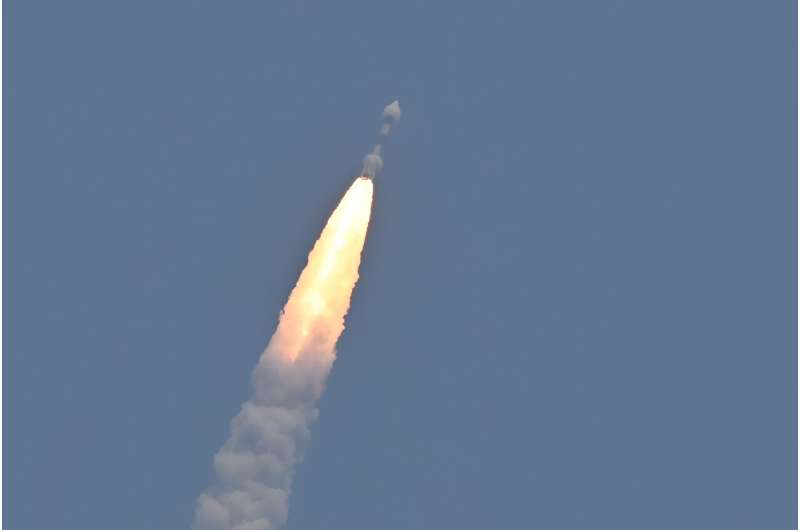
India's sun-monitoring spacecraft has crossed a landmark point on its journey to escape "the sphere of Earth's influence", its space agency said, days after the disappointment of its moon rover failing to awaken.
The Aditya-L1 mission, which started its four-month journey towards the center of the solar system on September 2, carries instruments to observe the sun's outermost layers.
"The spacecraft has escaped the sphere of Earth's influence," the Indian Space Research Organisation (ISRO) said in a statement late Saturday.
Aditya, named after the Hindu sun deity, has traveled 920,000 kilometers (570,000 miles), just over half the journey's total distance.
At that point, the gravitational forces of both astronomical bodies cancel out, allowing the mission to remain in a stable halo orbit around our nearest star.
"This is the second time in succession that ISRO could send a spacecraft outside the sphere of influence of the Earth, the first time being the Mars Orbiter Mission", the agency added.
In August, India became the first country to land a craft near the largely unexplored lunar south pole, and just the fourth nation to land on the moon.
India's private space sector skyrockets
When Indian entrepreneur Awais Ahmed founded his satellite startup in Bangalore in 2019, his country was still a year away from opening the space industry to the private sector.
"When we started, there was absolutely no support, no momentum," said Ahmed, who was 21 when he founded Pixxel, a company deploying a constellation of Earth imaging satellites.
Since then, the private space sector has taken off in India, joining a rapidly growing global market.
There are now 190 Indian space start-ups, twice as many as a year earlier, with private investments jumping by 77 percent between 2021 and 2022, according to Deloitte consultancy.
"A lot of Indian investors were not willing to look at space technology, because it was too much of a risk earlier," Ahmed said in an interview with AFP.
Stopgap spending bill includes FAA learning period extension

Your Interactive Guide to the 2023 Annular Solar Eclipse
 Have you ever wondered how to track an eclipse down to the exact second? NASA has you covered! As the countdown to the highly anticipated Oct. 14, 2023, annular solar eclipse continues, NASA is proud to unveil the Eclipse Explorer - an interactive map designed to enhance your eclipse-viewing experience. Crafted to complement our existing static eclipse maps, this tool enables users to dive into


