How to build better extraterrestrial robots
 Running on the beach versus a paved road can change an athlete's stride, speed and stability. Alter the force of gravity, and that runner may break their personal record or sink into the ground. Researchers have to consider such parameters when designing extraterrestrial rovers and landers - which can trawl where no person has stepped foot. To better inform this work, a multi-institutional team
 Omnispace and Lacuna showcase NGSO IoT satellite connectivity
 Omnispace, the company redefining global mobile connectivity, together with communications leader Viasat (NASDAQ: VSAT) and Lacuna Space, have demonstrated a first-of-its-kind, global, open standards-based internet of things (IoT) service which could pave the way for a range of IoT and direct to device (D2D) satellite services.
Omnispace successfully demonstrated its non-geostationary (NGS
Omnispace, the company redefining global mobile connectivity, together with communications leader Viasat (NASDAQ: VSAT) and Lacuna Space, have demonstrated a first-of-its-kind, global, open standards-based internet of things (IoT) service which could pave the way for a range of IoT and direct to device (D2D) satellite services.
Omnispace successfully demonstrated its non-geostationary (NGS Arlington Capital Partners to acquire Exostar from Thoma Bravo
 Arlington Capital Partners ("Arlington"), a Washington, DC-based private equity firm, has agreed to acquire Exostar, LLC ("Exostar"), a leader in trusted, secure business collaboration in highly regulated industries including aerospace and defense, healthcare and life sciences, from Thoma Bravo, a leading software investment firm. Terms of the transaction were not disclosed.
The Exostar Pl
Arlington Capital Partners ("Arlington"), a Washington, DC-based private equity firm, has agreed to acquire Exostar, LLC ("Exostar"), a leader in trusted, secure business collaboration in highly regulated industries including aerospace and defense, healthcare and life sciences, from Thoma Bravo, a leading software investment firm. Terms of the transaction were not disclosed.
The Exostar Pl Vega's fuel-free CubeSats to keep formation with wings

Spain’s trio of ANSER CubeSats, due to fly on Europe’s next Vega launcher, will fly like a flock of birds in orbit – in more ways than one. Keeping in formation by following their leader, the three shoebox-sized satellite will image Iberian waters as if they are a single standard-sized mission. And they will unfurl wing-like flaps to maintain their relative positions, surfing on the scanty airflow at the top of Earth’s atmosphere.
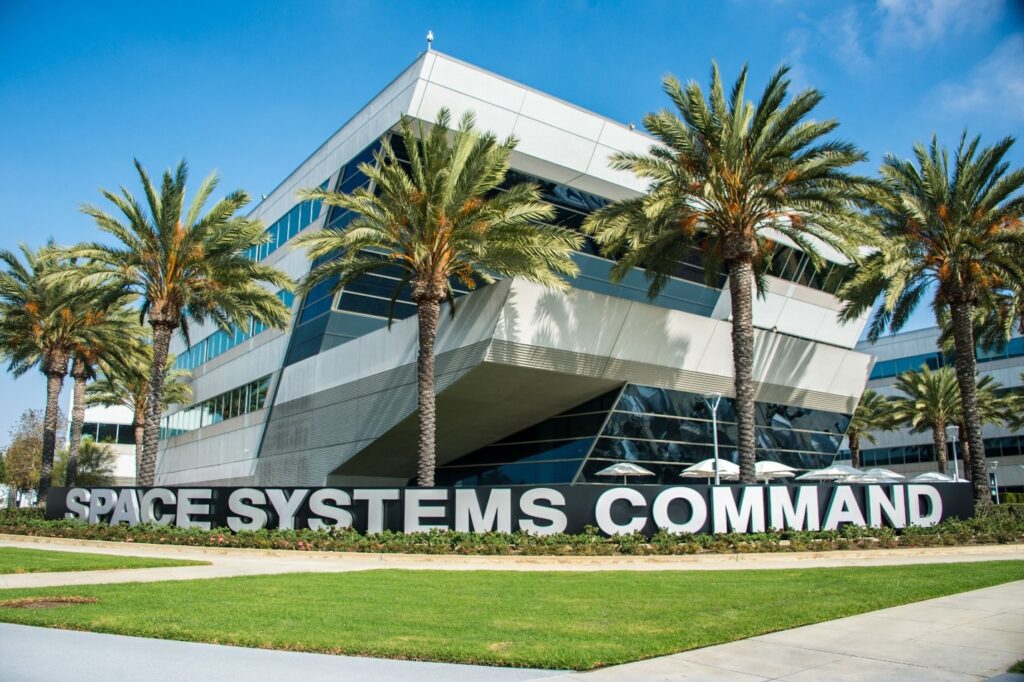
Cybersecurity firm Xage gets $17 million contract to protect Space Force networks
China narrows field for low-cost space station cargo missions
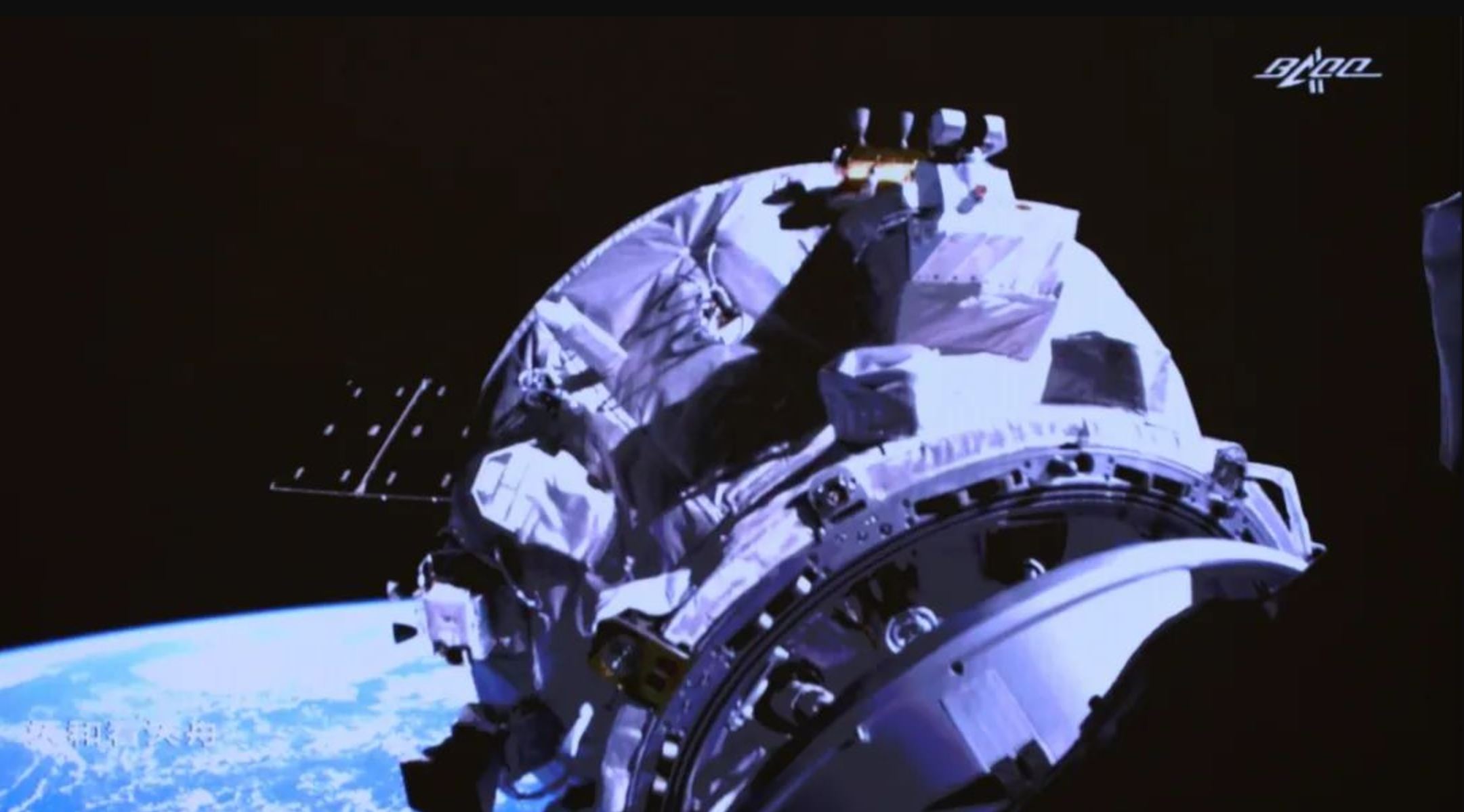
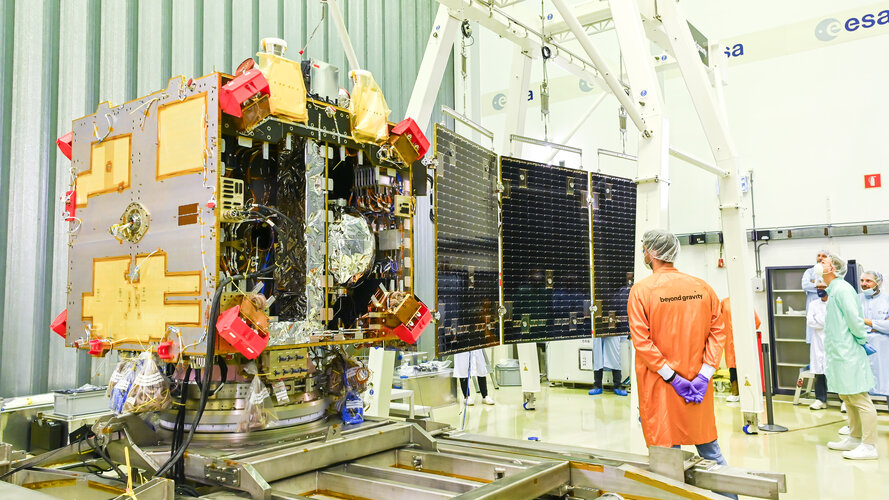 Image:
Hera takes wing
Image:
Hera takes wing Hera solar wing deployed
 Video:
00:00:57
Video:
00:00:57
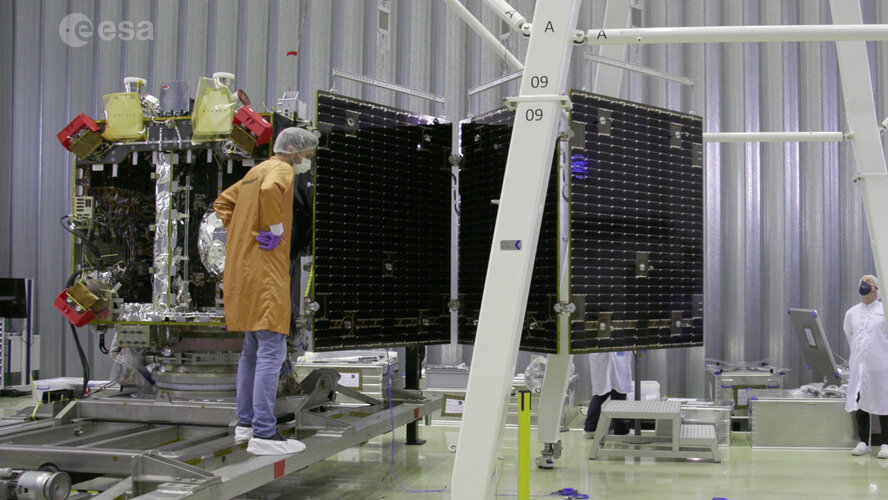
ESA’s Hera asteroid mission for planetary defence seen with one of its two solar wings added, during its continuing test campaign at the ESTEC Test Centre in the Nethelands.
The van-sized spacecraft, left, is powered by a pair of solar array wings, made up of three panels each, provided by Beyond Gravity in Switzerland.
One of these 5-m-long wings was added for Hera’s ‘cold deployment check’ – a manual unfolding process to confirm that the wing fits correctly. Because the solar wings have been designed to operate in weightlessness they were supported by a frame during this test
Ready for collection – lightsabres for Mars
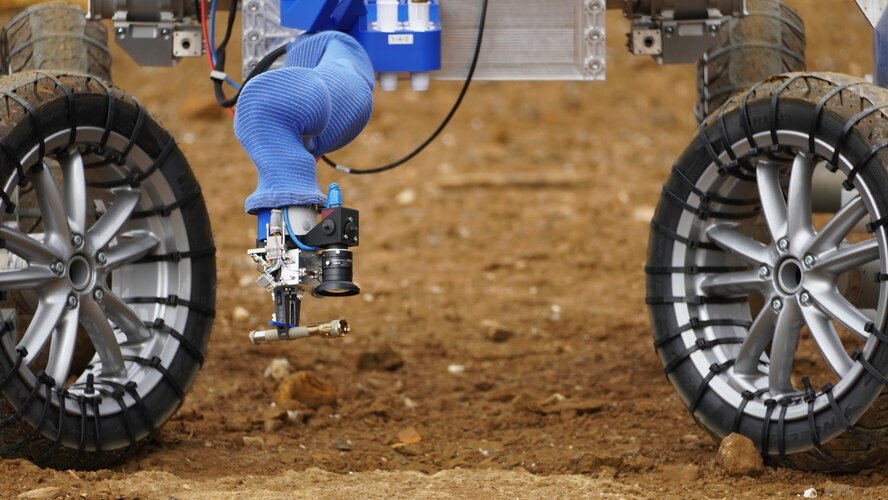 Image:
Ready for collection – lightsabres for Mars
Image:
Ready for collection – lightsabres for Mars Soyuz returns ISS crew after record-setting stay